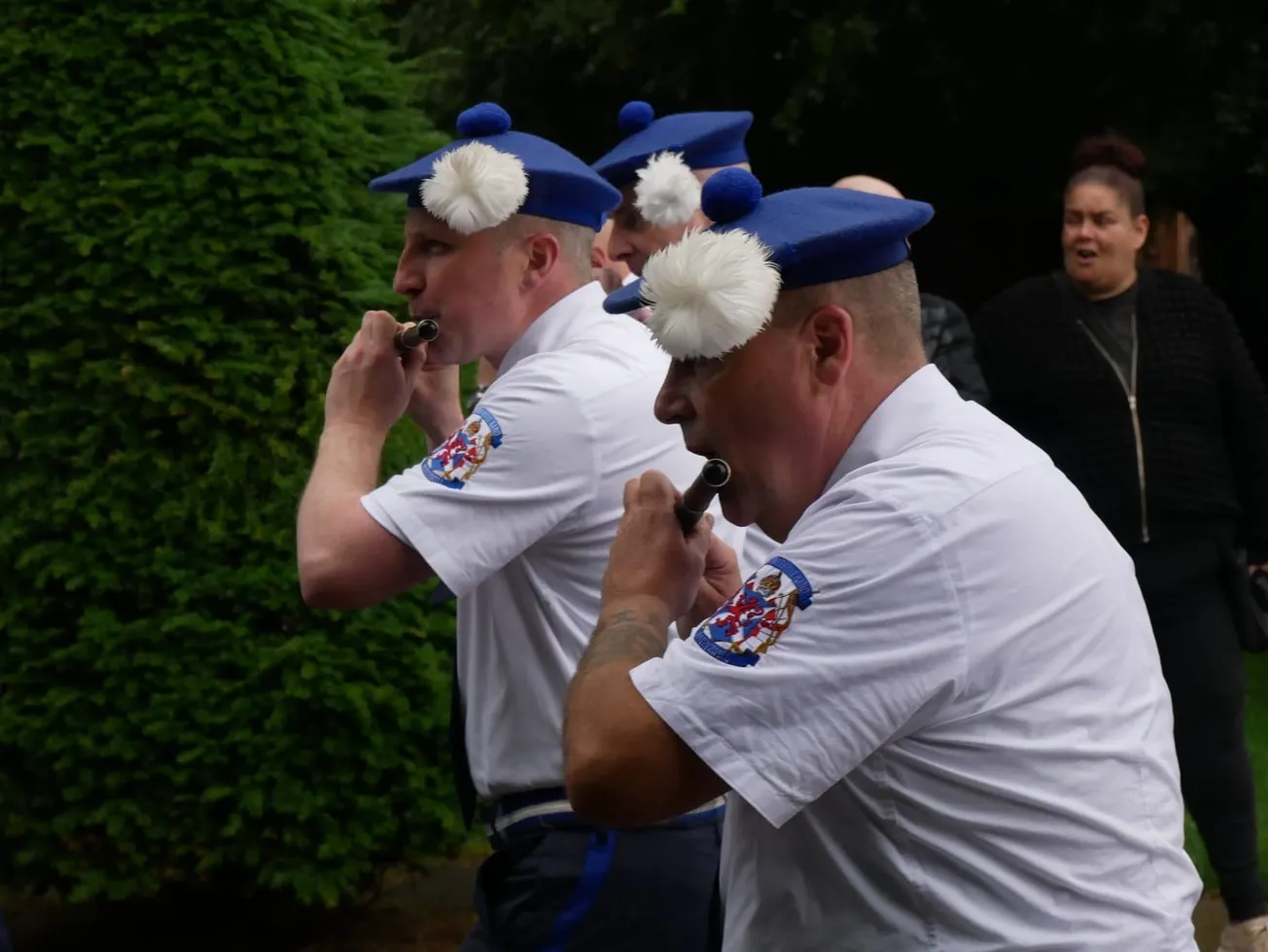
“I love Jesus,” says Brogan Tant. “I’m a big fan of Jesus”. His thick Edinburgh accent elongates the word, adding a soft g and a hard z: ‘Geezosss’.
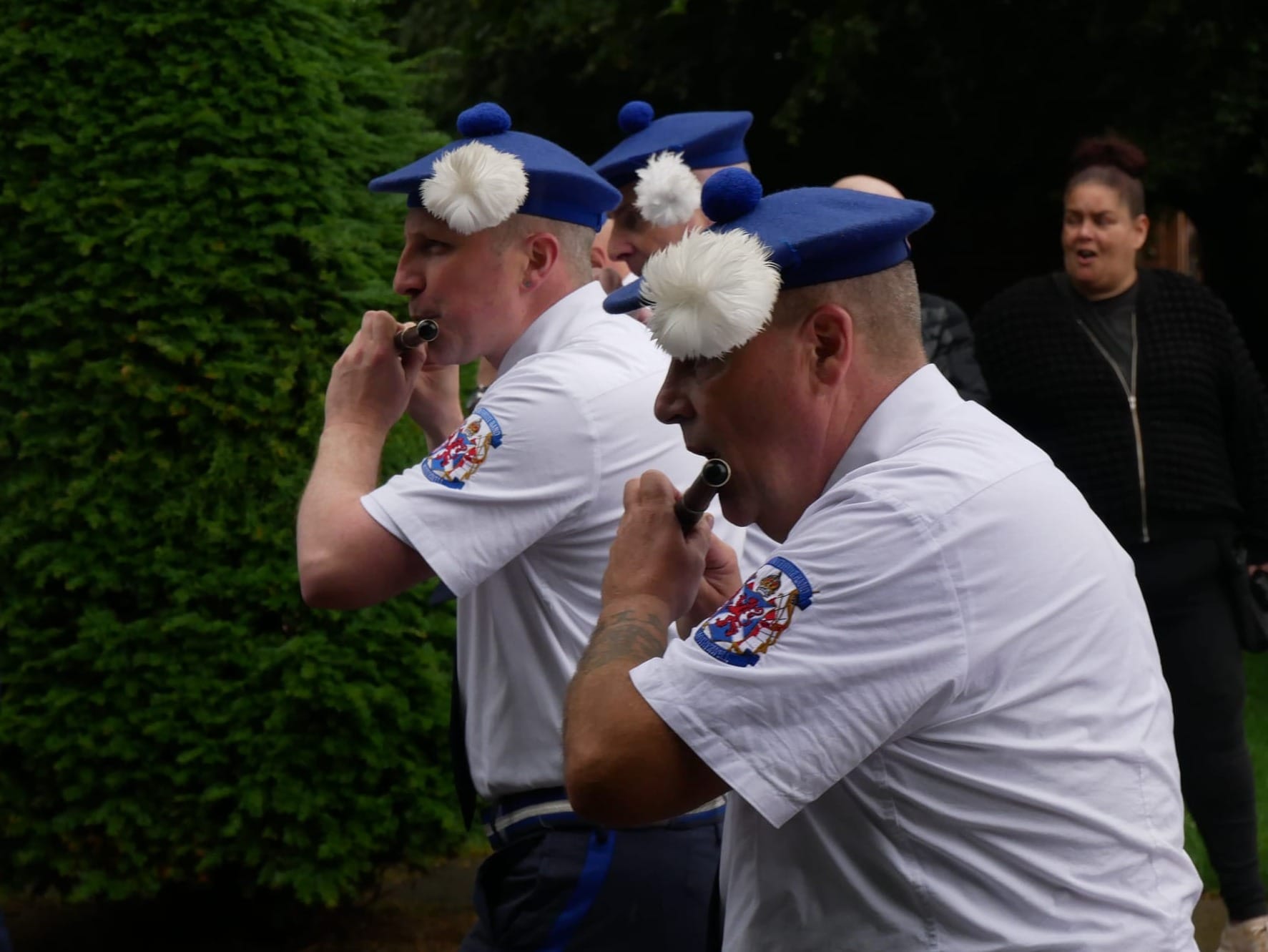
Other things the 25 year-old carpet fitter is a fan of: darts, Hearts, and marching with the Grand Orange Lodge of Scotland.
I first meet Tant in summer 2025, in the Lodge’s Laurieston headquarters. It’s just me and four Orange — what’s the collective noun for a group of Orange members? People? Folk? A murder?
Let’s go with folk. So it’s me and four Orangefolk, two under 25, two over 50. We’re chatting across a long table, a portrait of King Charles watching over us, the conversation furnished by a bevy of refreshments provided by the Lodge (several Tesco meal deal sandwiches and assorted crisps).
I thought it would be tougher to get here, to be honest. But it turns out the Lodge is remarkably open to the media at the moment. That’s due to one of the men sitting at the table, the one with hooded eyes who reminds me of the warden in The Shawshank Redemption. “I want to create a new brand of Orangeism,” says David Walters, persuasively.
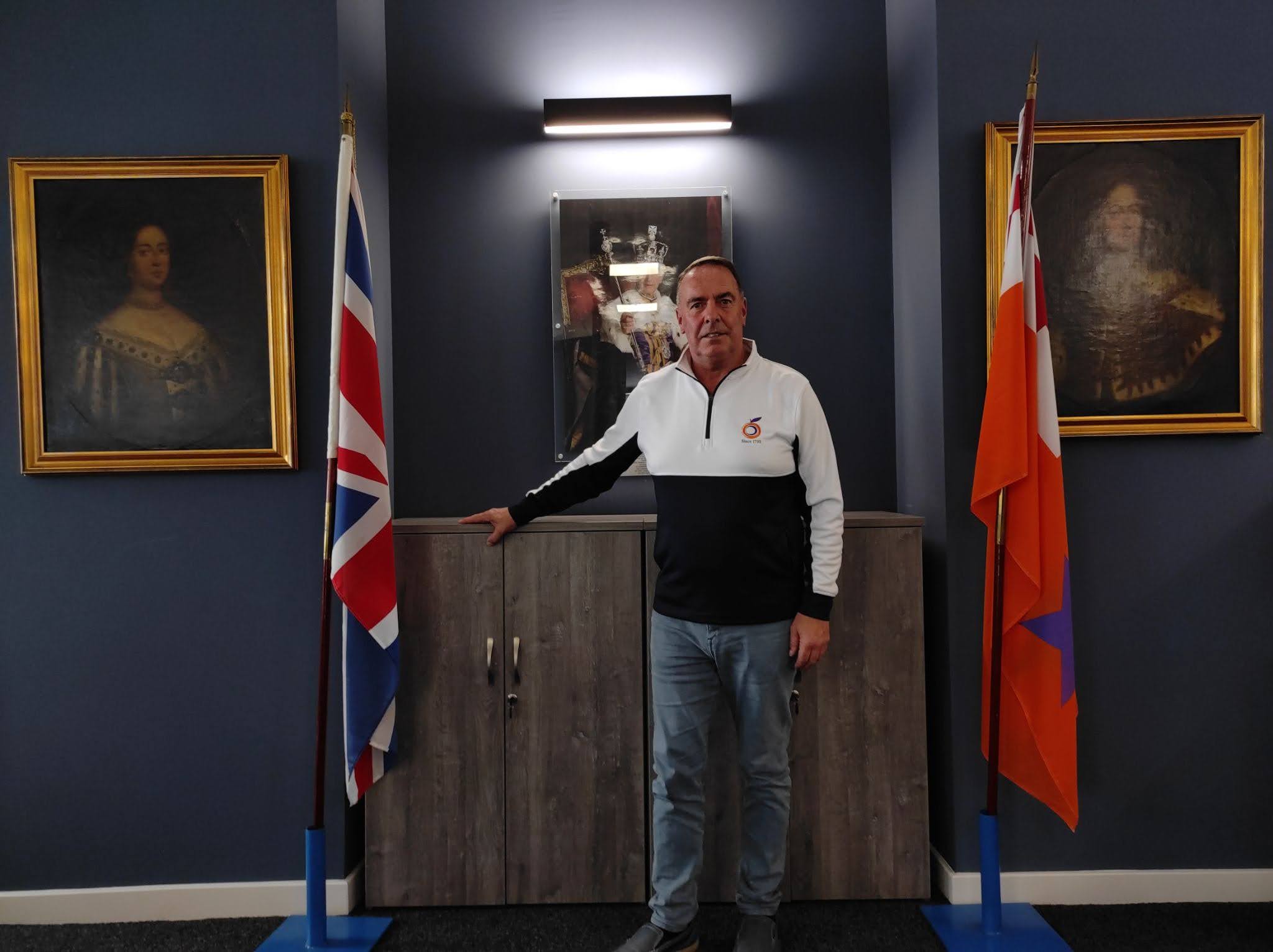
Over two years ago, Walters was named chief executive of the Lodge and he’s been on a modernising drive ever since. Part of this involves courting the press in a manner that would be unfamiliar to Orangefolk of yesteryear. “It's an open door,” Walters says of his media policy. “Come and sit down with us and try [to] understand us a bit better than what you just read about a parade”. It’s why I’ve been allowed to the Lodge today to speak to Tant, Walters, and father and daughter, Mark and Abbey Kirkland.
I requested this Orange audience because I’ve got a question of my own, one it turns out overlaps with Walters’ mission. It’s simple: who goes Orange in 2026? The Order is one of the most hated organisations in Scotland. Their membership has been declining since 1981, although it’s hard to get accurate statistics because the Lodge have been thought to “intentionally inflate” official membership figures.
Walters won’t tell me how many Scottish members there are now, but he says it’s over 20,000. He’s more forthcoming on his ambitions for recruiting the young. In Northern Ireland, he says, youth membership of the Orange Order is up 40%, “I’d love to replicate that here”.
The climate certainly seems ripe for it. Support for socially conservative and rightwing movements in Scotland has increased in the last few years. There’s been an explosion of division, accompanied by flags and symbols that signify tribes. Laments for lost ‘tradition’, in the face of economic uncertainty and social insecurity, have got louder. What ‘tradition’ means is very subjective. In the case of the Orange Order, faith is in there, as well as fealty to the British monarchy. And boy do they love flags and symbols. Maybe division too.
But what is the Orange Order in 2026? Where does it fit in modern Glasgow? And what kind of young person looks at the Order and goes ‘yeah. That’s a bit of me’?
This story is free to read. You just need to sign up to join The Bell's mailing list. And why wouldn't you? You'll get our journalism in your inbox the second we publish, keeping up-to-date on this and all our stories. No card details required.
Already have an account? Sign In