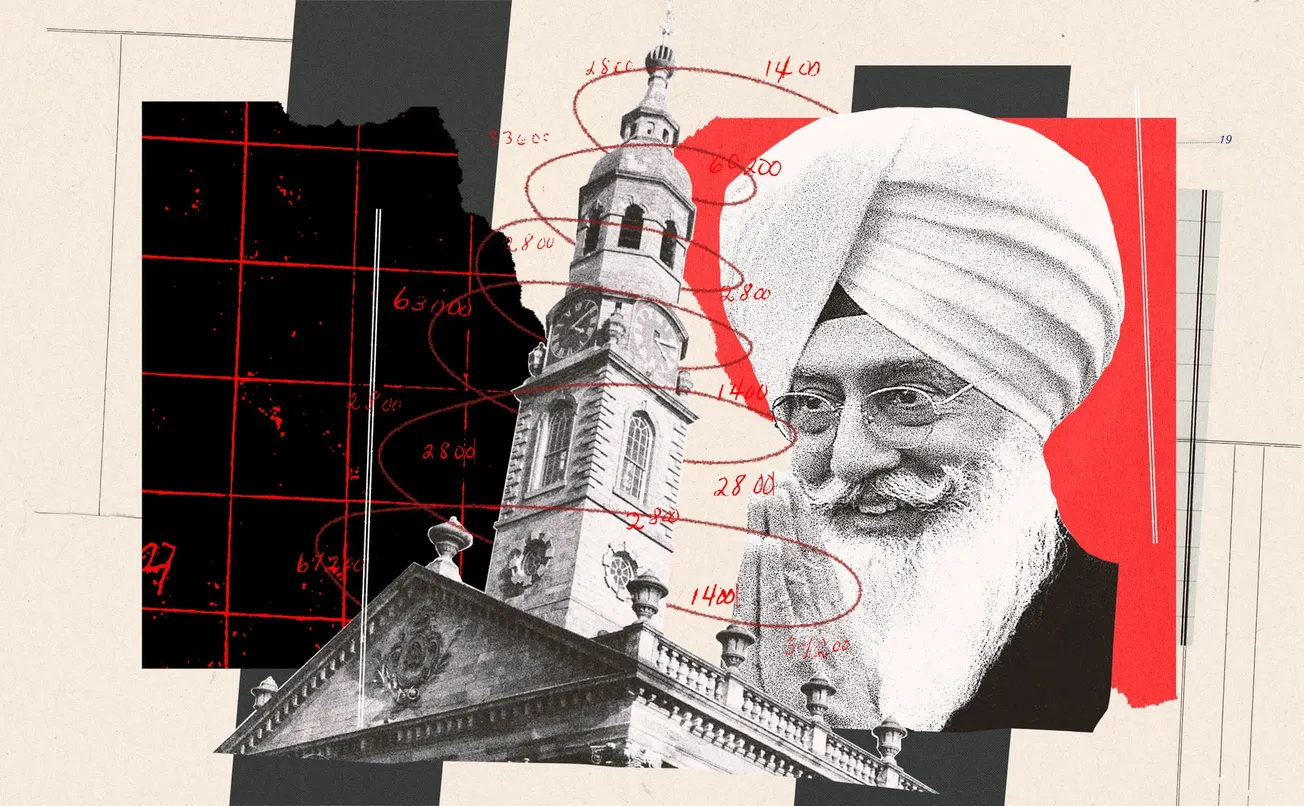
I’m in the belly of one of Glasgow’s oldest and most architecturally significant churches. The organisation that now owns it has been described variously as a spiritual group, religious sect and a cult. For reasons which will become clear, I’ve just been asked to rip up several pages of my notes on their activities in Glasgow. This, my second visit, is far stranger and more unexpected than the first.
How did I get here, and more to the point, how did this 18th century church end up in the hands of a highly secretive and controversial movement founded in the Punjab in 1891?
Jacobites and sleeping masons
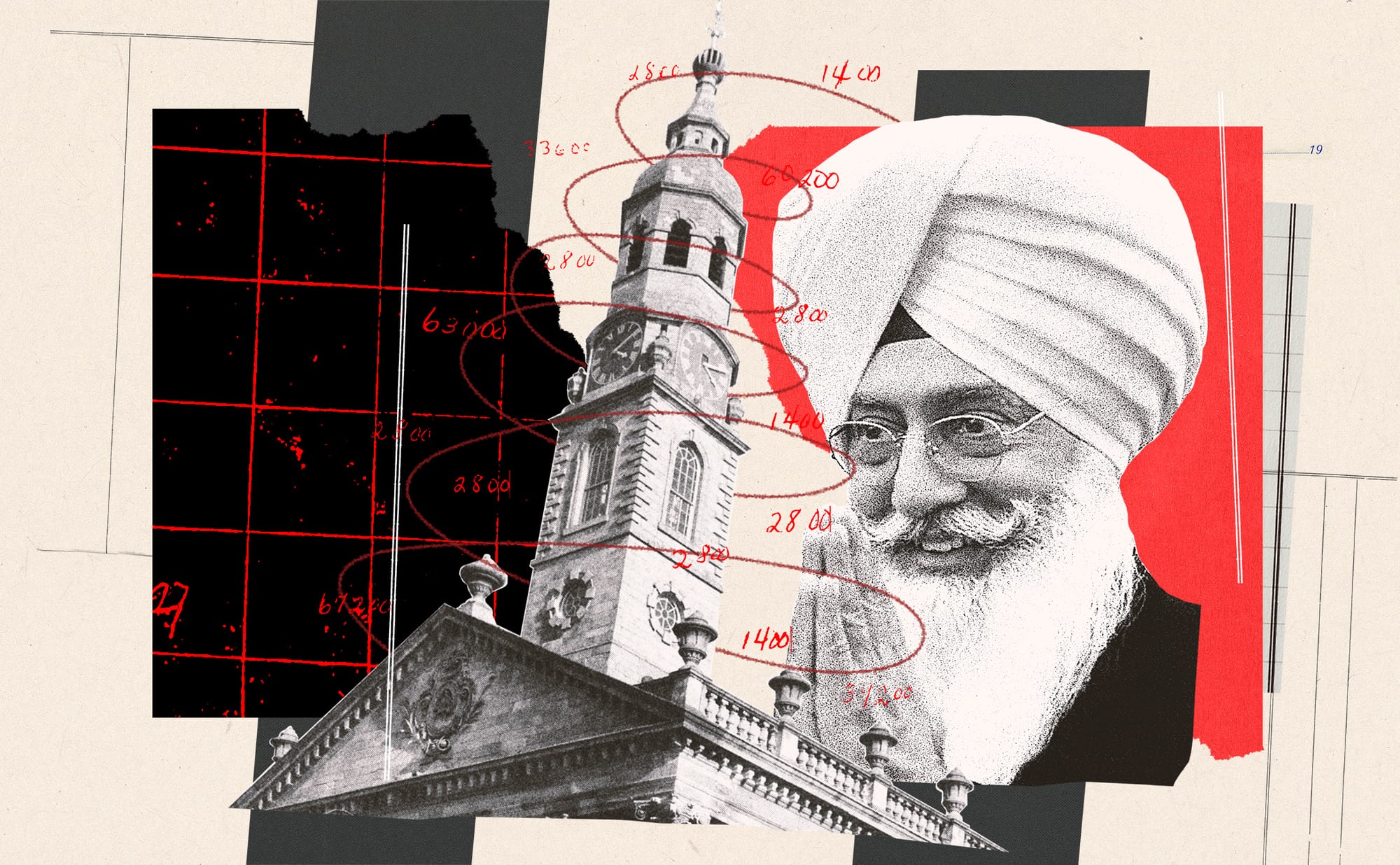
Few churches in Glasgow are as stop-you-in-your-tracks beautiful as St Andrew’s in the Square. In this city of 60 listed churches, four cathedrals and 1,800 buildings of special architectural or historic interest, that’s saying something.
Inspired by London’s St Martin-in-the-Fields, St Andrew’s, a stone’s throw from Glasgow Cross, was the first Presbyterian church built in Glasgow after the Reformation. It was commissioned and paid for by the city's Tobacco Lords to demonstrate their slavery-derived wealth and power. During its construction, the Jacobite army camped around its walls, beating a retreat after their abortive invasion of England. The city’s master mason, Mungo Naismith also reputedly slept below the Corinthian portico after the scaffolding was removed, to allay fears the structure would collapse on those below. The Glasgow coat of arms carved above its doors attests to its storied past, it having been the official place of worship for the city fathers. Inside is a spellbinding Rococo interior, with magnificent plasterwork by Thomas Clayton and immense Corinthian columns. Yet only a select few have stepped foot inside for many years.
Despite being the third oldest church in Glasgow and one of the finest classical churches in the whole of Britain, it is not easy to find out who owns it. Passing it regularly for several years, I’ve yet to see a single person enter or leave the building. The gates seem permanently locked, and the southern corner is currently covered in scaffolding. There are few clues, save for a cryptic plaque outside the church reading ‘Science of the Soul’.
It’s time to consult Glasgow’s architectural oracle.

An interruption from Robbie, if you’ll oblige me for a brief moment. Pieces like this take time to put together. The Bell is a threadbare team on a mission to bring back proper reporting, and put bluntly we need you to back us.
But if you’re not quite ready to become a fully-fledged member of the flock, sign up to our mailing list and get two totally free editions of The Bell every week: a Monday briefing, full of everything you need to know about that’s going on in the city; and an in-depth weekend piece just like this investigation into the esoteric sect that bought one of the UK’s finest classical churches.
Glasgow deserves great journalism. You can help make it happen.
You’re halfway there, the rest of the story is behind this paywall. Join the Bell for full access to local news that matters, just £8.99 a month or annual deals with two months free.
SubscribeAlready have an account? Sign In