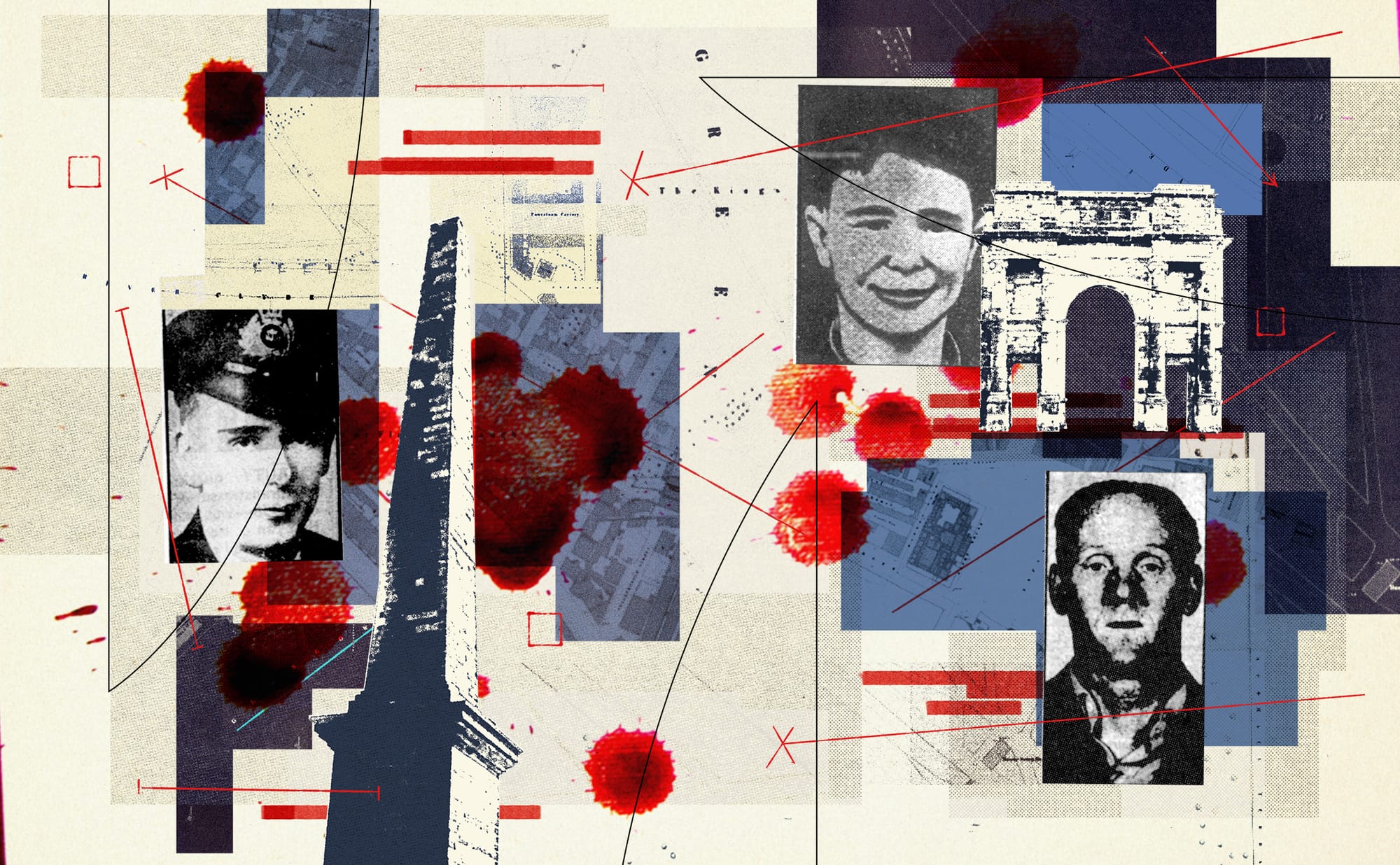
In the latter years of the 1950s, Glasgow cowered under the tenure of the serial killer Peter Manuel. Manuel had embarked on a rampage over the previous two years that is perhaps unparalleled in Scottish criminal history. No one was safe. Manuel’s final outrage had been his undoing, the annihilation of an entire family in their Uddingston home over the festive period of 1957. By mid January 1958 he was in custody and the investigation into his crimes was ongoing. Police believed Manuel had tossed a gun used in one of his killings into the Clyde between the King’s Bridge and St. Andrew’s footbridge. As well as searching the riverbanks, Glasgow CID set up a pontoon and used divers to search the riverbed. Finally, everyone could go about their business with a little less fear.
Or so it seemed.
In the late 1950s and early 1960s, a clutch of murders and one attack following Manuel’s incarceration took place. These attacks shared striking features — they all happened on Glasgow Green and the attacker’s methodology was notably similar. But while the press linked the three murders at the time, by April 1960, they had stopped reporting on them. While some of the evidence nods to one of the most notorious murderers of the 20th century, the truth may be even more unsettling: that, much as the papers suggested at the time, the murders and one attack were all carried out by the same unnamed serial killer, a figure now lost to history. But if the perpetrator was never caught, why did they stop killing?
Down and out in Glasgow
John “Ginger” Orr led a life that could generously be described as colourful. In January 1958, the 40-year-old had just been released from prison after serving a sentence for housebreaking. During that time his wife had taken their daughter and moved to Ayrshire, also filing a petition for divorce. Prior to his stint in Barlinnie, Orr had played junior football for Kirkintilloch Rob Roy and had been a fairground boxer.
Leaving prison and finding himself both single and homeless, Orr did the only logical thing and went drinking. Later police were able to piece together Orr’s movements on the night of 25th January 1958. He had been seen in various pubs around the East End, and the Green. He had been seen in one pub late in the evening arguing with a “sharp-faced” blonde woman.
At some point they had parted, as the last confirmed sighting of Orr had been on the Saltmarket walking south towards Glasgow Green in the company of another man, an unremarkable-looking man of indeterminate age and medium height, wearing a shabby gabardine coat. That was the last anyone saw of Ginger Orr alive.
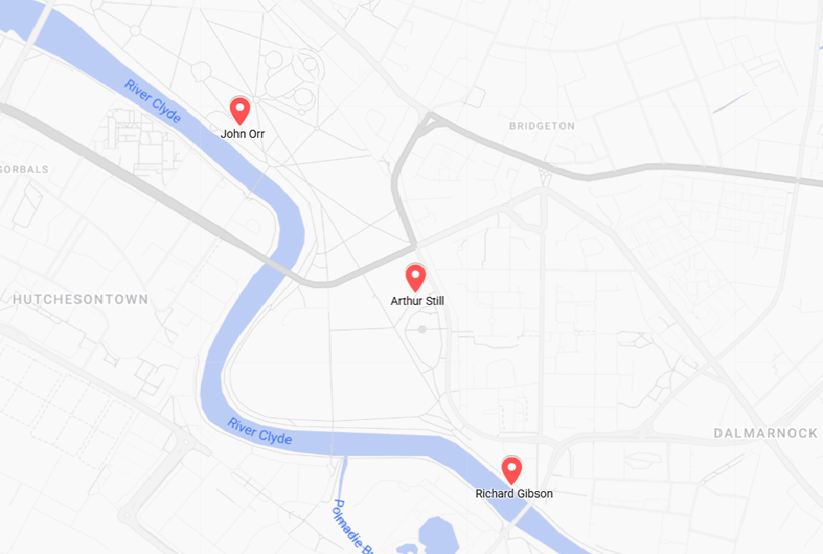
By Sunday mid-morning a couple making their way to church had found Orr’s body. He lay in bushes at the then Southern Carriageway of the Green, between the Glasgow Humane Society cottage and Nelson’s Monument. He had died from a single stab wound to the neck from a sharp double-bladed instrument.
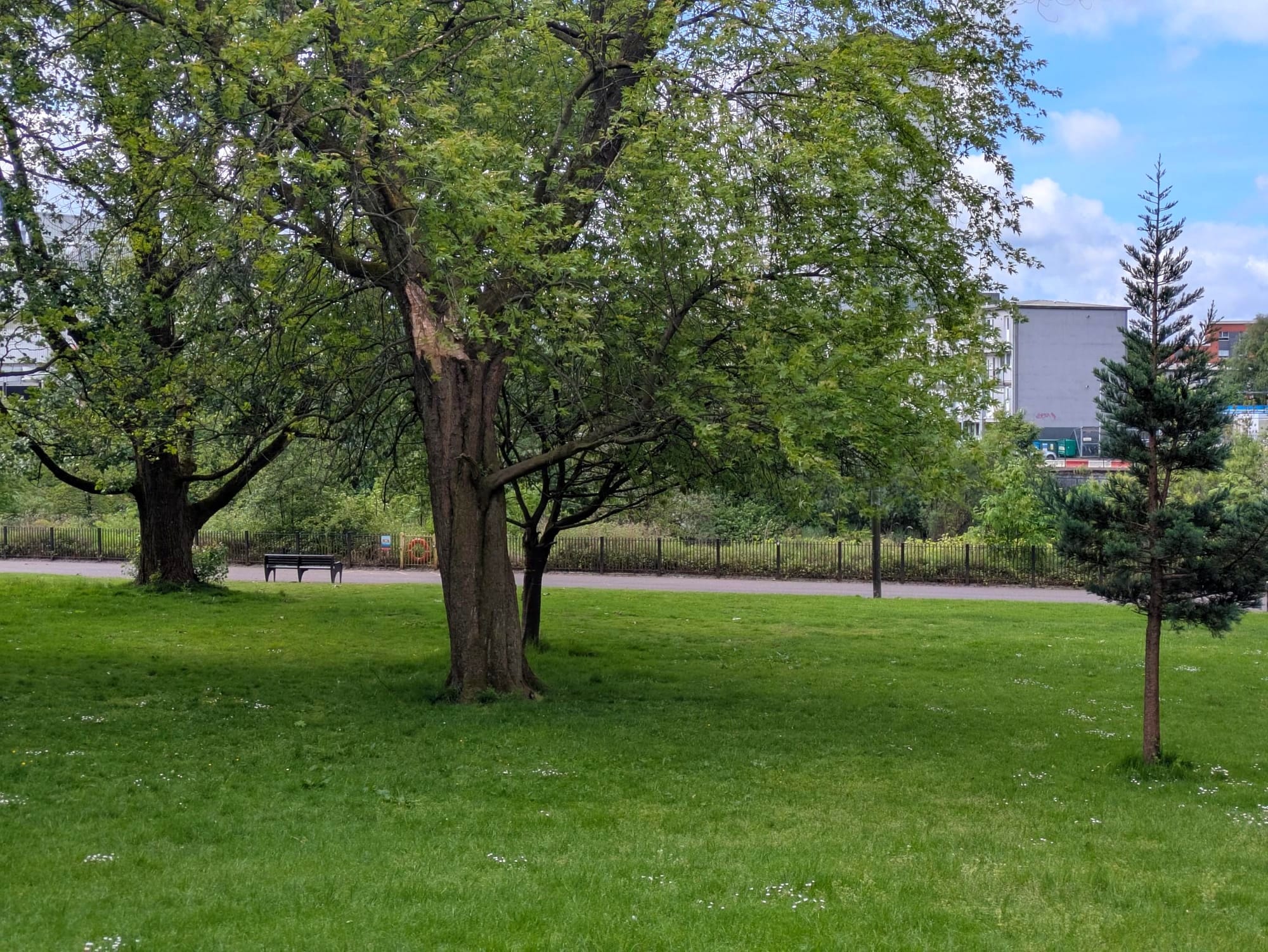
CID descended on the area. They were initially keen to talk to a group of youths who had been heard shouting “John” repeatedly near the Polmadie footbridge, however the group were soon traced and eliminated from the investigation. The trail went cold quickly. No weapon was found and there were no witnesses. The best lead police had was the shabbily attired man seen walking with Orr, but the sighting was frustratingly light on details.
Orr's death became one for the unsolved files and would likely be long forgotten were it not for subsequent events. Much like Orr, in October 1959, Richard Gibson was down on his luck. The hotel porter was out of work and living in a model boarding house on Drygate. He was 47 years old, itinerant and single.
On Saturday October 4th, Gibson sought some recreation to ease his woes, and took in an early show at the Pavilion Theatre. Some witnesses later stated he was with another man, while others recalled him watching the show alone. He definitely had company the next time he was seen, in a chip shop on Bridgeton Main Street. He left in the company of another man, who witnesses in the chippie were able to give a good description of: short and powerfully built, with a “long face” and messy hair, wearing an evening suit. Gibson and his unidentified companion were last seen heading south on Main Street towards the River. Towards the Green.
The following morning three factory girls were on their way to work in Dalmarnock. As they crossed the Rutherglen Bridge they glanced down and saw a grotesque sight: the body of Richard Gibson, savagely stabbed multiple times in the back, neck and torso, lying on what is now the Clyde Walkway path. Unlike Ginger Orr, Gibson had not been dispatched with ruthless efficiency. Marks on the ash path suggested a brutal struggle, as also evinced by defensive wounds to Gibson’s hands and forearms.
Again evidence was thin on the ground, although Gibson’s attacker had apparently left one crucial clue, a cloth cap dating back to wartime, lying beside Gibson’s body (police checked this with Gibson’s friends and acquaintances, who claimed he had never worn a hat). Police canvassed theatregoers, chip shop patrons and Gibson’s fellow residents at the model lodging house, but their enquiries led nowhere. They were adamant that robbery wasn’t the motive, since Gibson had nothing. The only thing in his pockets when searched was the stub of his theatre ticket.

We're now on WhatsApp! Send us a message with a tip off, feedback, or just to say hello - it doesn't have to be about a grizzly murder (although it can be). We'd love to hear from you.
‘Murder squad in maniac hunt’
A third and fourth Glasgow Green attack followed a few months later. A passerby found the boy in the early hours of the morning. Seventeen-year-old James McMahon was lying in the street on the old Rutherglen Road in Oatlands, with deep stab wounds to his back and shoulders. Gravely injured, but still alive, he was transported by ambulance to the Royal Infirmary.
Minutes later, police followed a trail of blood to the Polmadie Bridge, across the river then over Fleshers Haugh – location of the present day all weather football pitches – then up Tullis Lane. There they found a second victim, slumped over a low wooden fence sporting near identical wounds. He in turn was also transported to the Royal.
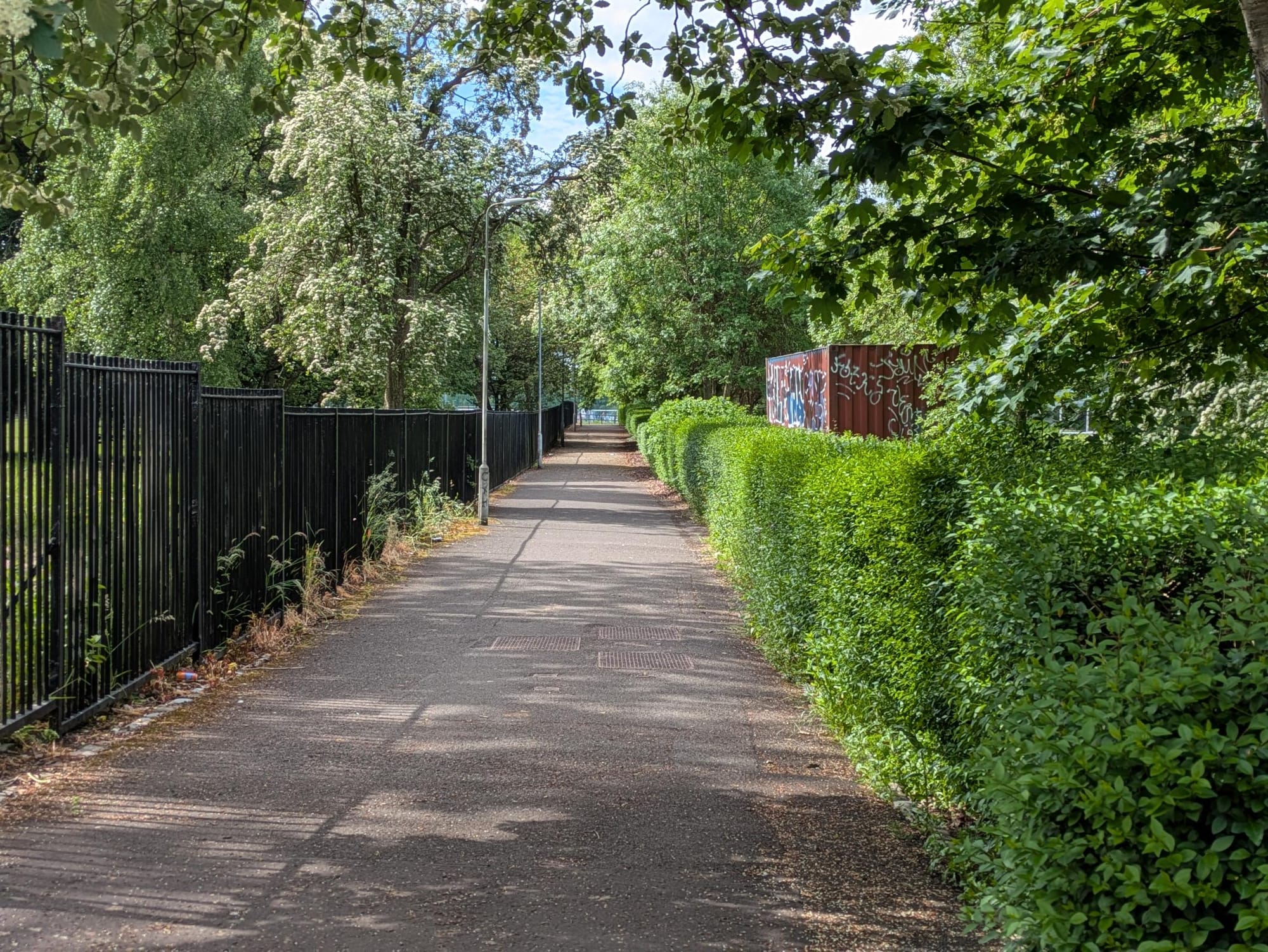
James McMahon survived his injuries. This second victim, 36-year-old Arthur Still, did not.
On the following Monday morning a headline in the Daily Record screamed “Murder squad in maniac hunt” and joined the dots in the same way that the Glasgow Police surely also would have done already, linking the assaults on Arthur Still and James McMahon to a string of similar attacks around Glasgow Green over the previous two years.
The murder of Arthur Still differs from those of Ginger Orr and Richard Gibson, in that it remains an open investigation, in name at least. Police Scotland’s Homicide Governance and Review Team holds a file of unresolved homicides — any homicide investigation that has not resulted in a conviction. Some will never be solved, like cases of murder suicide or cases where the perpetrator was too mentally unwell to stand trial.
The files date back over 65 years. January 1st 1960 is the cut off. Arthur Still’s killing is the oldest murder on the list. Still’s killing falls into a specific category of unresolved homicide, an undetected murder. That is to say no suspect has ever been developed. Police Scotland maintain that an unresolved homicide case is never closed, but quite what they can hope to achieve in Arthur Still’s case is questionable. Even if his assailant was a teenager at the time, they would now be around 80 years old if still alive.
But who was Arthur Still before he became the oldest undetected murder in Scotland? The 36 year old worked as an engineer in the merchant navy. He had only arrived home on leave 24 hours before his murder, and Still had been staying with his mother, a widow, at her home in Govan. On the night of his murder he had gone out drinking in the town, although when interviewed in the local press, neither his mother nor sister could account for how he had ended up on Glasgow Green.
Meanwhile James McMahon continued his convalescence in hospital. Well enough to now speak to police, his statement unfortunately did little to advance the case. CID had little to go on. We now have even less, as the news reports from the time don’t reproduce McMahon’s statement, only the fact that he hadn’t been able to provide any relevant information.
Even though McMahon had survived and Still died, there were similarities in the cases. Ultimately, there were no suspects and no arrests made for either case. And Still and McMahon’s injuries had been inflicted by a sharp double-bladed weapon — like a dagger or stiletto. No weapon had turned up during extensive searches of Glasgow Green and the surrounding area.
To have attacked two men on the same night was an uncommonly brazen act. However if you accept that one person was behind the murders of John Orr, Richard Gibson and Arthur Still, this same person had no problem committing a murder within whistling distance of an enormous police operation — on the night Orr was attacked in 1958, CID had been searching the River Clyde at Glasgow Green. This search was taking place 300 yards from where Orr was found.
So who would do something like that?
A series of coincidences — or clues
In July 1987 the world’s media descended on Saddleworth Moor, east of Manchester. The reason for this interest: the Glasgow-born serial killer Ian Brady, infamous as one of the “Moors Murderers” along with his partner Myra Hindley, had been brought by police to the Moor to assist in a renewed search for the body of his last unrecovered victim, Keith Bennett.
This was likely not altruism on Brady’s part, rather an attempt to reassert himself at the centre of the narrative. Even two years earlier Brady had scorned suggestions he could help in the search. However, days earlier the body of Pauline Reade, another of the pair’s victims had been recovered, based on information provided by Hindley, who also gave a full confession to all five of the Moors Murders. Suddenly Brady was much more keen to assist. He offered to travel to the Moor to assist with the search, and also confessed his own part of the five killings.
He was brought from his residence at Ashworth Secure Hospital to the Moor. The day was a washout. Brady seemed disoriented and bewildered, later blaming shifts in the landscape for his confusion. By 3pm, investigators had seen enough and Brady was returned to hospital. Keith Bennett’s remains have never been recovered.
Brady was undeterred, and next sent a letter to the BBC. In it he disclosed five further murders he claimed to have committed; three in greater Manchester and two in Scotland. In his initial letter Brady claimed to have shot both of his Scottish victims, however when questioned by Detective Superintendent Peter Topping, who had built something of a rapport with Brady, he revised his story.
He talked of following a homeless man, who he had seen striking a woman, down the Saltmarket and into “a park”. If this story seemed to parallel the killing of Ginger Orr, what followed next did not — Brady described stabbing his victim repeatedly and frenziedly, a detail which seems much closer to the killing of Richard Gibson than that of Orr.
Brady clammed up after that; it seemed like it had all been a game to him. He died in 2017, apparently still revelling in his infamy.
Could he have been responsible for any or all of the Glasgow Green murders? He resided in Manchester by the time of the first killing, that of Ginger Orr, but still visited Glasgow regularly. He was a young man at the time; just 20 years old in 1958. And he also spent a significant spell behind bars in 1959, which may rule him out of being the killer of Richard Gibson.
More than anything else, Brady was a liar and a manipulator who delighted in attention. It’s highly possible that Brady read of one or more of the Glasgow Green murders, and spun Peter Topping a tale based on it.
 Iain McGilp
But on the other hand, there’s this. One of the Manchester murders that Brady was linked to following his confession was that of Ben Marsden, a 50-year-old man who was followed and stabbed by an unidentified assailant on his way home from a night in the pub in the Gorton area of Manchester in October 1959, the same month Gibson was killed. Ian Brady lived mere streets away. Marsden died from a stab wound to his upper back inflicted, like those of the Glasgow Green victims, by a double-bladed weapon.
But when we look at the Moors Murders, there are uniting features there, too. Brady seemed drawn to killing children and interwove physical violence with rape and sexual assault. This seems far removed from the Glasgow Green killings: all adults, with no record of the murders having any sexual component to them. Ultimately, the Brady theory may just be a little far-fetched.
Instead, the murders seem likely to have been committed by a sort of anti-Bible John: someone who was able to carry out their murders without attracting any notice at all. After January 1960, the spate of attacks stopped. Why? In reality the reason may be something truly banal. Murderers are subject to the same material conditions as the rest of us. At the time of these killings the areas of Glasgow around the Green were impoverished and decaying — Bridgeton, Gorbals, Dalmarnock, were being cleared of their slum housing, and the population decamped. To the new estates round the edge of Glasgow, to new towns like East Kilbride and Irvine. And some further afield. The back pages of the Evening Times during the same era are littered with adverts. Workers needed — not just professionals, but tradesmen also. In Canada, Australia and elsewhere. Could it be that our unnamed serial killer simply left Glasgow for a better paid job elsewhere?
Or could it be that our unidentified killer was overwhelmed by life events? Historically, writing on serial killers by figures such as former FBI special agent John Douglas, the inspiration for Netflix’s Mindhunter, has suggested that these types of offenders will not stop killing unless they are incarcerated or they die. However more recent studies have emphasised the ability of these killers to go dormant; Gary Leon Ridgway or “The Green River Killer”, one of America’s most prolific serial killers, stopped killing when he met his third wife, a devoutly religious woman, while Denis Rader, another infamous American murderer, known as “The BTK strangler”, ceased his activities after the births of his two children. Is it possible our unknown killer settled into a life of domestic quietude and lived out his days peacefully in the city he had briefly terrorised?
These scarcely remembered killings are now unlikely to ever be solved. The victims are long buried, the witnesses long gone, and whatever drove a killer – or killers – has faded with them. What remains is that a familiar place can hold shadows that never quite lift, a darkness that haunts the corners even of the places we love.

Thanks for reading Iain's piece. He's our resident grizzly historian. We love commissioning brilliant freelancers like Iain who write stories different to what Calum, Robbie, and Beth bring. Today's one, about whether there was an unnamed serial killer prowling the Green in the 1960s particular caught their attention.
Never miss another email from The Bell. Sign up to our mailing list and get two totally free editions every week: a Monday briefing, full of everything you need to know about that’s going on in the city; and an in-depth weekend piece like this one.
If someone forwarded you this newsletter, click here to sign up to get quality local journalism in your inbox.