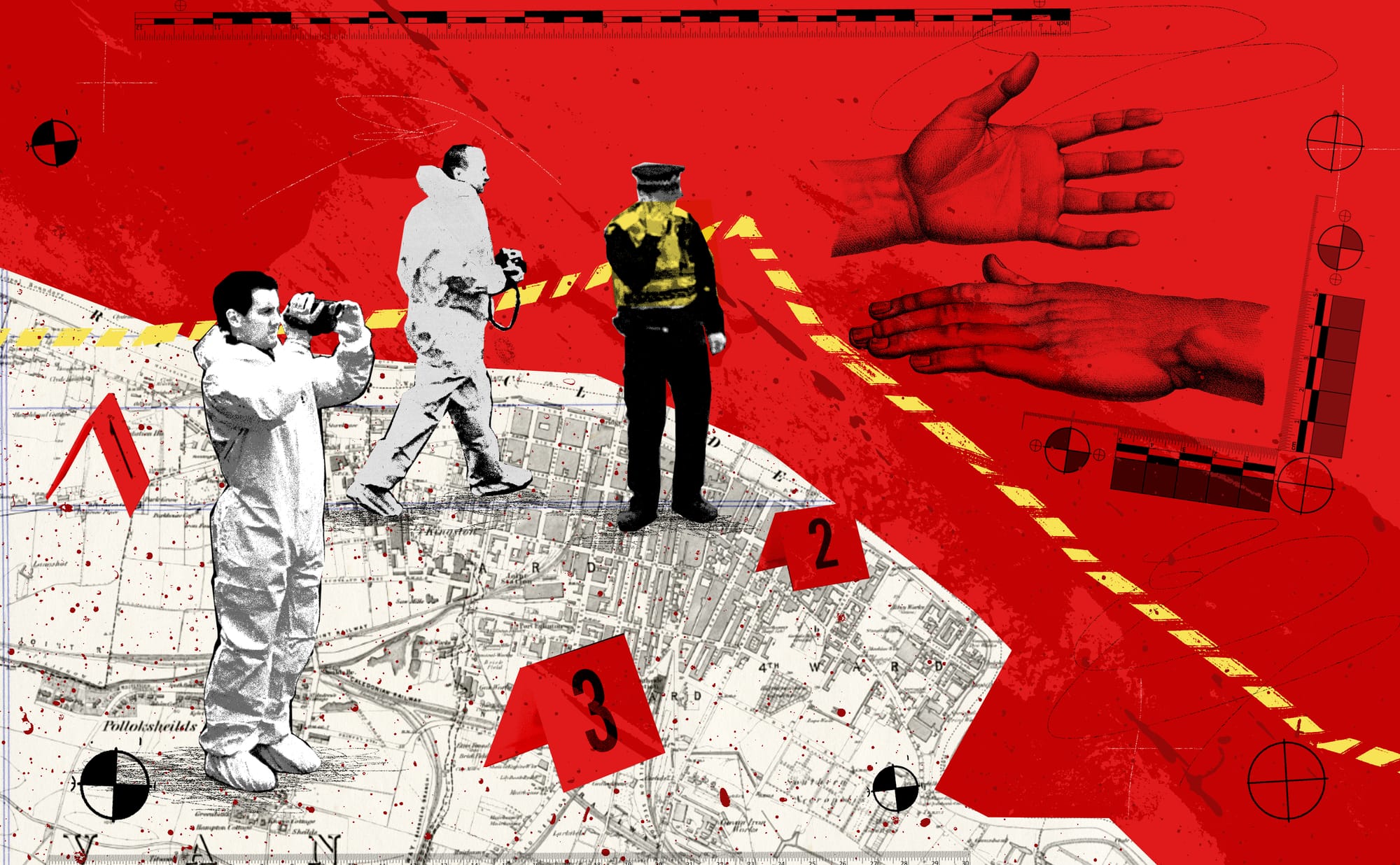
It was December 1964. John Lynch left his wife and kids on the bus as he stepped off into the gathering dusk on Gorbals Street. He was due a pint. The kids had been to see Santa, and were all bouncing off the walls. Cleland Street seemed a good choice, with four pubs in its short stretch of two tenement blocks. He disappeared into the dark under the railway bridge and was gone.
Hours later, three teenagers found him lying in the backcourt of a now long-demolished tenement. He was dying.
The 43-year-old had been stabbed in the chest and later died in hospital. No one has ever been convicted of his murder.
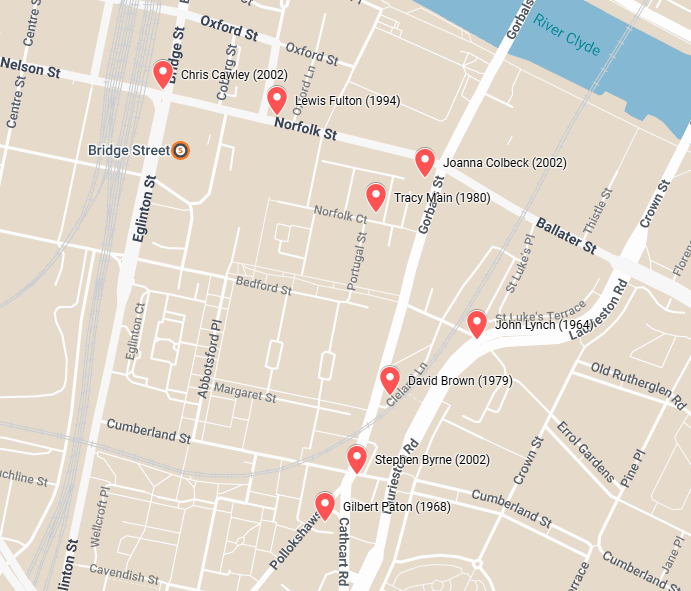
His killing would be the first of eight cases in close geographical proximity spread over 40 years that would go unresolved.
Prior to his death in 1991, the Glaswegian journalist and raconteur Jack House published more than 50 books. The most famous was The Square Mile of Murder in 1961, within which he told the story of four high-profile murders that took place in the relatively genteel environs of Woodlands, Garnethill and Sandyford around the turn of the 20th century. Common among these cases was the privilege of both the victims and perpetrators.
However, at the same time as House’s book was becoming a bestseller, a real square mile of murder was emerging on the other side of the city. It was in the working-class districts of Laurieston and the Gorbals, against the backdrop of tenement housing that was rapidly deteriorating into slums. The killings were all the more notable due to the lack of convictions.
When you place Scotland’s unresolved murders on a map there are a few clusters: Castlemilk is one, the bucolic Perthshire village of Blairgowrie strangely another, but nowhere is there such a tightly packed concentration as the narrow area in the Gorbals and Laurieston surrounding Norfolk Street and Gorbals Street.
James Boyle, 21, was charged with the murder of John Lynch, as well as the attempted murder and robbery of another man that same night. Boyle’s trial was short and farcical. The murder charge relating to the killing of Lynch was dropped on the first day of the trial, after a female witness failed to identify Boyle as one of two men she saw standing over Lynch’s body. A further witness was charged with contempt of court before Boyle was acquitted of all remaining charges. No one has since faced charges relating to the murder.
Hi, thanks for reading. We're Robbie and Calum, and we run The Bell. Our job is to sniff out the unreported and unmissable stories about Glasgow and then bring them to you.
To stay in the know, you need to sign up to be a paying subscriber.
It's an incredible price for £1.71 a week, you'll get all our best journalism, be part of the Bell community and contribute to bringing on-the-ground, local reporting back to Glasgow.
But the question remains — is there a reason that this part of Glasgow has so many unresolved murders in such a localised area, some geographic X factor that makes murders both more frequent and also less likely to be resolved? Or is it simply a case of the type of misfortune which seems to disproportionately affect less well-off areas? To understand this, it is necessary to look at the various cases.
Glasgow deserves great journalism. You can help make it happen.
You’re halfway there, the rest of the story is behind this paywall. Join the Bell for full access to local news that matters, just £8.99 a month or annual deals with two months free.
SubscribeAlready have an account? Sign In