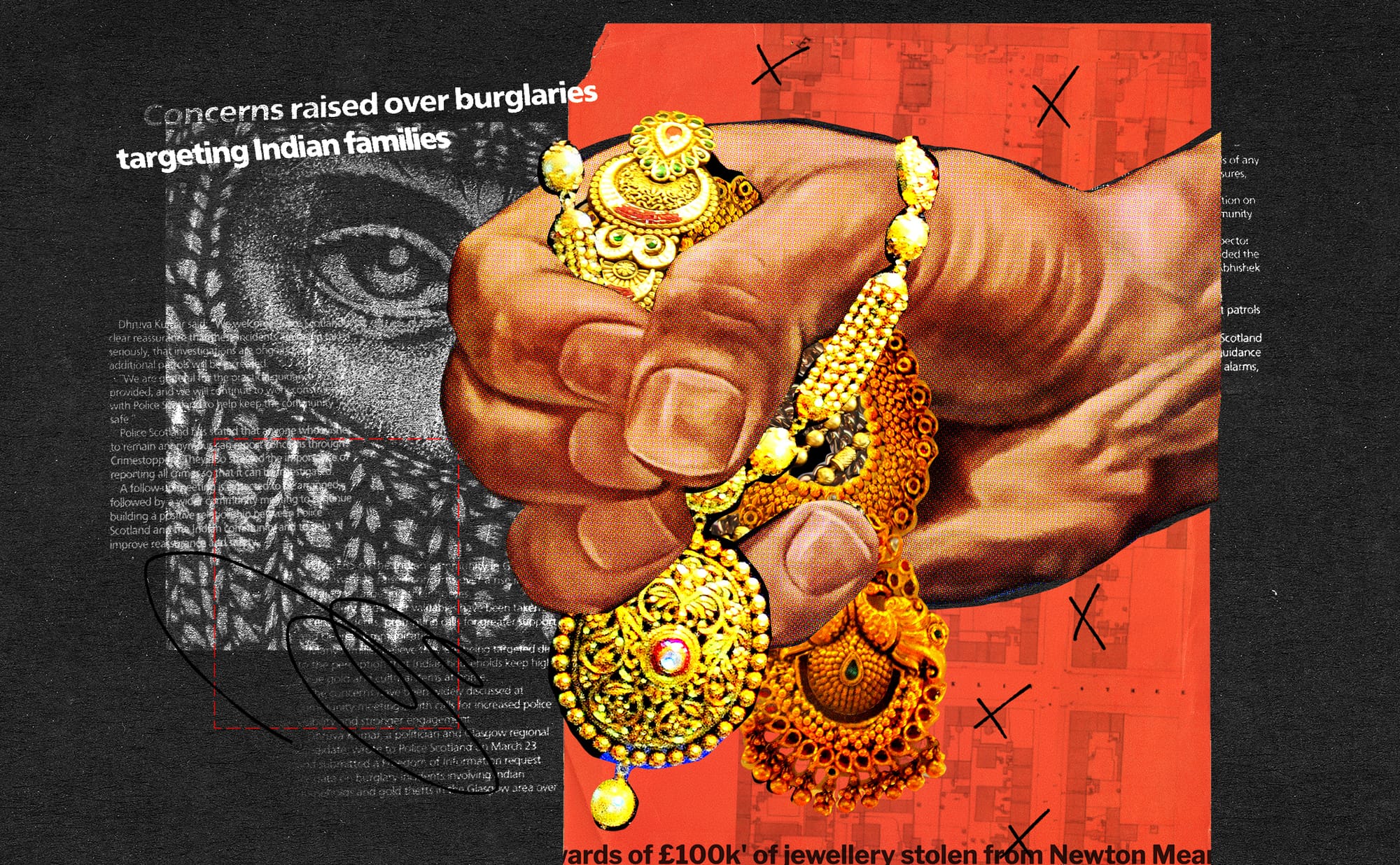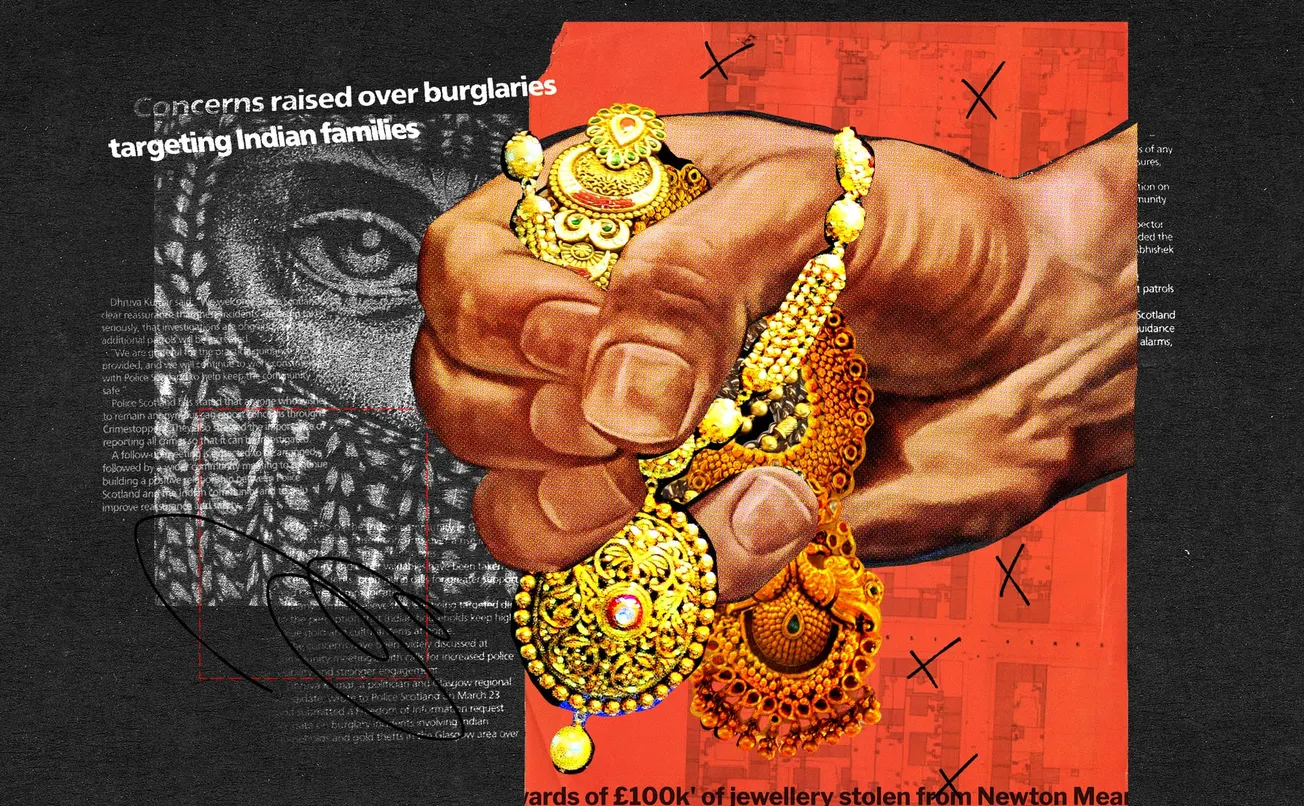
When Diya Adajania* was back in India in 2015, her mum brought out her jewellery box. She explained that these “weren’t just pieces of gold”, but a “piece of our family history and blessings for your future”. ‘India is not safe,’ she told her, handing over a lifetime’s worth of gold heirlooms, before adding, ‘Scotland is safer.’ She then urged her to wear them with pride and pass them down to her own children one day.
A decade later, Adajania has lost them all. She’s recounting the day her house was robbed in March to me despondently. “It’s incredibly bittersweet and ironic to think that these heirlooms survived decades safely [in India], only to be taken from us here in our own home.”
Adajania describes it as “the hardest time of our lives”, estimating the thieves took anywhere between £90,000 to £99,000 in gold, amounting to her and her family’s entire life savings. “There’s an emotional attachment to the jewellery,” she explains, that is greater than any financial value. Things have been made worse by the fact she didn’t insure all her jewellery, and her insurance didn’t cover the exact value of all her items (underinsurance is common, especially as the price of bullion soars to record heights).
Since the robbery, she’s been depressed. Her doctor prescribed sleeping pills and medication for depression and anxiety, which she’s been taking too much of to cope with her daily panic attacks. She’s been admitted to hospital. “My whole family is traumatised. I can’t speak to my parents right now,” she says anxiously. “I used to go outside and speak to people every day and now I can’t go outside and see anyone because of the stress.”
Adajania believes the criminals knew exactly what they were looking for, and that she was targeted because she’s Indian. She’s not the only one who thinks so. In the suburban town where she lives, she’s heard of five or six robberies of Indian households in the past few months.
Like Adajania, Shiv Thakkar* had his house robbed by what he believes was a sophisticated criminal group. When the family left for an impromptu night away, they didn’t tell anyone. “They were keeping an eye on us,” he surmises. “It seems to me they are experts.”
Thakkar had several cameras installed around his property, which detected the family leaving the house and coming back, but nothing in between. “I suspect they are using a wifi jammer,” he says. “I’ve only heard of robberies in Indian houses, and only stealing gold,” he adds. It’s easy work for criminals to target South Asian families, he explains; in suburban towns like his, “people can figure out where Indians are living”.
The thieves took around £8,000 worth of gold. “I did not have much because we don’t bring much gold to the UK,” he explains. “We have immediate family in India so we keep some over there.” For Thakkar, it’s the emotional cost, not the monetary one, that weighs most heavily. “They stole our engagement and wedding rings. [But] the more disturbing thing is the mental trauma.”
Weeks on, his wife won’t stay home alone and has to wake him up if she needs something from downstairs during the night. “I have a two-year-old son, safety is a major concern.”
Thakkar claims Hindus keep more gold than other South Asians, because they buy it during festivals like Diwali and “consider it auspicious”. “I’m not sure Pakistani people keep that much gold compared to Indian people,” he says.
So could organised criminal gangs really be preying on Indian households, like Thakkar and Adajania believe?

Hi, thanks for reading this story, which is free to read. I'm Robbie. I co-founded the The Bell in the halcyon days of 2024 to champion quality long-form journalism in this great city of ours. All you have to do to carry on reading about Glasgow's gold robbery crisis is sign up to our free newsletter. And why wouldn't you? You'll get our jam-packed Monday briefings and another story each week straight to your inboxes.
No ads, no gimmicks: just click the button below and get our unique brand of local journalism straight to your inbox.
This story is free to read. You just need to sign up to join The Bell's mailing list. And why wouldn't you? You'll get our journalism in your inbox the second we publish, keeping up-to-date on this and all our stories. No card details required.
Already have an account? Sign In