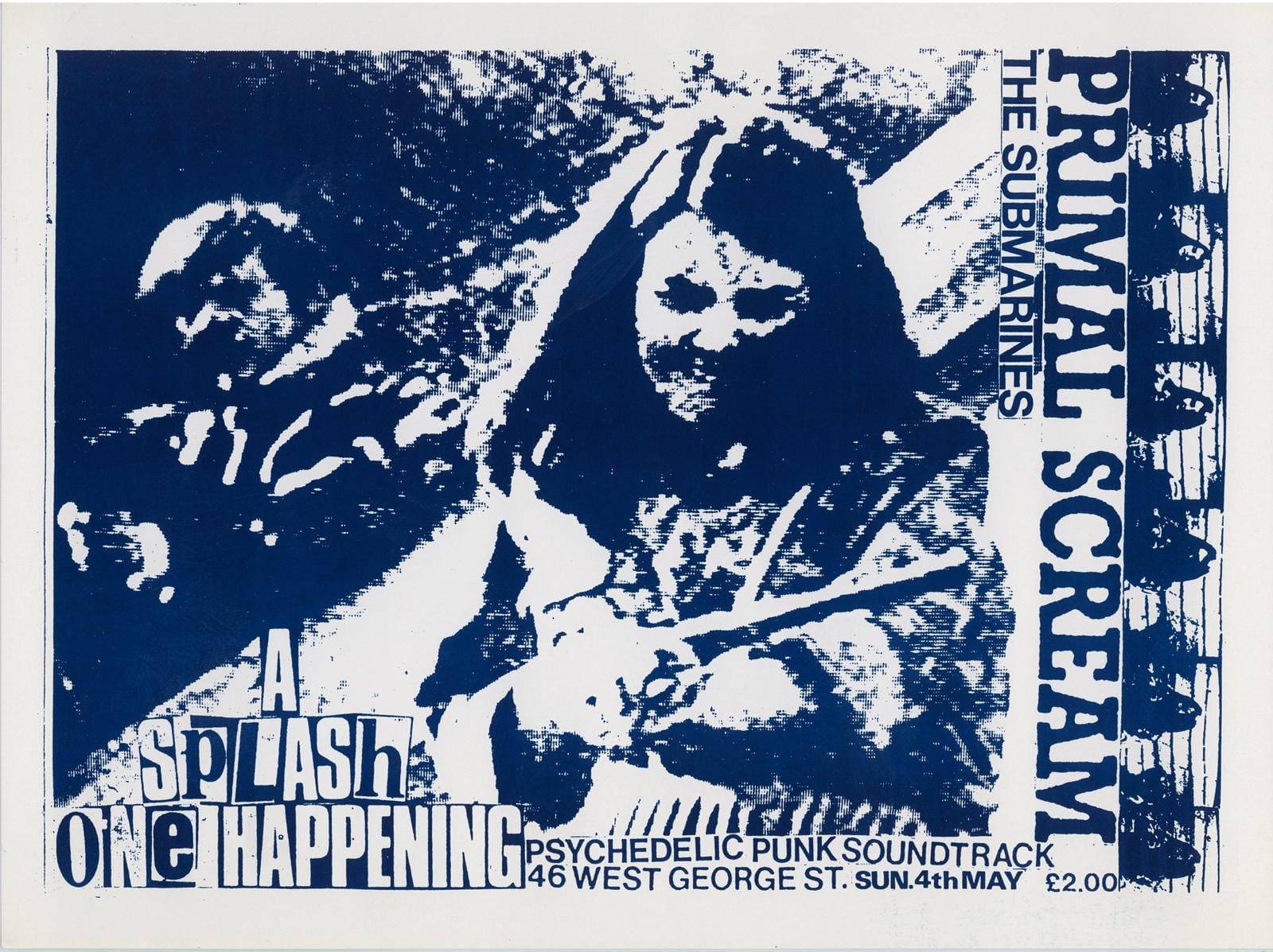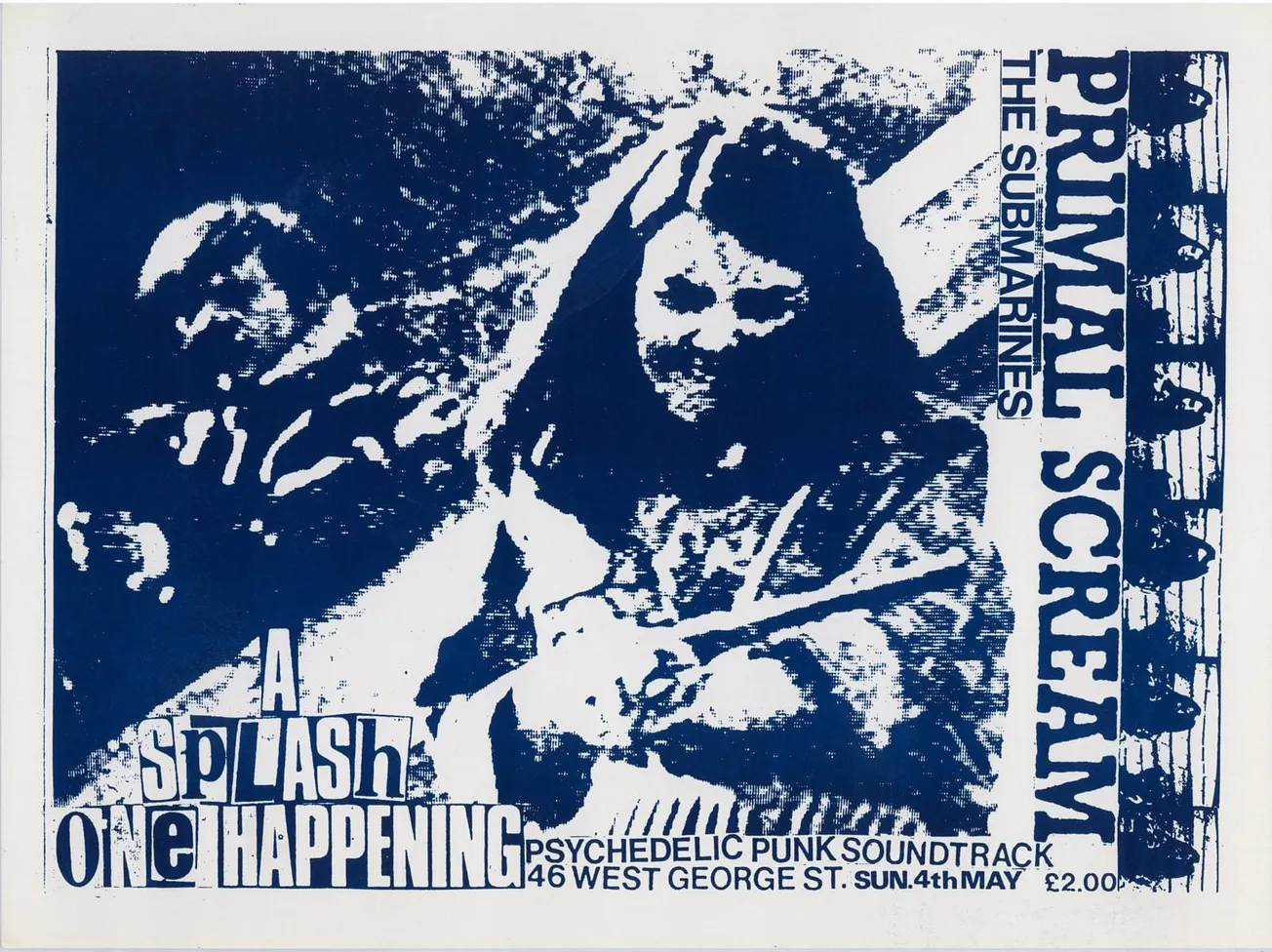
Nobody dances with more careful indifference than they do here — the whole room is moving in harmony in that loose-limbed way people dance now. The boys are clad in blue-and-white striped t-shirts, black Levi’s and biker boots, the girls in vintage summer dresses bought from Paddy’s Market, and when people crash into each other they smile rather than square up. Unlike every other club in Glasgow, the crowd isn’t here just for drinking, although everyone does seem drunk. Nor are they here to pick someone up or to start a fight. Principally, people are here for the music, a mashed-up soundtrack of New York punk, sixties psychedelia and new wave blasted out from a tape deck that keeps us all on the tiny dancefloor now sticky with spilled alcohol. It’s easy to blot out the thought of the late-night bus home through the east end or work in the morning. Aged 19, there’s nowhere I’d rather be than Splash One Happening.
In 1986, the NME put out a compilation cassette that changed everything. Titled C86, it was supposed to showcase a new music scene at the time: as one essay describes it, these were guitar bands that were reacting against the commercial rock music that dominated the airwaves, instead looking to older pop acts for inspiration, like the Byrds, the Ramones and the Beach Boys. But C86 did more than showcase a scene — it birthed a genre, with many describing the release as “the beginning of indie music.”
It seems striking to me that a third of the cassette was made up of bands who played at Splash One, a small underground club I used to go to in Glasgow. Splash One only existed for 16 nights, spread out over a single year — but it’s been a major influence on Scottish music. So how did a club that existed for the blink of an eye come to shape culture in so many decades since?
Bands people wanted to see
Back in the early 80s, Scotland’s live music scene was nowhere near what it is today. The excitement of punk bands travelling up from England or Glasgow’s own Postcard Records scene were distant memories, and there were only a few live music venues for smaller bands. In May 1985, Primal Scream frontman Bobby Gillespie and six of his friends – Paul Harte, Grant MacDougall, Billy Thompson, Derrick Louden, Karen Parker and Louise Maxwell – united to create Splash One Happening. As Grant MacDougall put it in an interview, “There was no other clubs putting on the bands we wanted to see.” The point of Splash One Happening was to remedy that.
Welcome to The Bell. We’re Glasgow's quality local newspaper, delivered entirely by email. Sign up to our mailing list and get two totally free editions of The Bell every week: a Monday briefing, full of everything you need to know about that’s going on in the city; and an in-depth weekend piece like this one.
No ads, no gimmicks: just click the button below and get our unique brand of local journalism straight to your inbox.
They found a venue in Daddy Warbucks, in the centre of Glasgow, and renamed it after its address, 46 West George Street (these days, where the Irish-themed bar Waxy O’Connors stands). A key point of difference between Splash One and other clubs was that alongside the live performances, there were no DJs — instead, they played specially-curated mixtapes. Derrick Louden described the vibe as a “completely DIY thing” in an interview with The List — a night in which the group booked the bands, made the posters, chose the soundtracks and made the tapes themselves.
Even though at this time, Primal Scream was still a minor indie band who hadn’t broken through to the mainstream, Grant MacDougall tells me that Gillespie undoubtedly had a major influence on who played there. This was both through his connections in the music industry and through his band’s record label, Creation.
The club’s organisers didn’t have the contacts, money or access to a large enough venue to put on groups they loved, like the Cocteau Twins, Nick Cave or The Cramps, but Gillespie’s contact book gave them links to some of the country’s best up and coming bands.
Which meant the club night became the best night in Scotland to check out new talent. The Soup Dragons made their first ever appearance at Splash, and would go on to have massive hits in the UK and the States in the nineties. Similarly, the Shop Assistants quickly got a major label deal after playing the club, while other Splash alumni The Pastels and BMX Bandits achieved a different type of success: they’re still making music and recording albums 40 years later. Wire, The Submarines, The Loft and The Jasmine Minks also numbered amongst the buzzy bands who played at Splash.
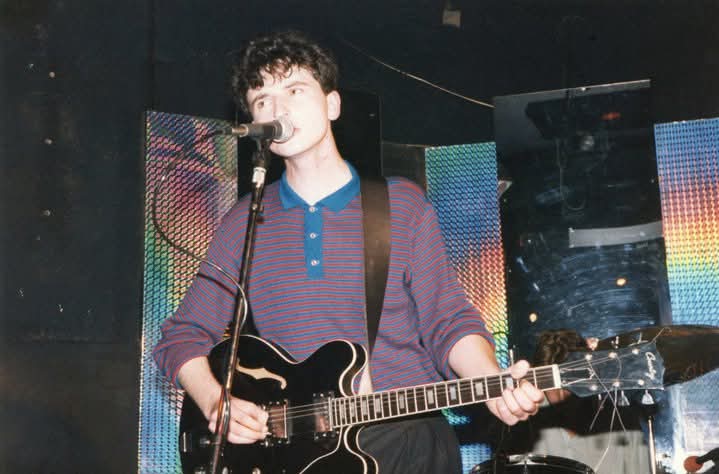
And the talent was everywhere: not just onstage, but coming through the doors, too. Although the club would only bring a couple of hundred punters in on a good night, amongst them were plenty of stars in the making. Visual artist Jim Lambie is best known for using coloured vinyl tape to transform the floors of different spaces into psychedelic experiences and he was nominated for the Turner Prize in 2005. He was a regular (and it’s thanks to him that footage of Splash One remains — he was responsible for filming the club). Musicians Norman Blake and Raymond McGinley would turn up at most events too. A few years later they would form one of Scotland’s most influential bands, Teenage Fanclub.
They weren’t the only attendees who would go on to create their own legendary musical act. Eighteen-year-old Frances McKee could be seen regularly dancing to Love, The Jesus and Mary Chain or The Chocolate Watchband on the club’s small dancefloor. Along with Eugene Kelly, she would go on to form The Vaselines, a band who weren’t initially successful but had a profound influence on one of the biggest rock bands of all time. Three of their songs were recorded by Nirvana and released on Incesticide and MTV Unplugged, with Kurt Cobain calling them his favourite songwriters.
For McKee, the inspiration came more from the tapes which were compiled to play on the dancefloor than the performers whose names were on the brightly coloured posters featuring counter-culture figures such as Edie Sedgwick and Richard Hell. She tells me: “The bands on stage were fine but everyone was there to dance, I think.” While their contemporaries on the Splash One scene generally consisted of four white boys playing guitar, bass and drums, The Vaselines bucked the trend by duetting backed by a drum machine. The duo were inspired by the – as the posters put it – ‘Punk Rock Psychedelic Soundtrack’ that you simply couldn’t hear anywhere else. “Splash One was the first place I heard Nancy Sinatra and Lee Hazlewood’s ‘Some Velvet Morning’. I remember hearing it and thinking ‘what is that?’” she remembers.
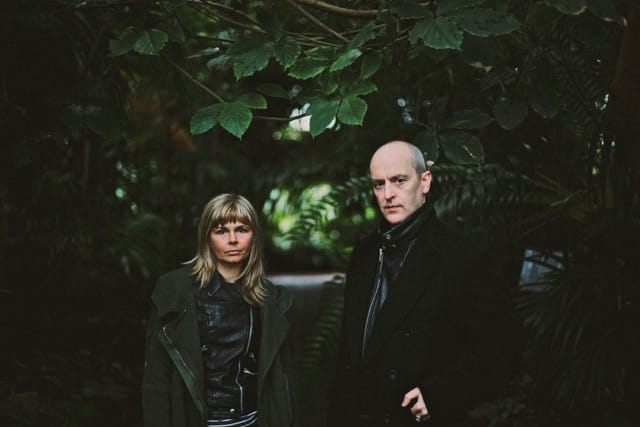
This duet has been described as one of the most darkly sexual songs ever written. And McKee still sounds surprised when she says: “People danced to stuff like that. There was lots of music I hadn’t heard before but that for me that was ‘Wow, I want to write music like that.’”
I ask her about one of the many myths surrounding the club — one that even got as far as Gillespie’s autobiography Tenement Kid. Namely, that she and Kelly first met there. “That’s bollocks!” she says. She didn’t meet Kelly there but saw him on the bus on the way to school — he was at a boys’ school, she was at a girls’ school — then she met him at a party and eventually he asked her out.

We're now on WhatsApp! Send us a message with a tip off, feedback, or just to say hello. We'd love to hear from you.
The legend grows
Why do so many apocryphal stories attach themselves to events there, I wonder out loud. Is it because people didn’t have phones to record events on or the fact the building itself burned down mysteriously in the 1990s, so there’s no physical location for people to affix their memories to? Nope: “It’s probably because everyone was on speed, or acid and no one can really remember,” she says.
Perhaps she’s right. After all, that she and Kelly first met there isn’t the only tall tale attached to the place. Another mythical story that has turned up in a book charting the history of Creation Records concerns Gillespie storming across the tiny dancefloor to the DJ booth to wrench a tape playing Scott McKenzie’s San Francisco (Be sure to wear some flowers in your hair) — a tune far too clichéd to be played to an audience used to more cutting-edge music.
While this almost certainly never happened, musical censorship of another type occurred when industrial funk band 23 Skidoo played. The Londoners were perhaps the first group in Glasgow to use two turntables on stage along with their musical instruments to play experimental dance music – something which stood out at a staunchly indie night – and at the end of their set, they continued to play records, rather than tapes. “I could see the audience looking slightly bewildered,” MacDougall tells me. “I had to go up on stage to say ‘We’ve got this advertised as a punk rock psychedelic soundtrack.’” What could have been a difficult stand-off was averted: “They were absolutely fine about it.
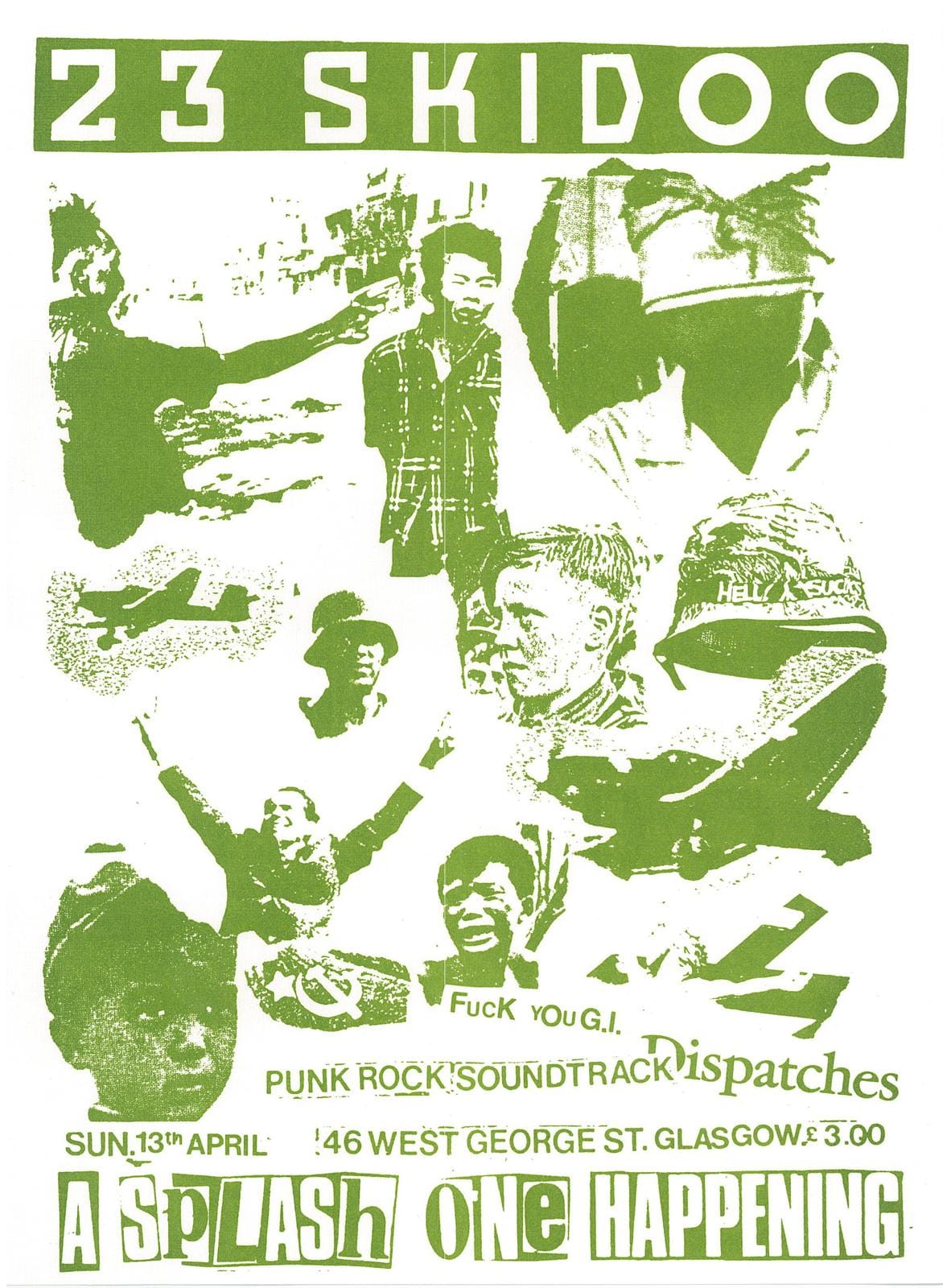
“It was painful for me because I was into that funk scene. It made for a very uncomfortable few minutes because of the nature of what we were doing and what 23 Skidoo wanted to do.”
A timely death
This was one of the last nights of Splash One and perhaps illustrates how differing musical directions was one reason the club was reaching its natural end. MacDougall explains that some bands had already played twice over the year: “We were in a repetitive mode, The Pastels and Primal Scream had already played, and it was proving more and more difficult to get agreement over other types of bands.” It just organically came to its conclusion, he says. “I think after a bit we couldn’t be arsed anymore.” It didn’t help that Bobby Gillespie and his girlfriend moved to Brighton, and it felt like a big effort to juggle these events with a day job.
Still, even four decades after the doors closed for the final time, Splash One’s legacy has persisted. Even today, Belle and Sebastian have asked three groups who played at Splash One to come out of indie obscurity to guest on their current world tour. Similarly, author and filmmaker Grant McPhee may have never made it along – his being nine years old posed a bit of an obstacle to attending the hippest club in town – but he’s been fascinated by Splash One and its “exceptional importance to Scotland’s culture” for years.
Screenings of his documentary Teenage Superstars, which examines the Scottish independent music scene of the 1980s, attract avid audiences in Berlin, Los Angeles and New York City and is a regular feature on screens in Tokyo. “Bands who have been influenced by this particular scene such as Belle and Sebastian have done far more for Scotland’s culture than Visit Scotland have ever done,” he says. “People around the world know this music and you can pinpoint so much of it to Splash One.”
But why does this little club have so much influence? McPhee compares it to the Sex Pistols playing Manchester in 1976. Although the punk band played in Liverpool and Dundee without much effect, the Manchester audience contained future members of Joy Division, The Smiths and The Buzzcocks, who all grew inspired from seeing The Pistols.
He adds: “There were maybe 100 or so people at Splash but they were a very fervent loyal bunch of outsiders who this music strongly appealed to. It was not just random people who walked in off the street but 100 people who were incredibly passionate and to me that passion and what they do is stronger than 1,000 people coming through the door of another event.”
Ultimately, he thinks trying to pin down why an often chaotic, sporadic event run by music enthusiasts rather than professional promoters worked so well is an impossible challenge. Something magical happened that could not be recreated, although other clubs tried, he says.
“It just takes some unknown magical element, it just ignites and you could spend decades trying to work out what that was.” For better or for worse, the world’s still trying.
We hope you enjoyed Gordon's story of the club that helped birth indie music. We do historic culture stories like this quite a lot. But we also do quite a lot of investigations, analysis and features. All on the ground, reported locally. Join for free to never miss another email from The Bell.
If someone forwarded you this newsletter, click here to sign up to get quality local journalism in your inbox.