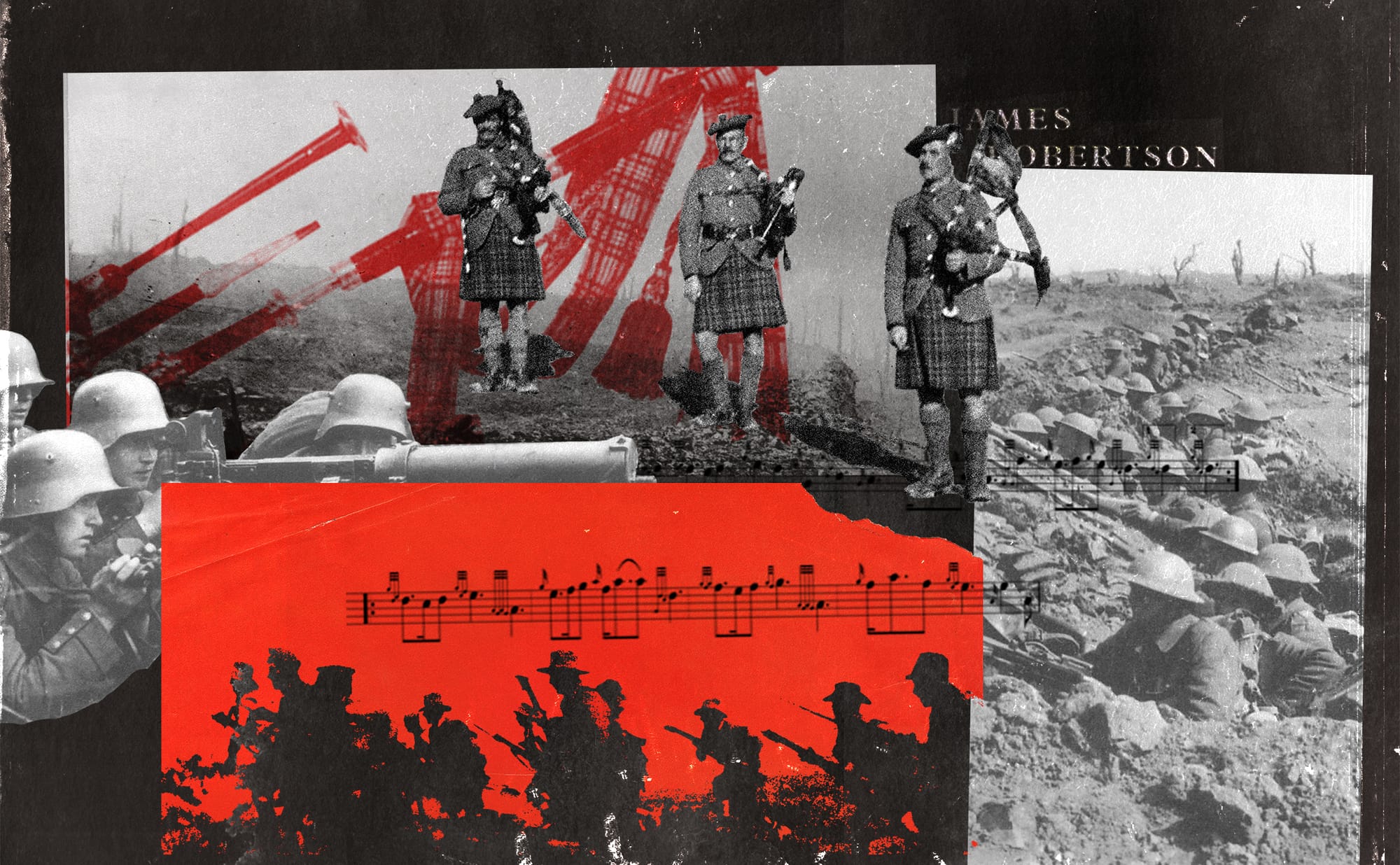
In 1994, Finlay MacDonald was hired as understudy for the role of ‘Ian the Piper’, a doomed teen soldier in Bill Bryden’s First World War play, The Big Picnic. Staged in Govan at the Harland & Wolff shipyard, the production turned an empty engine shed into the nightmare of the Western Front. But in Bryden’s story, ghosts of the postcode also appeared: the young men from Govan and Ibrox who were recruited to the area’s “Pals Battalion” with a lie.
Something along the lines of: “You’ll see Paris, you’ll eat frogs’ legs, you’ll drink red wine,” MacDonald says. In reality, they were fresh meat posted straight to the trenches.
One night during the run, the piper who played Ian couldn’t make the show, so MacDonald took his place. By chance, it happened to be MacDonald’s 17th birthday, a similar age to the Govan recruits who raised their rifles at the Germans’ mortars and siege guns.
Pipers in the First World War trenches would usually go “over the top” first, an act of courage for the troops who followed the music. (The more ancient idea, supposedly, was to impress an enemy with a chest-puffing dirge, while the skirls of the pipes kept morale going on long marches.) And so MacDonald led the company into the spotlight as the shipyard reenacted the slaughter.
He still remembers faces in the audience streaming with tears as he played the famous, heart-unbuttoning refrain of “The Battle of the Somme” in the shed. Argyll-born Pipe Major William Lawrie, who composed the tune in the trenches, was taken ill in France and evacuated. He died in November 1916 at a hospital in Oxford. Similarly unlucky pipe-makers, such as the acclaimed, Glasgow-based George Glen, were killed in peacetime soon after by the Spanish Flu.
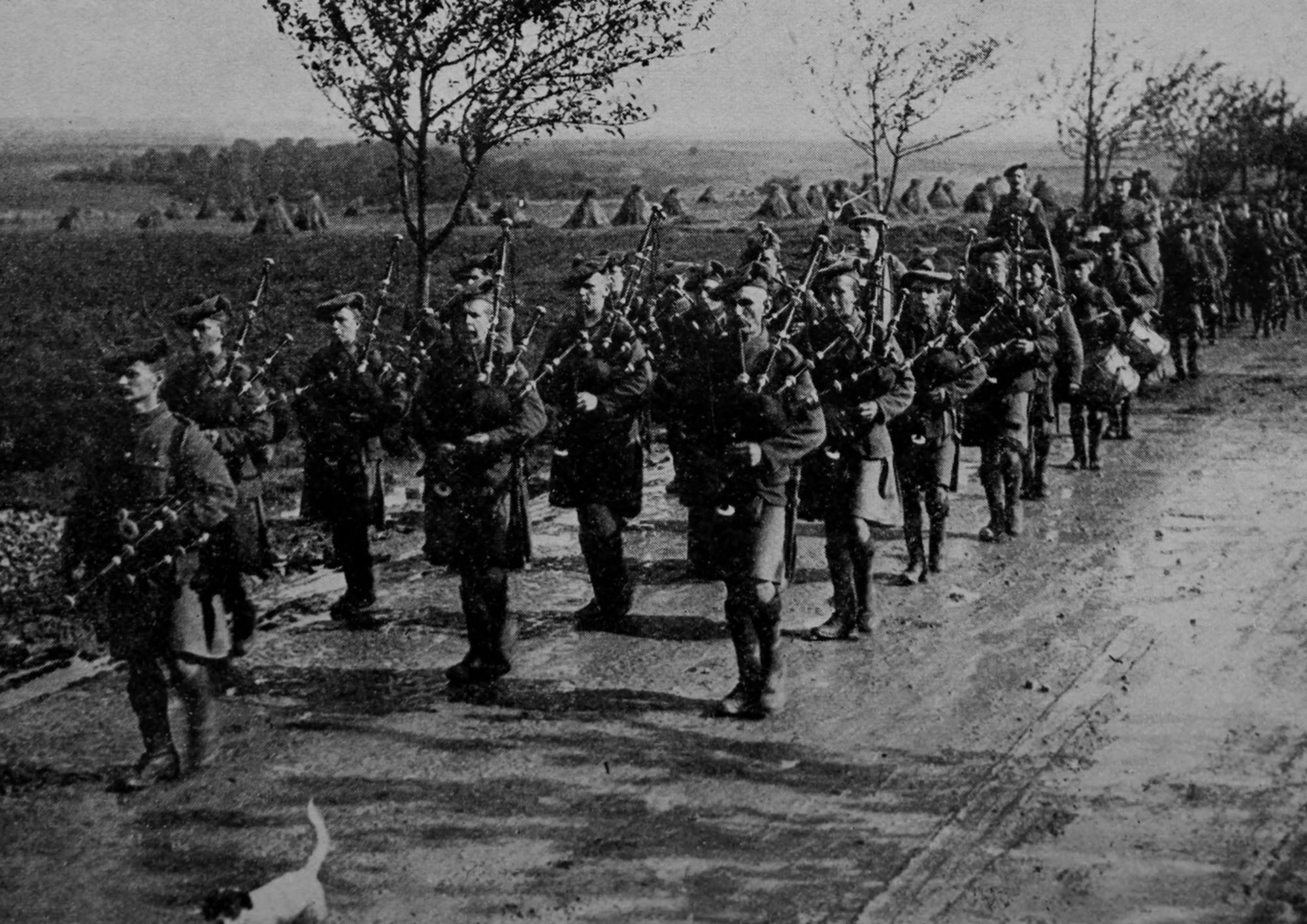
No matter the player, there is something timeless about any pipe sound. But inside the world of bagpipes, there are fearsome complexities and debates about styles and variations from the pipe sets themselves. The components’ design and configuration changes what meets your ears when the pipes are played.
And towards the fringes of bagpipe conversation, there is an idea that does the (admittedly niche) pub-table and discussion board rounds about a “lost” Glasgow sound that may or may not have been left on the First World War battlefield. The story goes that war had a serious effect on the Glaswegian bagpipe cottage industry, disrupting enough of its fundamental skills to alter the style of manufacturing — and with this the sound of the instrument. But does this have any basis in fact or is it just a musical urban legend?
When we first read Natalie's story, we were surprised by how moving we found it, but also how technical the manufacturing of bagpipes is - tiny changes in the process can alter the sound massively. This is the sort of emotive yet detailed reporting we love to commission at The Bell. Pitch to us, read us, support quality local journalism in Glasgow.
To read the rest of Natalie's brilliant piece, become a full member and get access to our back catalogue of award-winning journalism, and read everything we'll ever publish.
Glasgow deserves great journalism. You can help make it happen.
You’re halfway there, the rest of the story is behind this paywall. Join the Bell for full access to local news that matters, just £8.99 a month or annual deals with two months free.
SubscribeAlready have an account? Sign In