World class performances come to Glasgow’s streets
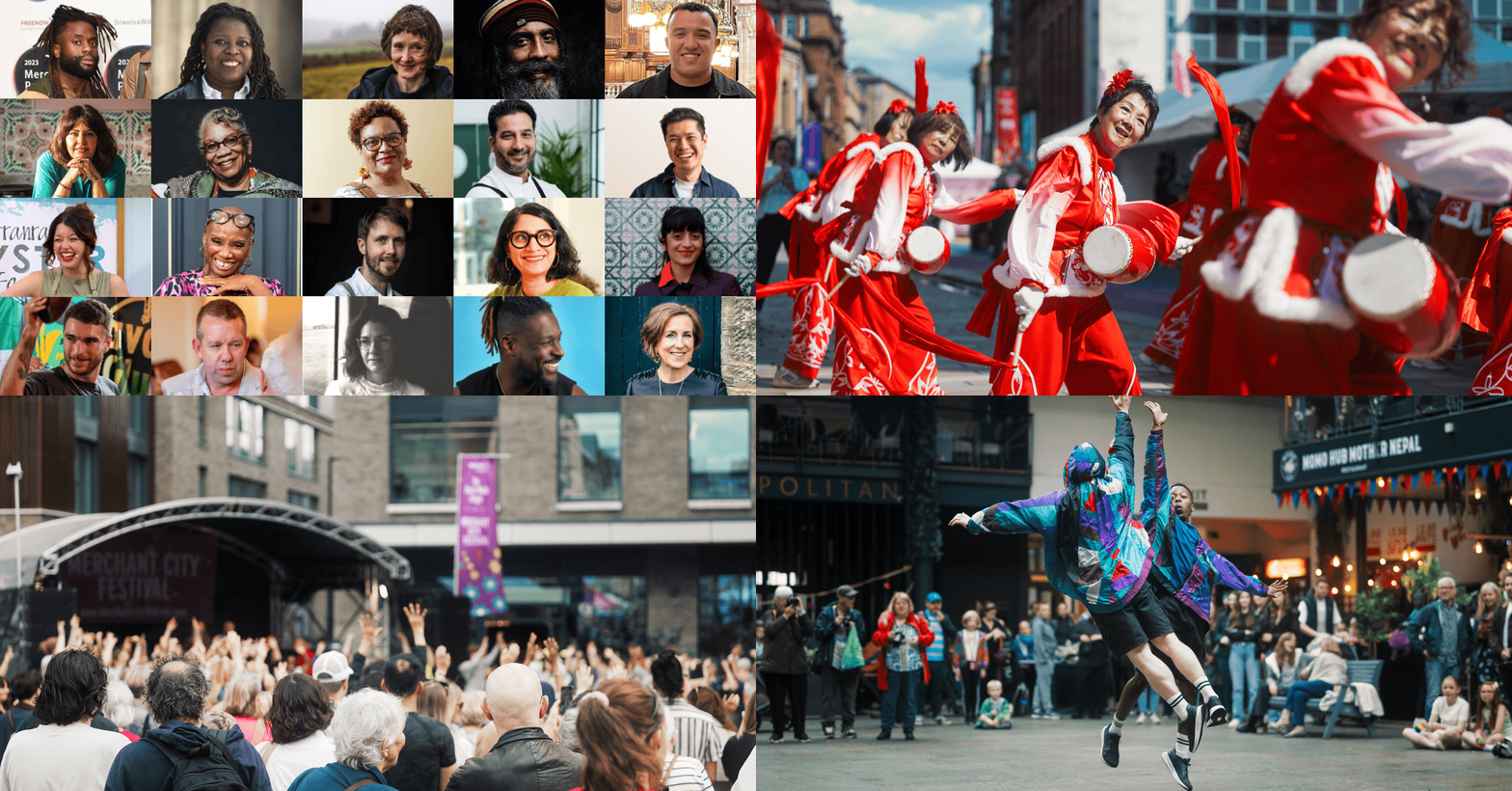
This summer, the Merchant City Festival returns to the streets to celebrate the very best of Glasgow’s cultural scene. There’s an incredible range of work on show: from FLOCK, a participatory outdoor dance inspired by urban birds, to the inquisitive performance piece I am From Reykjavik.
As with any good celebration, you can’t forget about the food. The Place at the Table series gathers leading chefs, food writers, broadcasters and cultural figures to celebrate the city’s diverse food culture and invites you to take a front row seat.
As part of the Glasgow 2026 Festival, the event is expanding to new areas of the city and, with 150 events, is offering more than ever before. Get involved from 24th July to 2nd August – click below to find out how.
Interested in sponsoring The Bell? Get in touch.
I started my career as a researcher, tracking far-right groups in England that weaponised the Southport killer’s heinous act to advocate for violence against migrants. But I’ll admit that I’ve still been somewhat surprised by the explosion of protests that have erupted in Glasgow this summer. The Bell has reported directly on the march that rampaged through the city centre on 9 June, and covered subsequent demonstrations in Royston, the Gorbals, Govan, Castlemilk, Possilpark, Springburn, which have all occurred in the last five weeks.
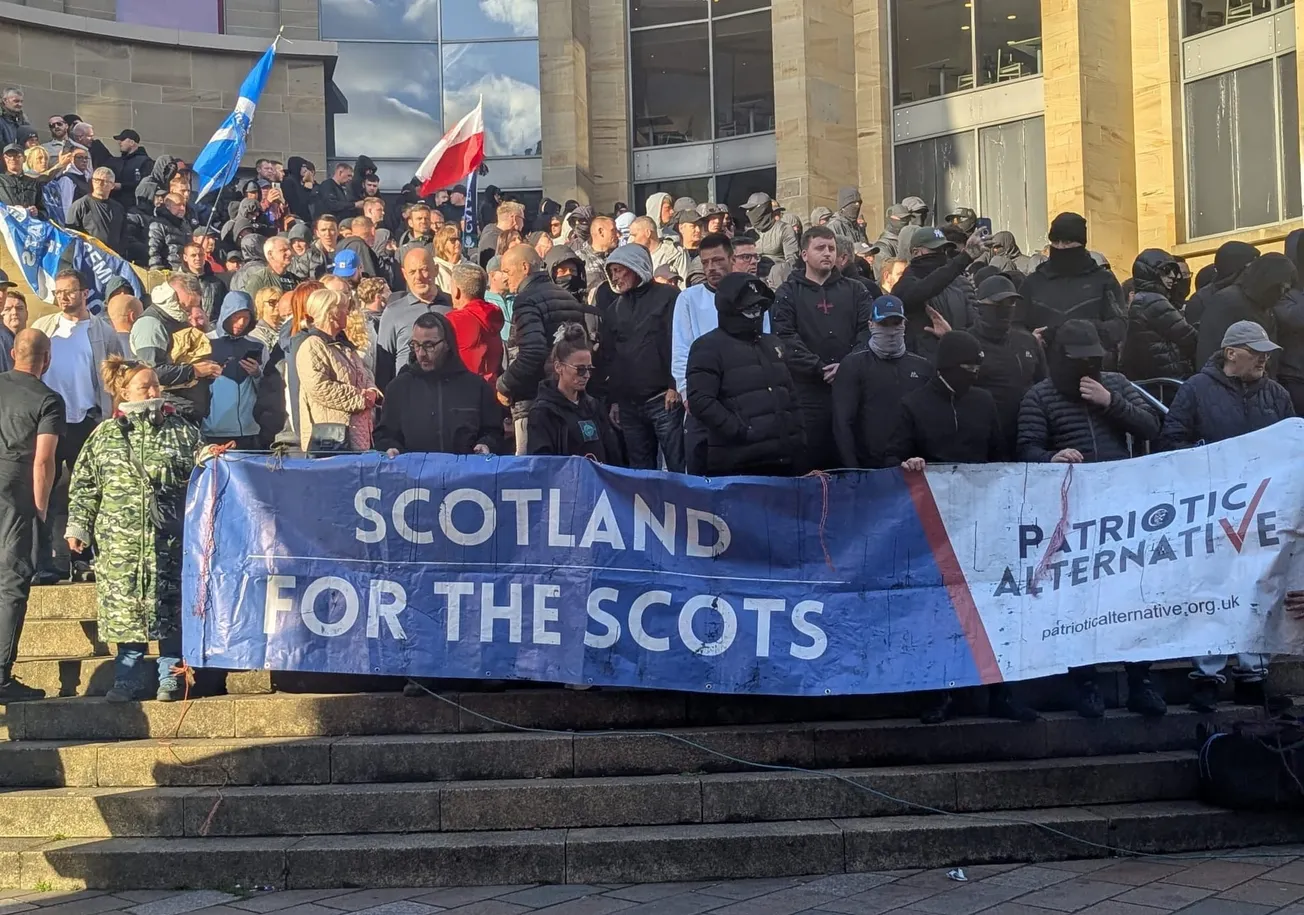
All of these gatherings have seen the presence of rightwing figures from Scotland — and sometimes England. Some attendees are unambiguously far-right, like neo-Fascist party Patriotic Alternative, whose banner appeared in the city centre on 9 June.
But one of the reasons it’s difficult to report on exactly who might be involved in this spate of protests is an (informal) policy of denial and obfuscation when links with rightwing movements are made.
The far-right is out, and ‘concerned citizens’ are in. When we published our findings about the neo-Nazi flags flown over St Enoch’s Square on 9 June, we got a ton of online pushback, denying such a presence. Local attendees we talked to rejected what we found about those who’d marched alongside them — surely everyone who marched was just a concerned citizen? But not everyone there is ‘concerned’ about the same things. And as my previous role taught me, there’s a whole network of people out there who have become very adept at harnessing alarm in disaffected communities.
In addition, social media is being used to create an ‘us vs them’ dynamic, which I fell afoul of last week.
Closer to home
Another reason it’s hard to report on the different motivations and personnel involved in these protests is lots of key people don’t really like being written about, or being linked to rightwing and far-right networks.
It’s interesting because often, a central grievance behind protests seems to be ‘why is the media ignoring [X] issue?’. We see a lot of complaints from influential social media figures in these circles about the media not ‘listening’ to them. But there’s also massive pushback when the media does write about them, partly because they can’t control the way they are reported on and they’re used to directing their message via big social media platforms.
My colleagues on The Bell’s sister titles have been directly threatened and singled out when they’ve reported on organisers behind the likes of anti-asylum hotel protests and the flag raising that took place last summer. And over the weekend, it was my turn.
Glasgow deserves great journalism. You can help make it happen.
You’re halfway there, the rest of the story is behind this paywall. Join the Bell for full access to local news that matters, just £8.99 a month or annual deals with two months free.
SubscribeAlready have an account? Sign In