At the west side of Glasgow Central Station, the national motto of Scotland is carved into a stone archway. “Nemo me impune lacessit,” it reads, as commuters pass by.
In the surrounding streets, the motto becomes more of a riddle. If a city could speak, “No one provokes me with impunity” is just not something you’d expect Glasgow to say. Most of the misfortune the city suffers, be it through mischief or bad luck or worse, seemingly goes unpunished. The culprits are as anonymous as the train passengers.
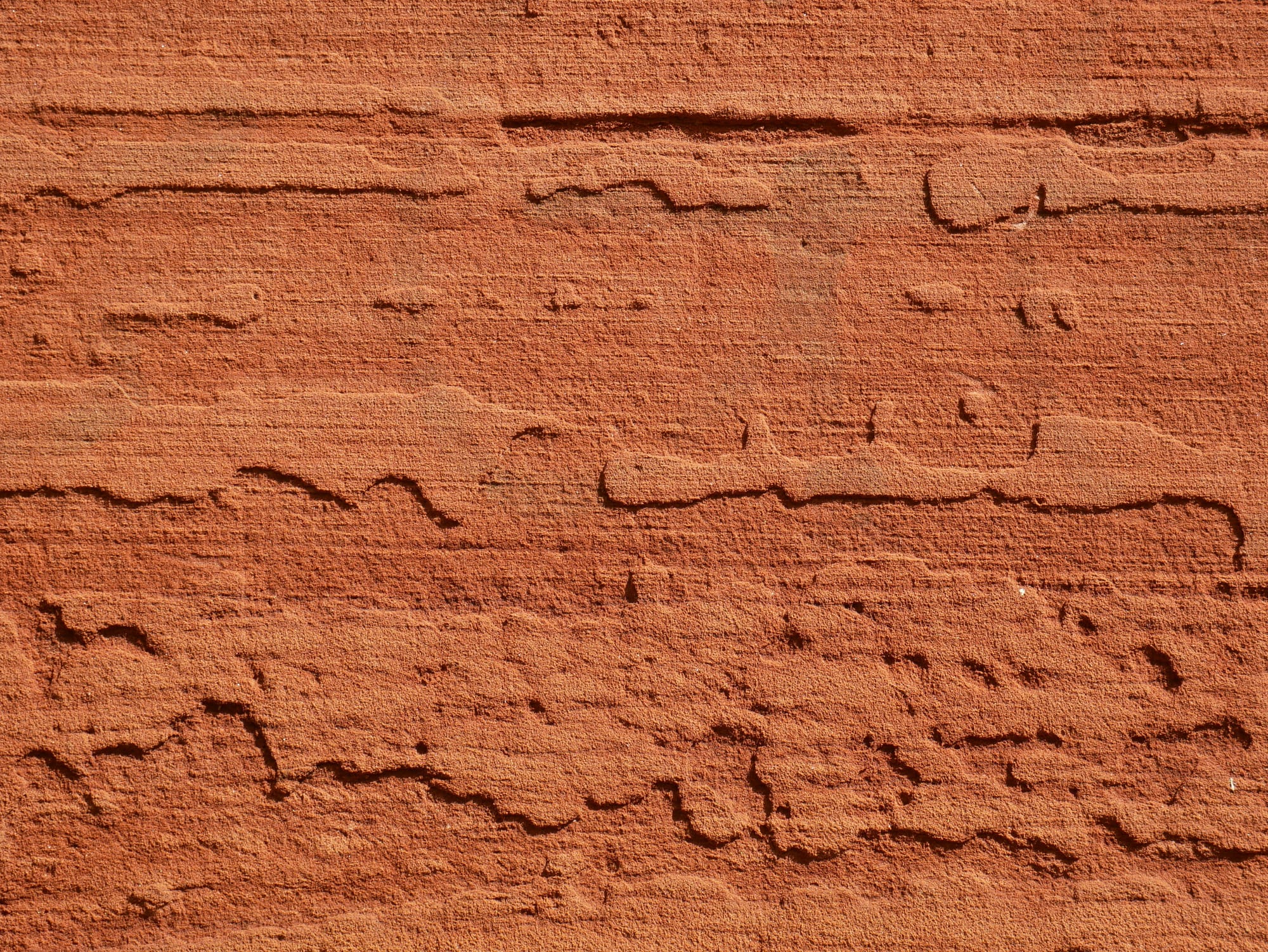
This defencelessness extends into the fabric of the city itself. Sandstone, one of the toughest and oldest building materials on the planet, makes up the large part of Glasgow’s tenements and many of its landmarks. But it’s surprisingly easy to damage.
At Union Street corner, just outside the station, there’s the big broken jawline of the building that caught fire one Sunday afternoon in March, ruined by Monday morning. When temperatures pass 650C, sandstone spalls as the quartz grains burst. The building didn’t burn so much as break open. Further west of the station, along Argyle Street, a crumbling gable end is propped up with a lattice of scaffolding. Every other block there are the cheeky crevice squatters of green buddleia tips. Blonde and red — the iconic colours of Glasgow’s urban canyons and tenement corridors — doesn’t cover the full spectrum of ageing stone, either. White salt streaks flow along the lower courses of buildings, and the green smears of moss and algae trace window frames and other damp spots.
On Queen Street, a vacant 19th-century merchants’ warehouse gives a glimpse of what can happen when a sandstone building reaches an advanced state of disrepair. Almost completely unoccupied for 25 years, it is at time of press awaiting a decision on an updated planning application for full demolition and reconstruction (as student flats). Its facade, covered in the 1990s in a cement render, has water trapped inside the stone, creating fragmentation. The 1830s builders also unhelpfully laid the sandstone “in cant”, with the horizontal geological formations standing vertically, inadvertently encouraging the stone to split and peel off into layers.
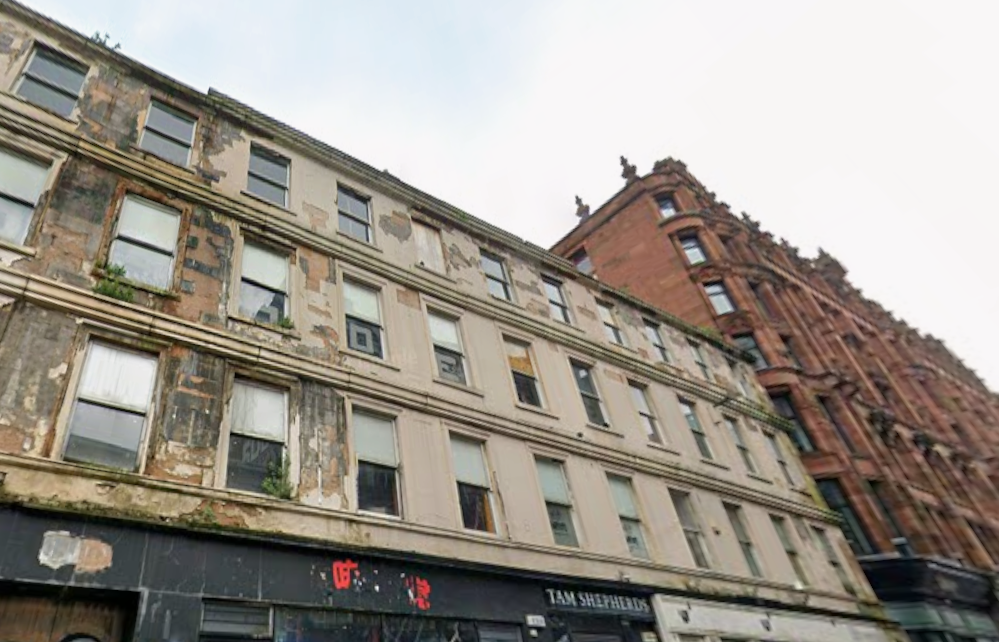
It’s natural, in a rainy city, to expect the risk of decay from water, along with manmade hazards of fire and neglect. But it’s unclear who, if anyone, should or can be held to account for this same deterioration. And in Glasgow, this question is governed by the added complication of the mini block-by-block democracies who today own the majority of the city’s tenements.
The stakes are higher than some might realise, because the problem is moving in slow motion. If ever you’ve wondered what Glasgow will look like for the next generations, it’s tempting to think of sandstone as a future-gazing rock — residents in 2126 will see what we see, because sandstone is so durable. But this might not be true for all the sandstone stock. Glasgow lost a lot of tenements to the wrecking ball after the second world war, and some of this was because a tipping point was reached when repair became more exorbitant than rebuild.
The last significant round of council-funded stonework repairs came in the 1980s, but at a February meeting at City Chambers of Glasgow City Council’s Operational Performance and Delivery Scrutiny Committee, it was acknowledged that these were now in need of renewal. Deteriorating stonework had recently become both a “major issue”, the committee heard, and a budgetary unknown. So how did we get here?
Very quickly, don't forget to sign up to The Bell! You can do it for free, and you'll get a Monday briefing every Monday lunchtime packed with local news, culture recs, reviews, and general local chat, and also a fab weekend read like this one. Link below 😄
Glasgow’s blonde, sunlight-catching foundations
Paul Everett, building stone scientist at the British Geological Survey in Edinburgh, says sandstone hit the “sweet spot” for stonemasons in the Victorian rush of industrialisation, being “soft enough to carve and shape”, but also traditional-looking and strong.
The Glasgow region used to have some 75 quarries in action, mostly producing blonde sandstone in what one visitor to Giffnock’s quarry in 1874 described as a cavernous space that “resembles the outline of so many cathedrals”, lit by flammable naphtha lamps. But though the stone beds were right under the city’s nose, to call it a local material is almost an insult to its epic geological journey.
In earth’s swampy Carboniferous period, about 359.2 to 299 million years ago, mountains were eroded by rainfall, turning the rock grain to sand, which was deposited in deltas and compacted downwards. Under the earth, with minerals from water forming a kind of cement, the sand thickened into beds of stone.
One such deposit began near the tropics, and after a long continental drift northwards, wound up in Giffnock. As trade and heavy industry prospered in the 19th century, this spot was mobbed with activity. There were sandstone quarries at Braidbar, and towards Thornliebank there were a handful more, known as the Burnfield quarries. From this hub came “B1” and "B1a” sandstones, named as unpoetically as the stone itself is romantic, visually — the blonde, sunlight-catching foundation of some of Glasgow’s earliest tenement developments.
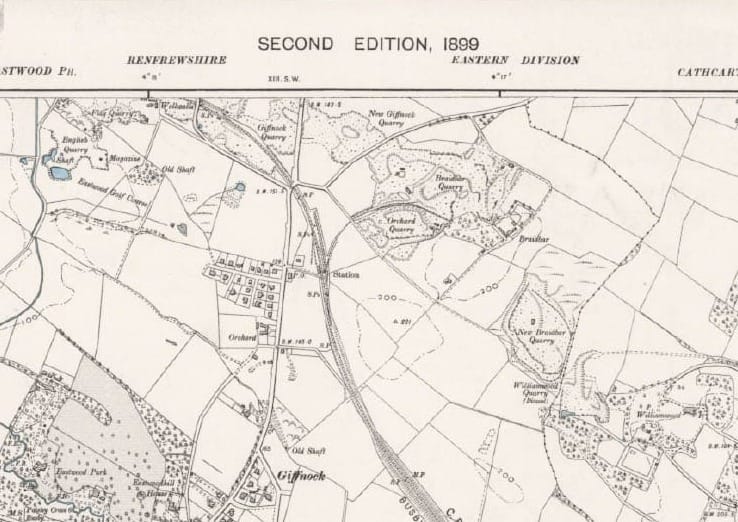
The Giffnock quarries were so heavily used that the seams began to run out of the best quality blonde stone around the 1890s, which handily coincided with the advancement of freight railways. This brought different types of stone into Glasgow, most notably the red sandstones from Locharbriggs quarry in Dumfries & Galloway (still active today) and Mauchline in Ayrshire.
The red is a desert colour — derived from huge compacted dunes that lay just beyond the tropics in the arid periods that followed the Carboniferous. In the same continental drift process as for Giffnock, this desert basin travelled north, bringing a buried memory of a hotter world with it.
A British Geological Survey report in 2006 identified four main types of Glasgow red sandstone, again christened plainly: R1, R2, R3 and R4. They have a more “siliceous composition”, the researchers found, meaning the stone allows for a freer movement of water and is somewhat less prone to decay.
Once red sandstone was available to builders, it became “the fashion”, says Niall Murphy, director of Glasgow City Heritage Trust, mostly for its novelty. The thinking, at the time, was that newer equalled posher. The switches in colour are atmospheric, too. Murphy likes the warmth of the red Strathclyde University Royal College building on George Street, for example, which reminds him of standing in the sun.
In the past 150 years, however, all sandstone has faced a number of what Everett calls “agents of decay”. In Glasgow this is chiefly water, since sandstone is porous and finicky: it needs to breathe properly in order to not soak up too much moisture while also not drying out completely. A clogged gutter dripping for years unchecked or consistent ingress through a faulty downpipe or broken cornice can be enough to start a process of decay.
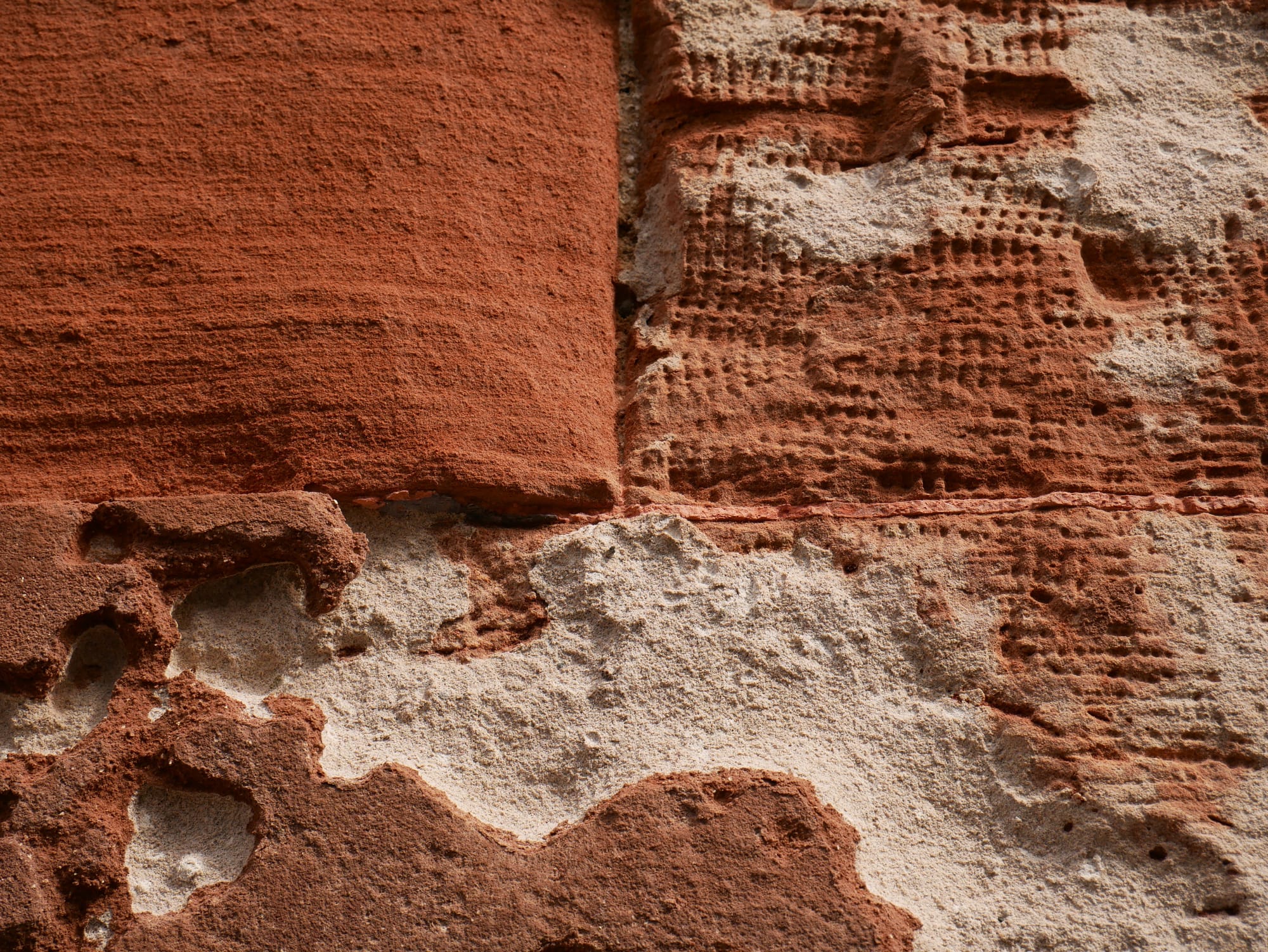
“Wet stone also provides an environment for algae and moss and plants, which starts the process of disintegrating [stone] into soil,” Everett says. There’s also “salt penetration from de-icing salts or bird droppings” to worry about, which causes the stone to fragment. A programme in Glasgow of acid-cleaning coal-sooted tenement facades in the 1970s made matters worse by changing the mineral dynamics of the stone. Cement repairs also smothered pores that should have been left open.
All this matters because sandstone, once excavated, instantly diminishes in strength, Everett notes. The weight of the geological layers above it makes it compact — and when it’s loosened from the stone bed and then carved up, the way it’s treated and the elements it’s subject to are especially critical to its longevity. This has knock-on effects for the liveability of the buildings, Murphy says. “We live in a city where fuel poverty is a major issue. You have to ensure water doesn’t get into the wallhead, the stone can act as a big sponge taking the heat out of the building.”
As far back as the 1900s, the Glasgow Public Health Laboratory had noticed this problem, photographing a single building over 17 years to show how sandstone could crack, crumble and change. But a later series of decisions from the municipal authorities about how to care for sandstone unfortunately made the present-day burden of maintenance more onerous.
Acid cleaning can accelerate the release of iron from blonde sandstone’s minerals, which damages its porosity, Everett says. Cement also traps moisture. “A lot of maintenance practices did more harm than good.”
In the minutes of the City of Glasgow District Council, which I accessed at the Mitchell Library, there’s a record of at least one councillor who wanted more of this stone cleaning rather than less, as part of the clean-up programme that kicked off with council-funded improvement grants in 1979.
In spite of such well-intentioned mistakes, the comprehensive investment by the council on the city’s social housing stock did make a difference to the condition of the buildings. The minutes show that in the financial year 1982/83, the District Council spent more than £40m (about £146m adjusted for inflation) on repairs to council houses alone. This comes amidst glimpses elsewhere in the minutes of a changing Glasgow. Planning requests to convert warehouses. Applications for car showrooms and petrol stations. Permissions to take down old shop signs. Agreements to resettle residents in the latter waves of slum clearance.
Duncan Thomson, who grew up in Maryhill, joined the City of Glasgow District Council in 1983, as a grants officer for the tenement improvement schemes. Today he is Group Manager, Private Sector, in the modern-formulated Glasgow City Council’s Neighbourhoods, Regeneration & Sustainability department.
When he joined, Thomson tells me that Glasgow and other local authorities were given sizeable budgets and that a lot of properties needed work. “Glasgow lost a lot of its tenements in the late ’70s [to] early ’80s, we didn’t have the money to put into them. Tenements were also removed for the M8 and Clyde Tunnel.”
Part of the council’s cash injection was to encourage remediation of residential buildings during the Right to Buy government sell-off, he notes.
“In the ’80s, there was real hope,” he says. “We’d never seen investment in the old tenement stock. We also had powers through housing associations to buy up and remodel tenements. There often used to be three flats to a landing, with a one bedroom in the middle, a lot of associations did amalgamations to get bigger flats.”
The old model of outdoor toilets and washing facilities was also still relatively common in the 1980s, Thomson adds — although the council removed an outdoor toilet in Whiteinch only a few years ago. He says housing associations now own 23,000 older tenement flats, and “if it hadn’t been for that [modernisation] we’d have lost a lot more”.
Sold off one by one, tenements each represent a stack of decision-makers, in which repairs require consensus, votes and money from mostly freehold owners, but sometimes with a conflicting medley of individual, landlord, factor, and social housing interests. Thomson says that maintenance was not entrenched in this era — the idea that seemingly small acts of regular and proactive care, such as gutter cleaning, could have a significant impact on the welfare of the tenement buildings, in particular the sandstone.
Today, he works on problem buildings in private hands that need attention, such as a crumbling gable wall or fragile stonework. Sometimes this can mean evacuation, mandatory repairs or compulsory purchase from the council. His team has evacuated half a dozen properties in the past two to three years, he says, directly as a result of falling stonework. But what would it cost Glasgow to remediate the worst cases in one go?
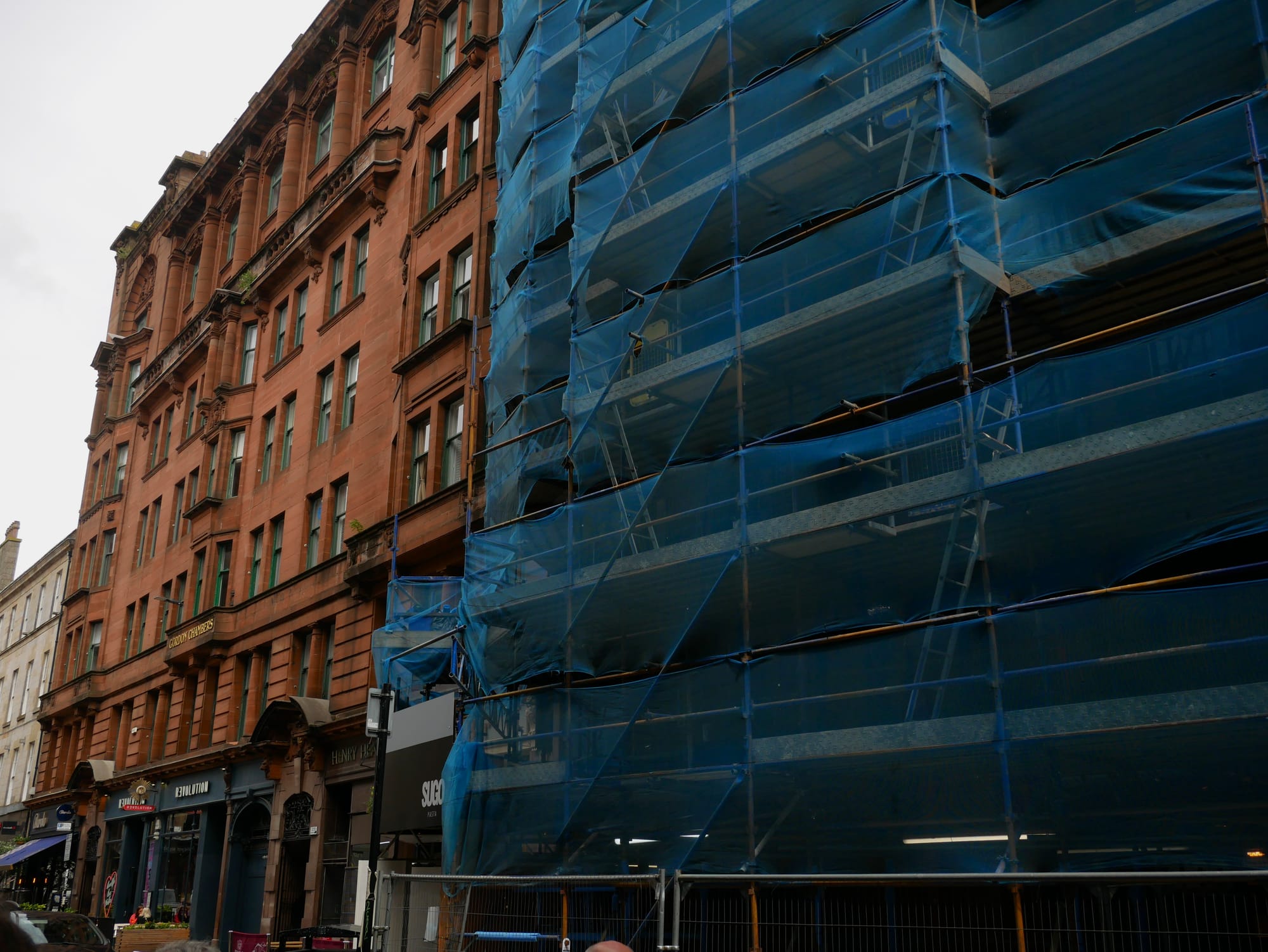
“You can only put an estimated figure on stonework, I don't know what it would cost the city, [one building] could be £10K or £50k or taking down a whole elevation [repairing the side or facade of a building], that’s £250K. But it’s impossible to police every tenement.”
He notes that, as for everything else, costs for such work have gone up, telling me a “full major repair” for one such block prior to Covid would have cost around £250,000-£300,000. This might have encompassed the costs of a new roof, stonework, structural elevation rebuilds and windows. “Now we have more and more tenders coming back that are over half a million or more,” he explains. “Last week on my desk we had one for over £700,000 for a rebuild of a front elevation in a very busy part of the city.”
Thomson says stonework is an issue being flagged up by more and more housing associations across the city. But when private owners are faced with six-figure quotes, what can they do?
“Some tenement repairs will be so substantial that owners won’t be able to take them on,” he admits.
Mike Heffron, chief executive of Scottish tenement advisory group Under One Roof, says the gaps in responsibility are an accident waiting to happen. “We’ve pushed the Scottish government to implement mandatory five-year inspections of tenements — churches have it but tenements don’t. You’re liable for any harm that a falling stone causes.”
The government agreed to the five-yearly inspection plan, Heffron says, but it hasn’t been legislated yet. The biggest fear, he adds, is that it meanwhile could “take a tragedy to get action done. We need a major call for action. Stonework is falling off. Last time [it happened] in Edinburgh, a woman was killed.” By this, he’s referring to Christine Foster, a 26-year-old Australian civil engineer who was serving outdoor customers at a bar on Hope Street in the capital in June 2000, when she was struck by stone falling from the third floor of the tenement above.
But even if a five-year inspection was mandated, in another layer to this problem, there are fewer and fewer stonemasons available to do the repairs. Murphy points out that when rebuilding does eventually start on the Glasgow School of Art, the pool of skilled masons will shrink further. “We need to be training more stonemasons for the whole of Scotland. We don’t have enough, and when the restoration of the art school happens it will absorb a lot of capacity.”
Despite all the challenges sandstone faces in this city, Thomson remains optimistic.
“[The council] have been willing to intervene, and we’ve not got everything right, but we’ve saved many of these tenements. They’re still popular and some are staggering. They need maintained, and people should be aware they’re custodians.”
Sandstone, as much as the people, makes Glasgow more than the sum of its parts, Murphy adds. “It gives Glasgow a real homogenous character. An urban feeling that belies its relatively small size.” For contrast, he points out the punier impression that brick-built Manchester made on him when he visited a few weeks ago. “I noticed the difference because here in Glasgow we have the stone, and it gives the buildings more weight, more massiveness.”
Everett, with a geologist’s sense of time, stresses that stone and rock are not immortal.
“Even the Alps and Himalayas will end up washed into the sea. There’s a lot of energy and forces going on over larger periods of time.” The same forces are at work in Glasgow’s sandstone, which won’t live forever. In the meantime, the question is to find a way for provocations – natural and manmade – not to pass with impunity.
Who doesn't love Glasgow's sandstone? The topic may be uncontroversial, but what Natalie does so well is reveal the stories and struggles and hidden beauty within much of Glasgow. We think her writing changes the way we see the city. We love commissioning amazing freelancers like Natalie. We can only do that with the support of paying subscribers. It's your money that goes straight into freelancers' pockets and helps sustain the journalism industry in Glasgow, which we all need!
If you aren't quite ready to become a fully-fledged Bell member, sign up to our mailing list and get two totally free editions of The Bell every week: a Monday briefing, full of everything you need to know about that’s going on in the city; and an in-depth weekend piece.
If someone forwarded you this newsletter, click here to sign up to get quality local journalism in your inbox.