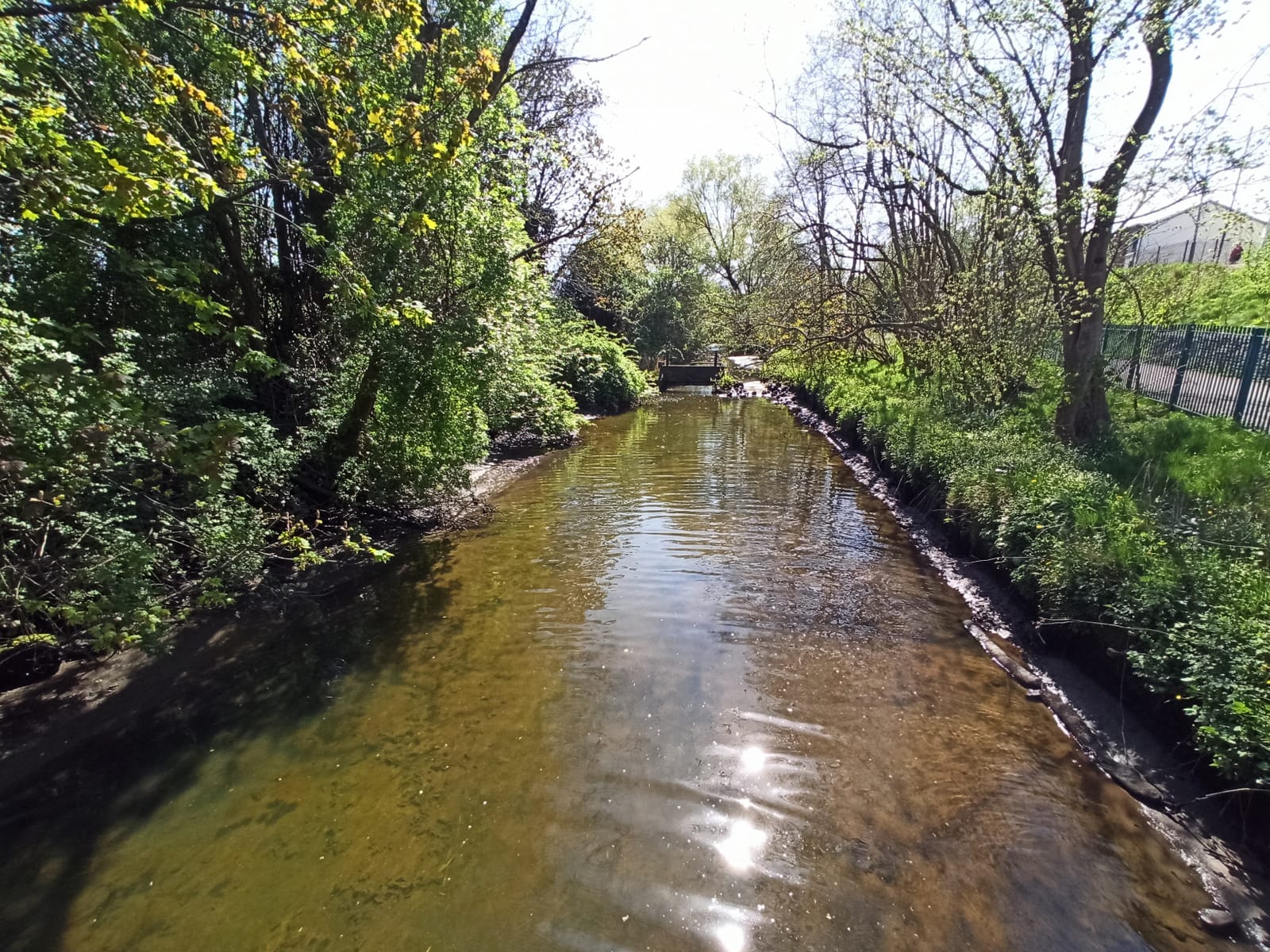
You can see it on Google Maps. A lurid yellow stripe, flowing from a culvert behind the Jenny Burn pub, slashing through the woodland, and off into the Clyde. The Polmadie Burn. The wee stream is hardly one of Glasgow’s best known waterways, but in 2021 it experienced a moment of viral infamy after it was discovered to have turned a sickly yellow-green colour, like some limited edition flavour of Sunny Delight.
The cause of this colour change was Hollywood material. Deposits of Hexavalent Chromium, a toxic chemical compound, had leached into the stream from contaminated soil in the local area. The name of the substance might sound familiar — Hexavalent Chromium is the chemical ‘villain’ in the Oscar-winning movie, Erin Brockovich (2000), a carcinogenic heavy metal that causes particularly unpleasant cancers of the respiratory tract in its airborne form.
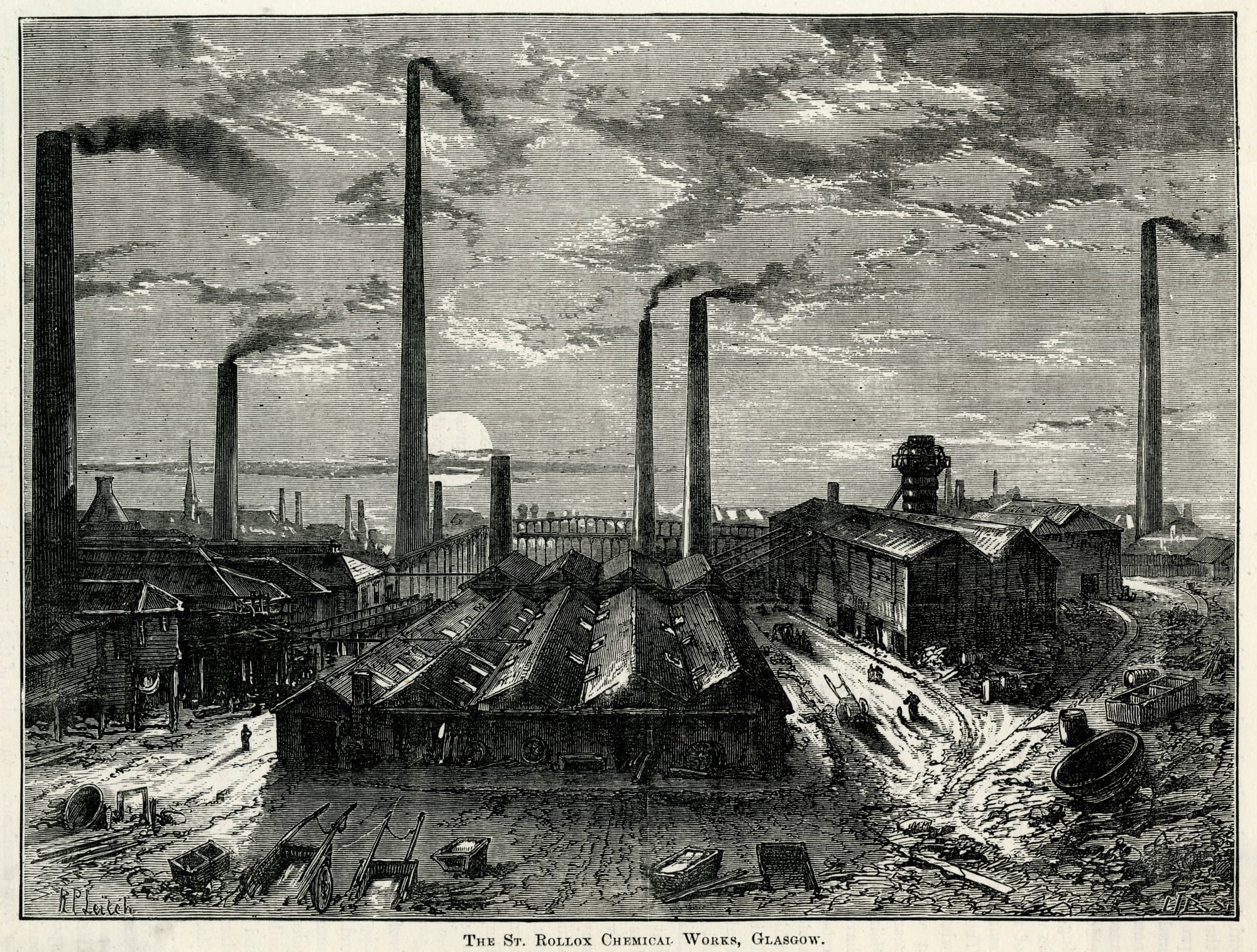
The chromium in the Polmadie Burn is the residue of the type of industrial production that shaped, and poisoned, Glasgow for well over a hundred years.
This legacy remains. It can be seen in the dirt-caked facades of those tenements that escaped gentrification in the 1980s and ‘90s; on the ravaged bodies of the dwindling few who survived working in the very places that generated this pollution; and in the very soil upon which the city is built. The fact is many would rather it was forgotten, but it may hold the key to the city’s uncommon levels of ill health and even to its history of violent crime. And to understand our city today you have to go back to the men who built its chemical industry, and the workers and communities who paid the price.
‘Eventually, he had to have limbs amputated’
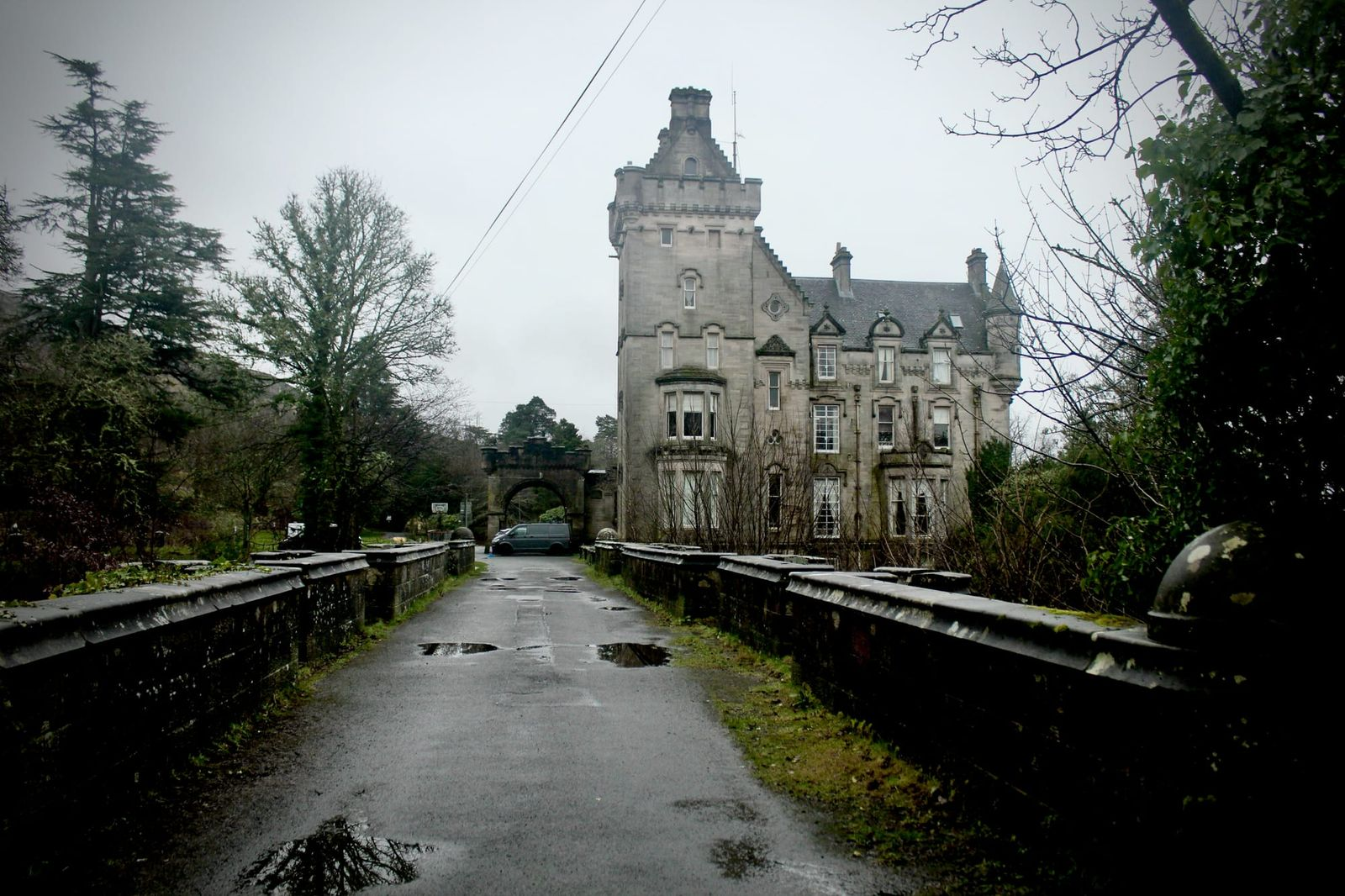
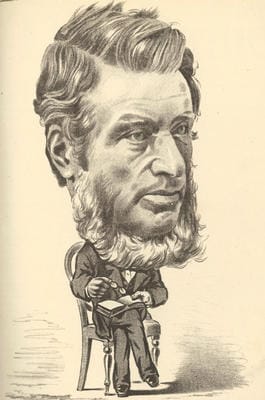
In the late 1800s, Overtoun House was a far cry from the polluted slums of Glasgow’s east end. The baronial pile on the outskirts of Dumbarton had been built for James White, the first Lord Overtoun, and the owner of what was often referred to as the Shawfield Chemical Works in Rutherglen. He’d made his fortune making soap before switching to producing bichromate of potash, a compound with various industrial usages, most notably in the tanning of leather. Hexavalent Chromium was one of its byproducts.
White was a man of contradictions. A prolific donor to the Church of Scotland, and a campaigner for observance of the sabbath, he nonetheless refused to give a Sunday off to his workers. They worked twelve-hour shifts, seven days a week in an atmosphere described as “hellish” by Keir Hardie, the founder of the Labour Party and an antagonist of White’s.
Furnaces burned throughout the day. The air was filled with chromate dust and other byproducts. No allowance was given for a lunch break, so if the men ate, they had to do it in the noxious environment, ingesting additional chemicals as they chewed.
Many developed “chrome holes”, deep lesion-like burns to their skin. A large number lost tissue from their noses and, in some cases, their entire septum, earning them the epithet “White’s Whistlers”.
J&J White’s Chemical Works, as it was also known, ceased operations in 1967. By that time the twelve acres allocated for dumping waste at the factory site had been greatly exceeded, and waste was deposited throughout the local area: on land in Rutherglen and Cambuslang, in claypits and beside the railway line at Carmyle, and even as far afield as Glasgow Airport. In 2002, just weeks before the Champions League Final was due to be hosted at Hampden Park, it was discovered that an embankment at the adjacent Lesser Hampden (now the City Stadium), had been built upon waste deposits from White’s.
Those physically involved in the dumping operations paid a heavy price. William Muir was a former manager responsible for one of the White’s dumping sites at Muirend; his daughter later described the toll the work took on him in a 2000, News of the World article. Ulcers all over Muir’s body caused constant pain and the ones that developed in his nose were so bad he had to have the bridge removed. “Eventually, he had to have limbs amputated,” she reported. The same article documented skin conditions suffered by local children, believed to have been caused by chrome dust dislodged by building works beside Muirend playing fields.
Even the demolition of Shawfield was uncommonly hazardous. Scaffolder Charlie McGibbon is in his seventies now, and happily retired, spending time with his pigeons and grandkids. But during his working life he worked on just about every dangerous industrial site in Scotland, from Ravenscraig to Grangemouth. He still sports a scar on his nose after being caught in the face by a bale of barbed wire while working at Coulport Naval Base. But that’s nothing compared to his visceral experience dismantling Shawfield.
This story is free to read. You just need to sign up to join The Bell's mailing list. And why wouldn't you? You'll get our journalism in your inbox the second we publish, keeping up-to-date on this and all our stories. No card details required.
Already have an account? Sign In