It was in 1996, somewhere deep beneath the surface of one of Glasgow’s leafiest, wealthiest neighbourhoods, that Steph took her first eccy.
Twenty-two years-old, she was attending one of many underground raves to be held in the abandoned Victorian railway tunnels that slip dank and unseen beneath the West End.
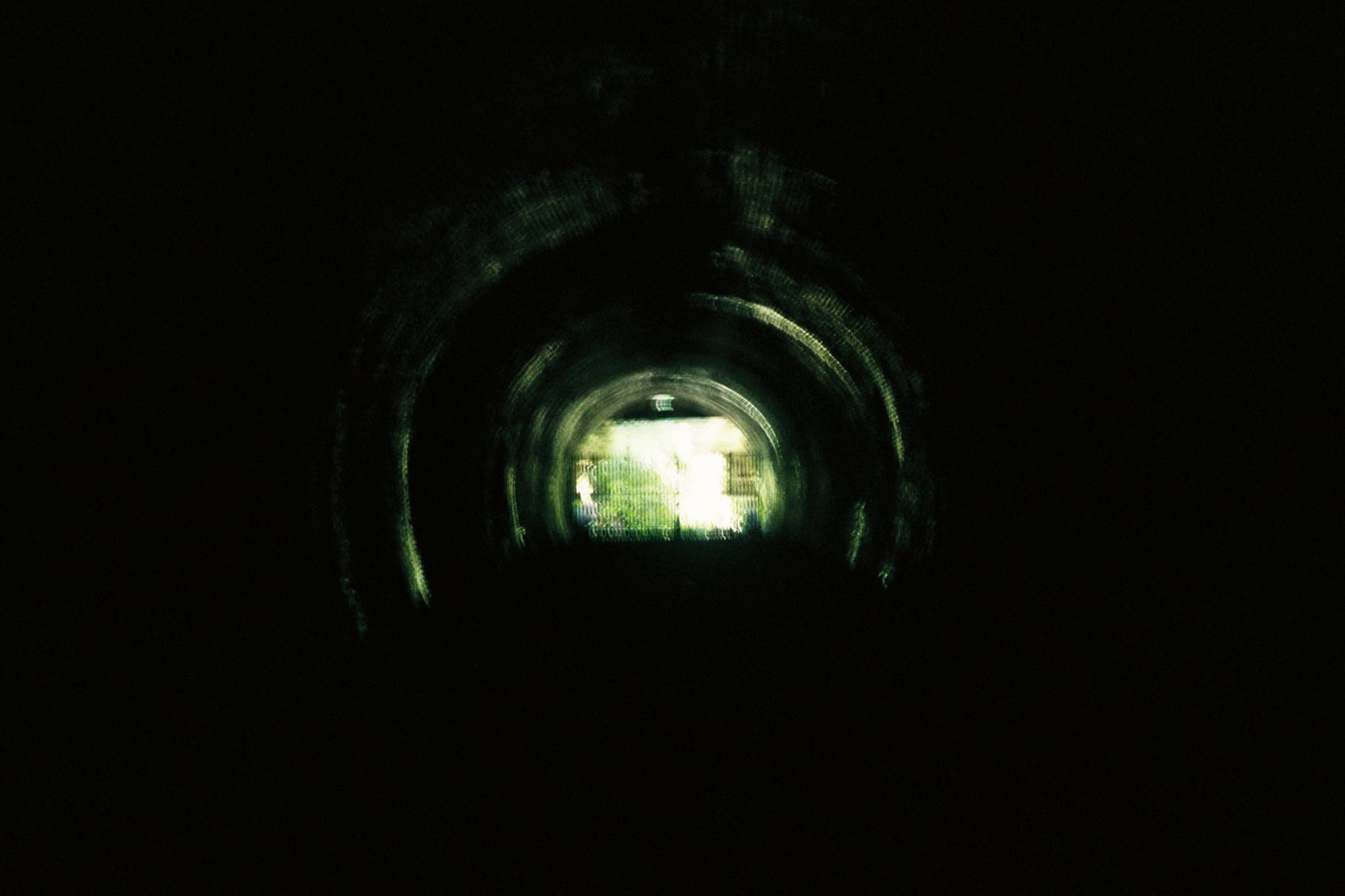
She recalls a steel door forced open at the tunnel mouth and candles laid along the floor, casting eerie shadows. “You walked in the muddy black for a minute or two,” says Steph, now 52, who’d rather not share her surname, “and then boom! There was suddenly this huge party. They had strobe lights. They had a bar. It just blew my mind that there was this wee subculture.
“I’d taken half a pill, and within half an hour, I was just like: ‘Oh my God, this is fucking amazing!’”
The tunnels had of course been built with trips of a different purpose in mind. Glasgow’s Central Railway opened its northern branch in 1896 and stretched from Stobcross beneath Finnieston, Kelvingrove and Great Western Road to the Botanics, Kirklee and beyond.
But smoky steam trains made the subterranean route dirty and unpopular. Cleaner, overground trams sealed its fate; passenger services ended in 1959, followed by freight in 1964. By the time Steph was dancing there, the tunnels hadn’t seen a train in over 30 years.
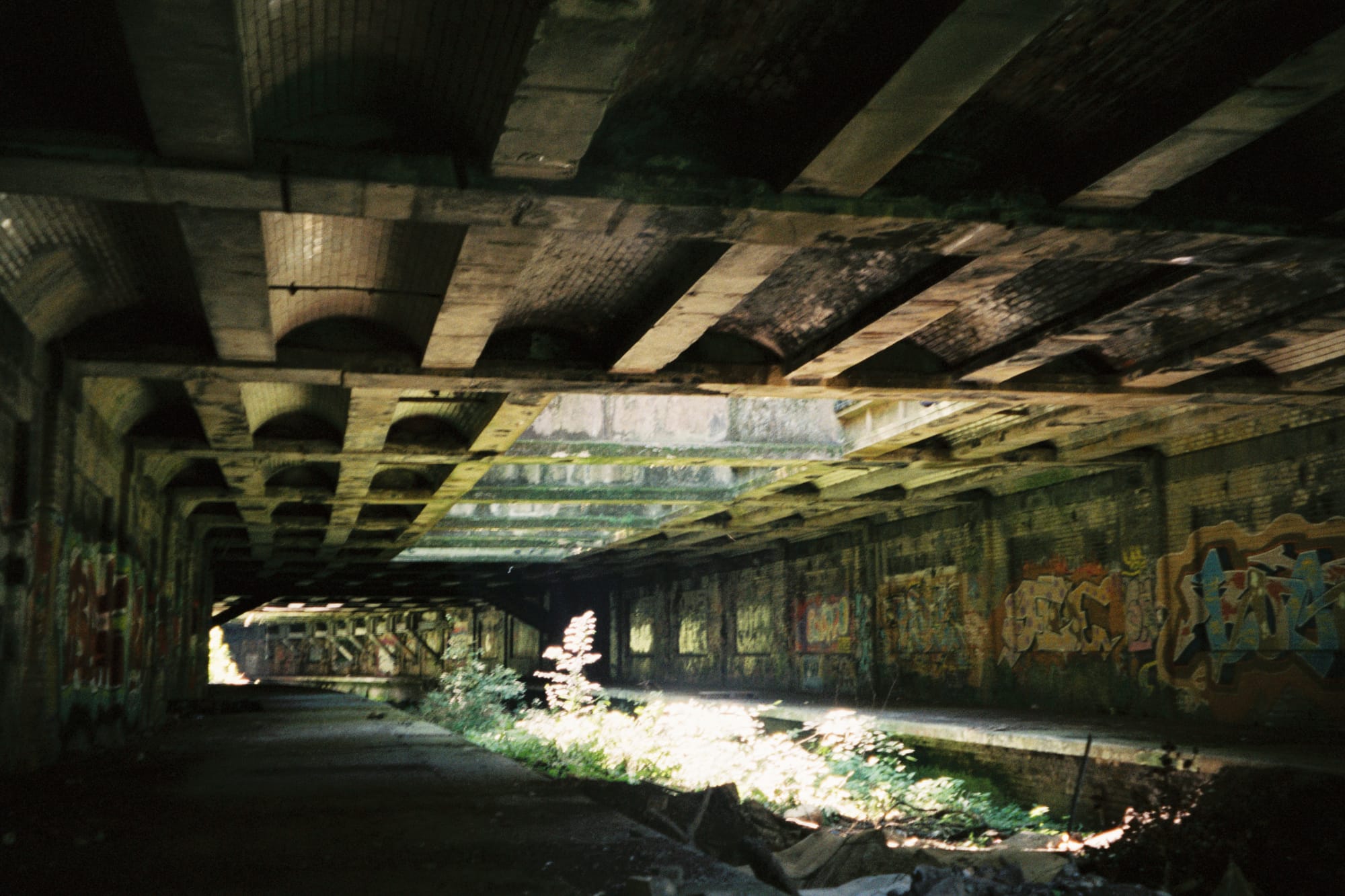
Only one former station on the line remains semi-intact, and in the most extraordinary of places: beneath the Botanic Gardens. Its platforms and track bed can be glimpsed from above through an air shaft by the park entrance. Framed by rhododendrons, ivy and trees, it’s a surreally beautiful window into a world of liminal, haunting Victoriana, sliding beneath a mostly unwitting public’s feet.
In its afterlife, Botanics station and its tunnels have acquired an outsized reputation thanks to an extraordinary string of related stories, mysteries and controversies. Not just illegal raves, but a fire, a thwarted nightclub conversion scheme, and a shoot for a Hollywood superhero movie that never was.
Could these spaces have a future beyond decay — and perhaps even welcome trains again?

[The Bell's internal monologue]: "We will get there... we will... Will we?"
Reader, only YOU can take us busy bees at The Bell past our target of 1,000 new members by 15 November. We are making progress, but we've only got eight days to go and, as you can see, well north of 350 new people to sign up. We're not stressed, yet. But we're not relaxed either.
This is our campaign. It's how we will set local journalism up for a great future in Glasgow, and it's how we'll help make the city better. Find out more below, and take advantage of our fabulous limited-time deals. (There are rumours of a £2.99 per month option and even £40 off annual memberships).
A sprawling inheritance
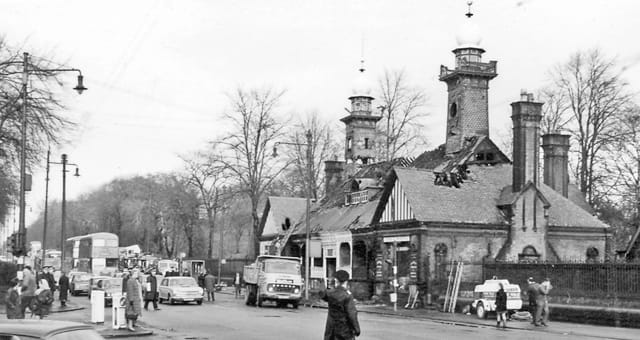
Long gone are the impressive surface buildings of the Botanics station, designed by the young architect James Miller. With its grand red-brick façade and ornate, Russian-style domes, the station’s ticket hall building was arguably his finest work. In 1970, a fire ripped through it, causing partial collapse. The unsafe ruin was demolished.
Underground, however, the station survives.
“The platforms are still there,” explains urban explorer James Perry, who has walked and 3D-modelled the space. “There’s a staircase on either side, but they’re blocked off.” Otherwise, beneath weeds, grime, graffiti and dead pigeons, it looks much as it must have done a century ago.
It’s one of several ‘ghost’ stations that pepper Glasgow, explains Niall Murphy, director of Glasgow City Heritage Trust. Glasgow’s suburban railway network — still the UK’s largest outside London — was assembled piecemeal by competing private companies in the city’s industrial heyday, leaving a sprawling, disconnected inheritance.
“We have this amazing legacy in Glasgow of railway infrastructure,” says Murphy. The problem “is how you tie it up”. Efforts, such as Glasgow Crossrail proposals in the 2000s, have repeatedly foundered.
In disuse, the tunnels have gathered folklore. People have sneaked inside them to drink, explore or play. Passage through became a benchmark of bravery for generations of Glaswegian youths.
Their most concentrated period of unsanctioned use came in the 1990s, at the peak of a youth culture phenomenon.
Saddam’s Bunker
The late Keith Robinson was a Glasgow legend who helped ignite the city’s early-1990s free-party scene with Desert Storm Sound System. In his posthumously published 2025 autobiography, he recounts its scrappy genesis in early 1991, as a pioneering, calamitous, afterparty in the tunnel beneath Kelvingrove. With the Gulf War dominating the news, stealthily distributed handmade flyers directed revellers to a place provocatively re-dubbed ‘Saddam’s Bunker’.
Glasgow deserves great journalism. You can help make it happen.
You’re halfway there, the rest of the story is behind this paywall. Join the Bell for full access to local news that matters, just £8.99 a month or annual deals with two months free.
SubscribeAlready have an account? Sign In
Become a member to unlock the rest of this article.
And as luck would have it, you can join for just £2.99 a month for your first two months (£8.99) if you sign up before 15th November.
If we get 1,000 new members, we’ll deliver five pledges to help you get more out of Glasgow.
Join from just £2.99/month Learn more about our five pledgesAlready have an account? Sign in