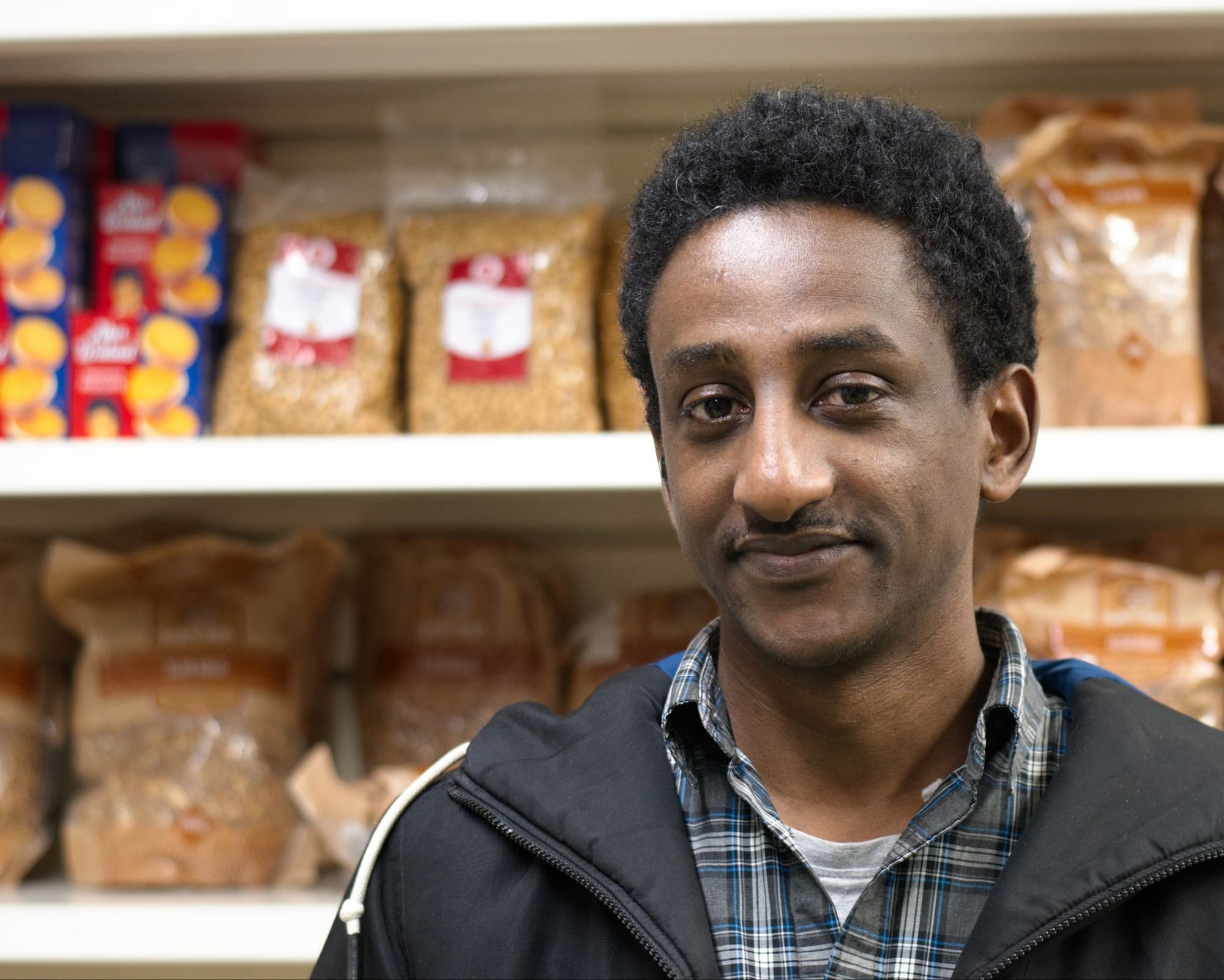
“It's dead,” says Ali, “We used to make millions from this spot. Now there's hardly any passing trade.” Ali owns Smoking World, the vape shop adjacent to Rachel Maclean’s Billy Connolly mural. It’s buzzing on the weekend in the Gallowgate, with nearby Barras Market drawing in droves of foodies, photographers and anyone on the hunt for some independently-made craft. But stop by during the week, as I have done today — it’s a cloudy Tuesday afternoon — and there’s hardly anyone around.
Isn’t it cheap here though, I press. Not really: rent costs them about £20,000 a year, he tells me. Venturing inside, the premises of Smoking World have been carved up. One half of the shop has phone cases and bongs, while the other half has been sublet to Gasmba Perfumes Shop, purveyors of off-brand perfumes (Savage rather than Sauvage) and speciality Sudanese and Eritrean products.
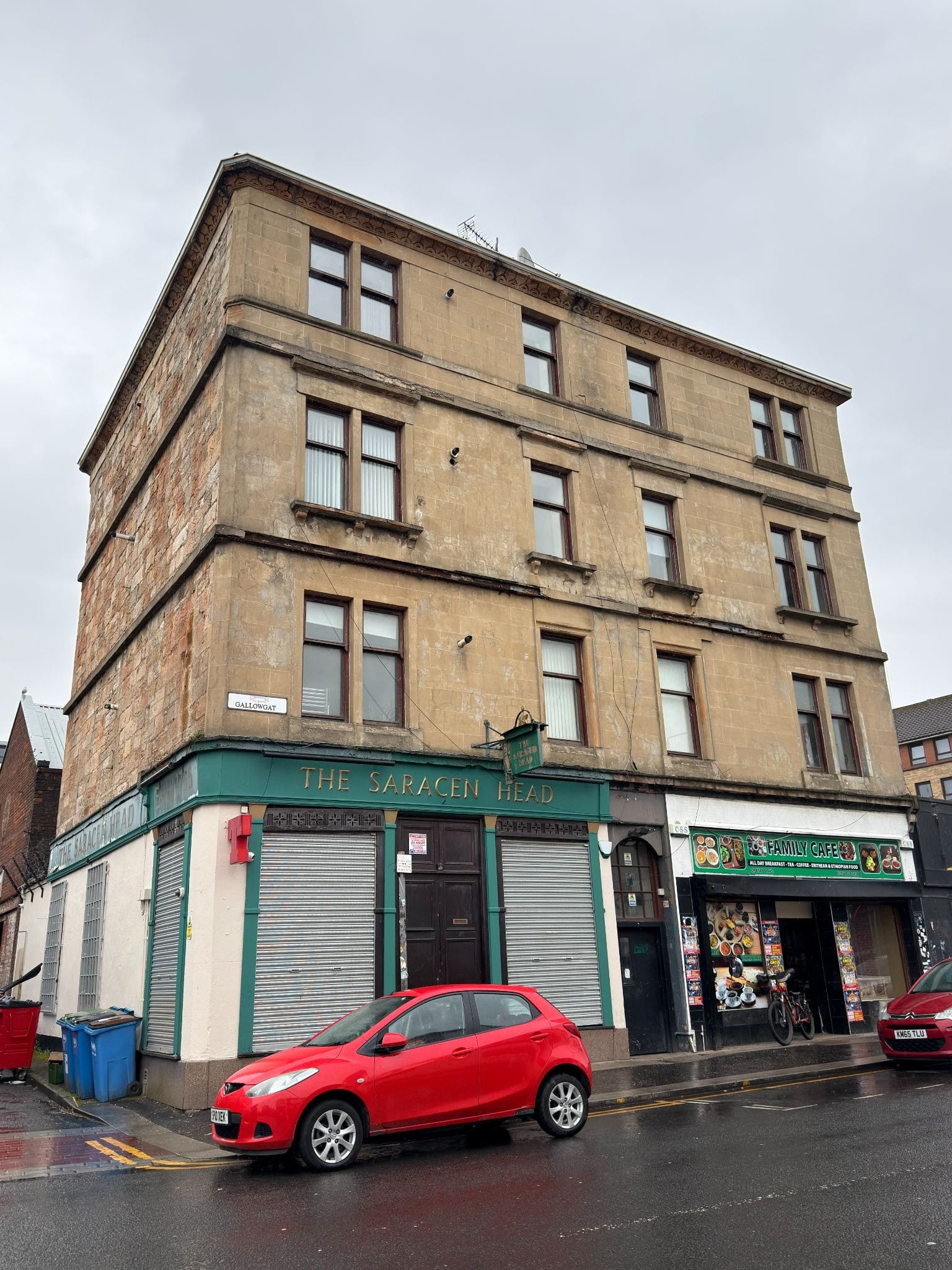
Ali’s only half right about the area being so quiet. His shop and the way it’s divided up function as a neat metaphor for the area, since much like Smoking World, two different versions of the Gallowgate live side by side. And while one of them is sleepy Monday to Friday — like Smoking World or pubs like the Saracen Head (which only opens on Saturday and Sunday) — the other Gallowgate is lively and bustling.
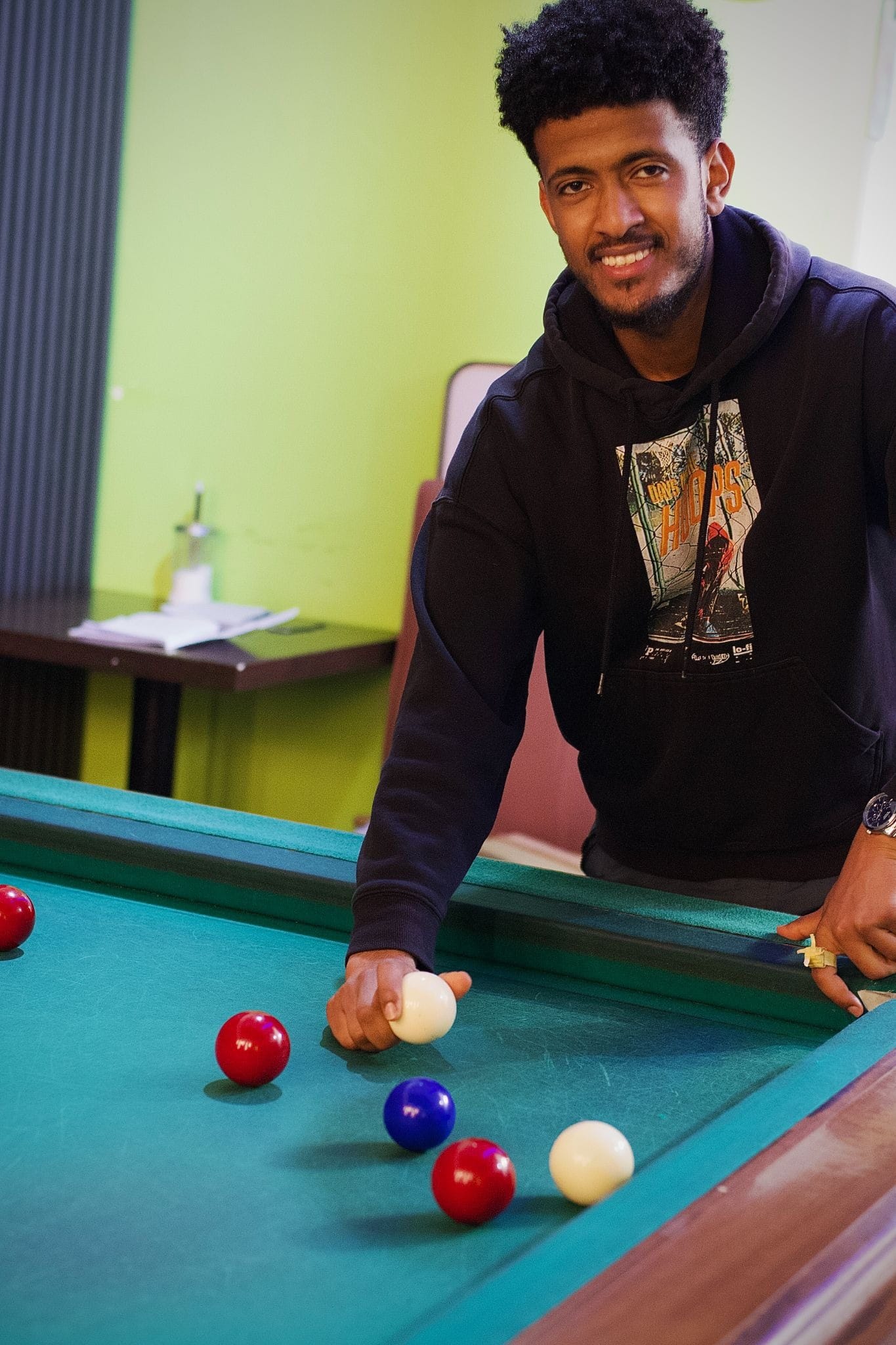
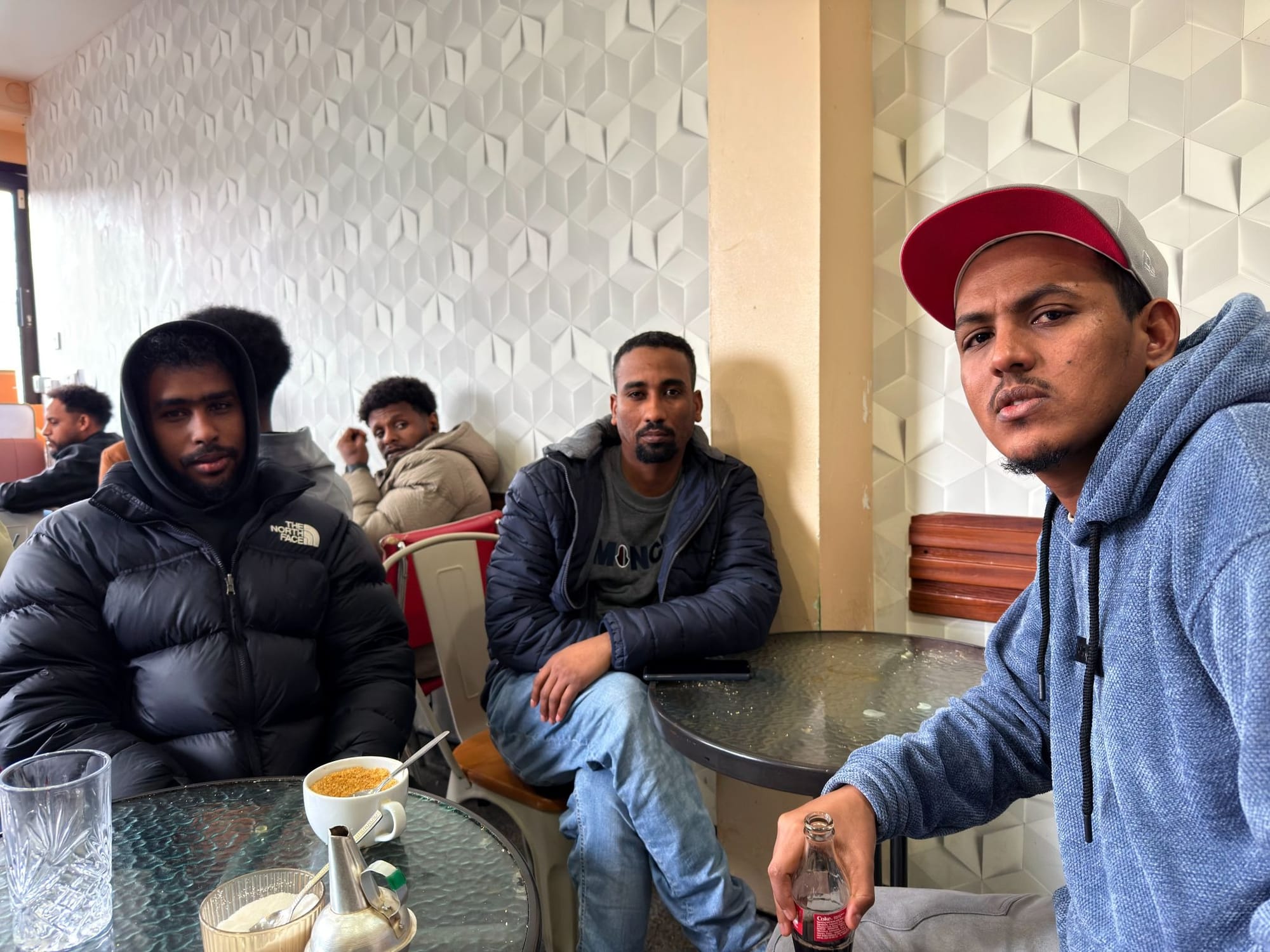
Take, for example, what’s next door to the Saracen Head — the Family Cafe, which serves Ethiopian and Eritrean cuisine. At the back of the cafe, I find a dozen men enjoying a game of Boccette, an Italian form of pool played without cues and with five tiny pins in the middle of the table. Just a coincidence? Further down the Gallowgate, almost every seat is occupied at Ghinda Cafe. It’s warm inside, partly from the fan heater above the door, but mainly from the sheer number of people. Like the Family Cafe, it’s proudly Eritrean.
Welcome to The Bell. We’re Glasgow's new newspaper, and we do this sort of in-depth dispatch reporting all the time. You have no idea how long Neil spent trapsing up and down the Gallowgate for this story — good thing he likes it.
Sign up to our mailing list and get two totally free editions of The Bell every week: a Monday briefing, full of everything you need to know about that’s going on in the city; and a compelling weekend read like this one.
No ads, no gimmicks: just click the button below and get our unique brand of local journalism straight to your inbox.
And it's not just cafes. A few doors along is an Eritrean butcher, across the road is an Eritrean barbershop and there’s also an Eritrean salon for women. (In pursuit of gender parity for this article, I enter but nobody seems particularly eager to be interviewed.) There are three Eritrean convenience stores, one with tailoring services, plus another Habesha cafe (Habesha is the pan-ethnic term for the Semitic-speaking people in Ethiopia and Eritrea). They’ve all got a healthy number of customers and all of these businesses have made a home for themselves on a road that’s barely 200 metres long. Which makes me wonder: couldn’t we call this stretch Little Eritrea?
I reach out to Alison Phipps to test my theory. She seems like a good fit for speaking on this — firstly, because she’s a professor of language and intercultural studies at the University of Glasgow and also holds the UNESCO Chair in Refugee Integration. But also because she has a very personal link to the country: her foster daughter is Eritrean and she now has three Eritrean-Glaswegian grandchildren.
We meet in Mosob — the popular Ethiopian-Eritrean restaurant near Queen Street station that has previously featured on these pages (“delicious, affordable and the service is friendly”, according to Robbie Armstrong). It’s got mesob, the colourful injera bread baskets, and jebena, the traditional coffee pots. When I air my Little Eritrea theory, Phipps readily agrees. She suggests it’s about finding sources of familiarity when you’re leading an entirely strange new life: “They want to worship in their own language, they want to eat their own food, and they want to hear the music that makes them feel at home. And then, gradually learn about all the other things that will make it feel like home here.”
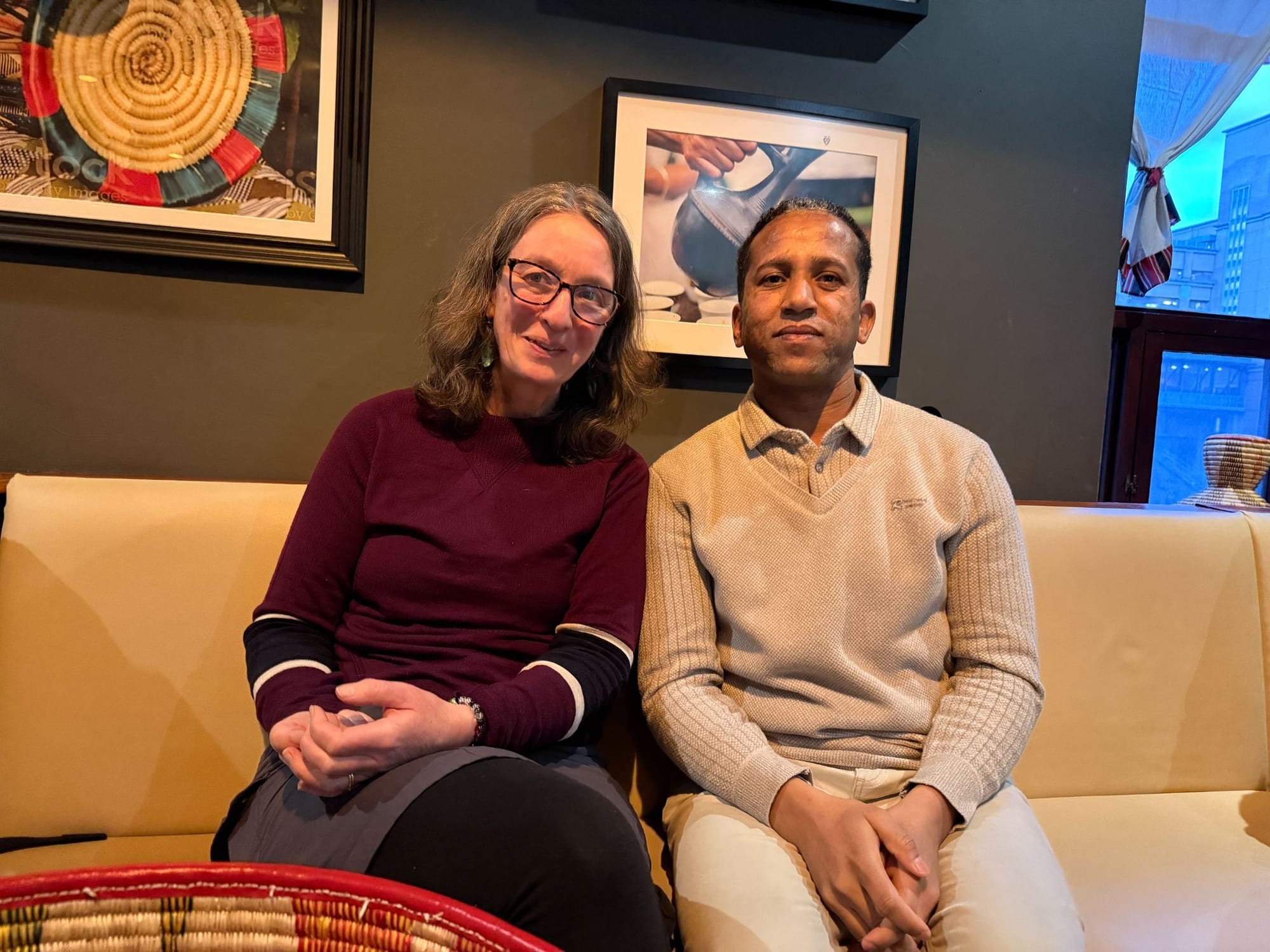
During our conversation, Dr Hyab Yohannes, one of Phipps’ Eritrean PhD students, arrives. For Phipps, achievements like his reflect the typical journey of diaspora communities: “When people arrive, they will work 90-hour weeks in grunt jobs. We see it all over the city with people delivering food until they've got enough money to start their own small business. Or they'll go into nursing and caring professions and work their way up. But it takes about 15 years to get to the point of doing PhDs.”
At Ghinda, food delivery bikes stack up outside. Every table is full of African men, chatting over coffee or scrolling on their phones. After ordering beef stew with injera plus a potent ginger coffee, I am invited to sit with Idris, the cafe's manager and the guy who guards the TV remote. Unlike most Eritreans, who travelled to Europe by boat from Libya, Idris crossed the Red Sea to Saudi Arabia and travelled by land to Turkey. It took him seven months to get to Scotland, by which time he had gradually become familiar with European culture as he worked his way across the continent.
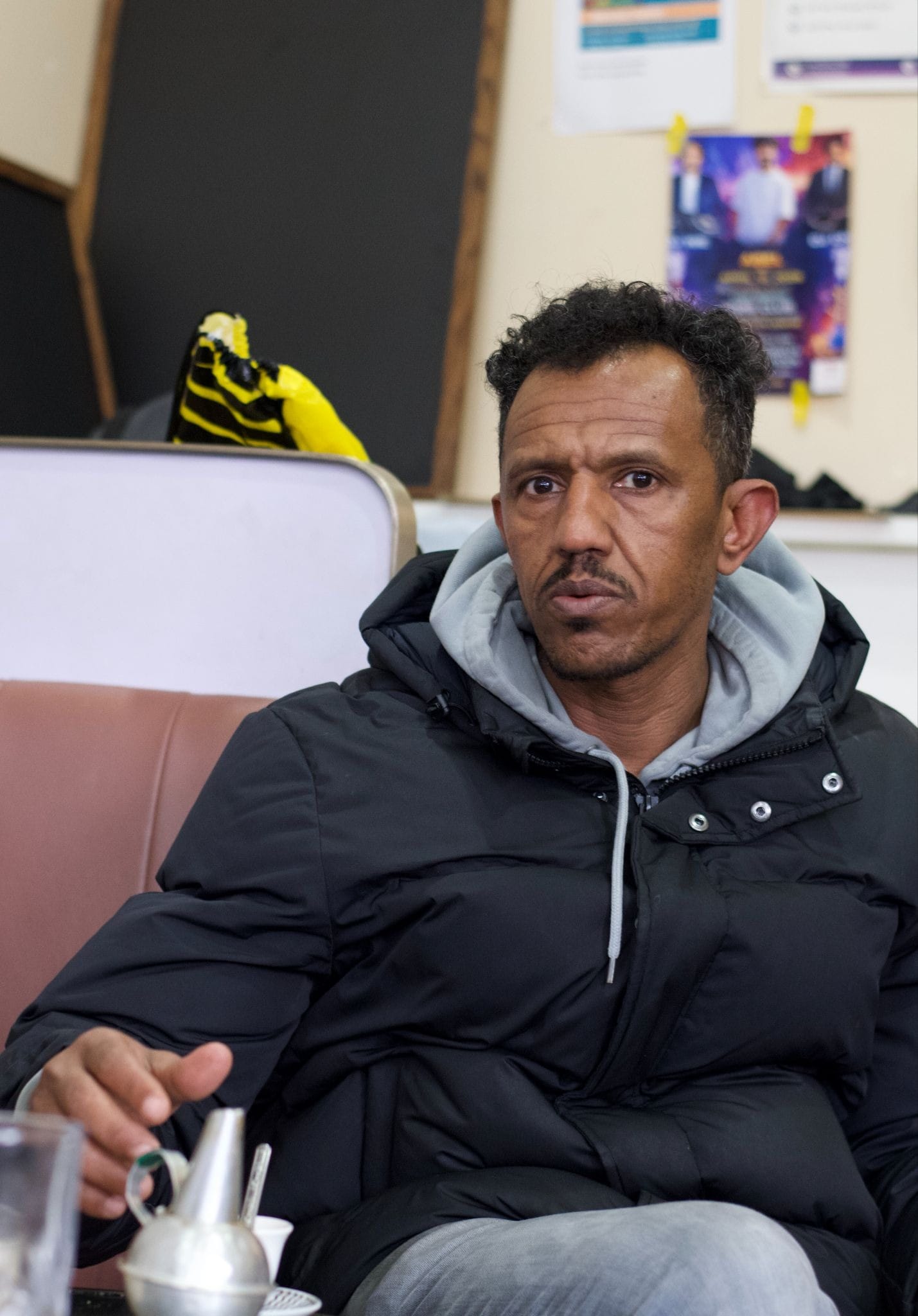
That was ten years ago. He worked for a laundry company and lived in Parkhead, and passed through the Gallowgate on the way into the city centre. At that time, there were barely any Eritreans in Glasgow. “Everything closed at five,” Idris tells me. “I used to stay at home alone all the time.”
A government census has never been taken, but it’s estimated that Eritrea has a population between 3.6 million to 6.7 million — so, roughly the same as Scotland. Despite this comparatively modest population size, Eritrea was the top country of origin for small boat arrivals to the UK in 2025. The reason behind this is an unhappy one: Since gaining independence from Ethiopia in 1993 after a bitter 30-year war, Eritreans have lived under the totalitarian rule of Isaias Afwerki. According to Amnesty International, torture is widespread, with both men and women subject to an indefinite, ill-paid military service. Eritrea’s oppressive government also means natives of the country have some of the highest asylum grant rates in the UK — around 87% in 2024.
Since the end of the war in 1993, there has been a steady arrival of Eritreans into the UK. Home office data shows 94% of asylum seekers in Scotland currently live in Glasgow. This makes sense: The Times recently reported that this city’s reputation as a safe haven has led to a rise of ‘double refugees’: people who flee their own countries and then move to Glasgow to escape anti-migrant hostility.
In the Family Cafe, I speak with Thomas, a food delivery courier aged 20, who has been in Glasgow for six years. “I love my country and want to go back; I have no option but to be here,” he says. “If I go back, I have to be a soldier from the age of 18 to 54. That's why I'm here.” I hear similar stories in Al Waha halal butchers, where I chat with Hamid, a softly-spoken Eritrean man who recently arrived in Glasgow after living for three years in Newcastle. He wasn't planning to move to Glasgow but fell in love with the friendliness of the people after a couple of days.
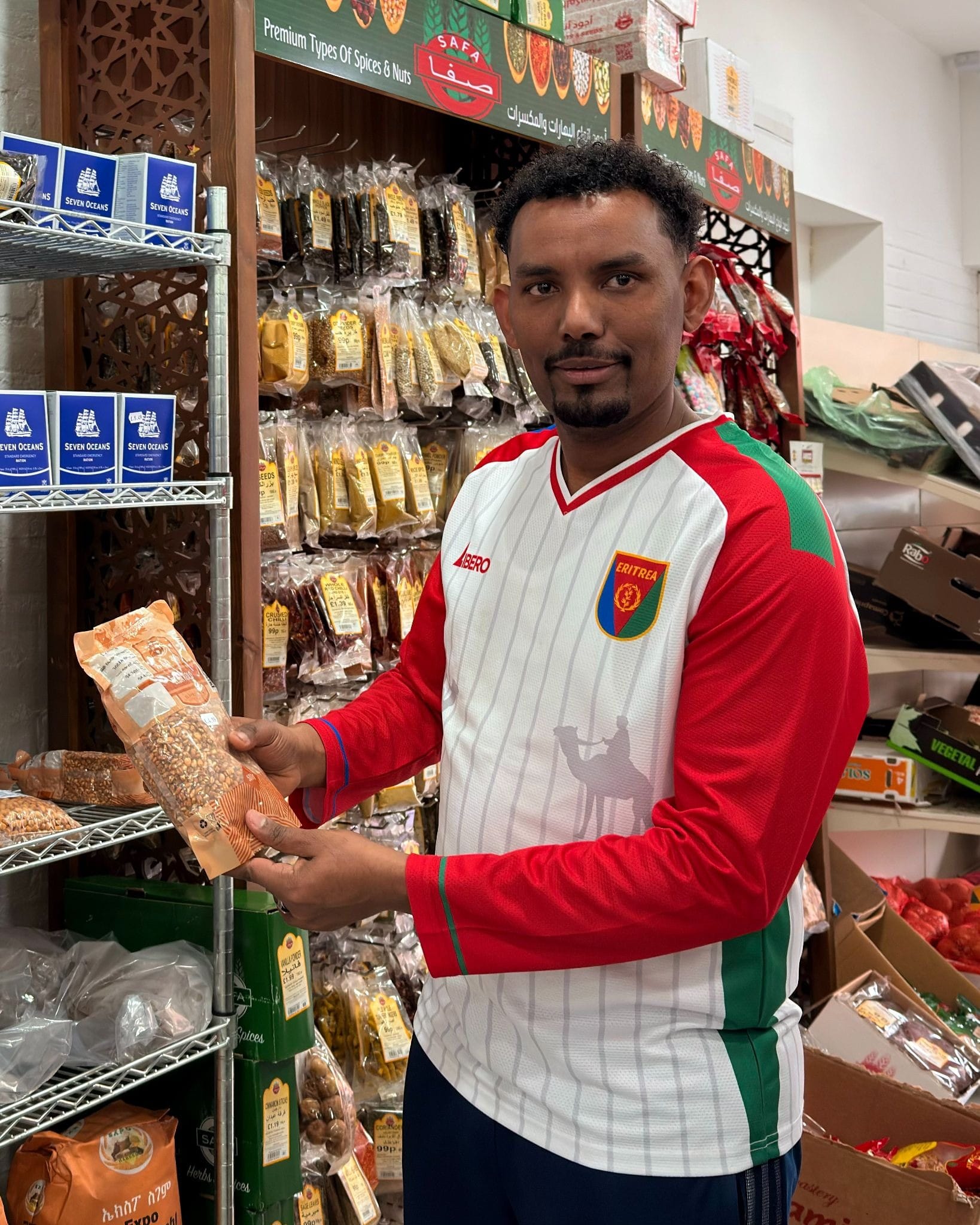
Hamid’s sporting an Eritrean football top, so I ask him why we rarely hear about the national team. Every time they play outside the country, several members of the team claim asylum, he explains. And indeed, only a few weeks ago, after Eritrea beat Eswatini 4-1 on aggregate to reach the next stage of Afcon, seven players absconded.
When I ask him about Little Eritrea, he tells me that his own father worked for several years in Saudi Arabia and always managed to find an Eritrean shop or cafe. “It's in our DNA to live this way,” he tells me. In Selam, the Habesha grocery store, Haben explains that Eritrean communities are incredibly close-knit. “If your mother needs to go out, the other mothers will accept you as their child: they will feed you, they will wash you, they will make you sleep with their children. The only difference is that they didn't give birth to you.” When he tells me this, it makes more and more sense that Eritreans like to seek out their community. Which doesn’t mean everyone’s happy with the situation.
Andy works in the bike shop next to Ghinda Cafe. I assumed that with all the Deliveroo cyclists, they would be doing well out of the new arrivals. But, apparently, the couriers just block the lane with souped-up electric bikes from China. “I don't want to live here anymore,” he says. “The country is completely ruined.” 150 years ago, the Gallowgate was a notorious slum of immigrants from Ireland, I say. Isn't this just the same thing?
“Yes,” he replies, “and then there were Pakistani and Indian people after the Second World War. But they integrated. This isn't integration. This is a community of people that are not integrating.”
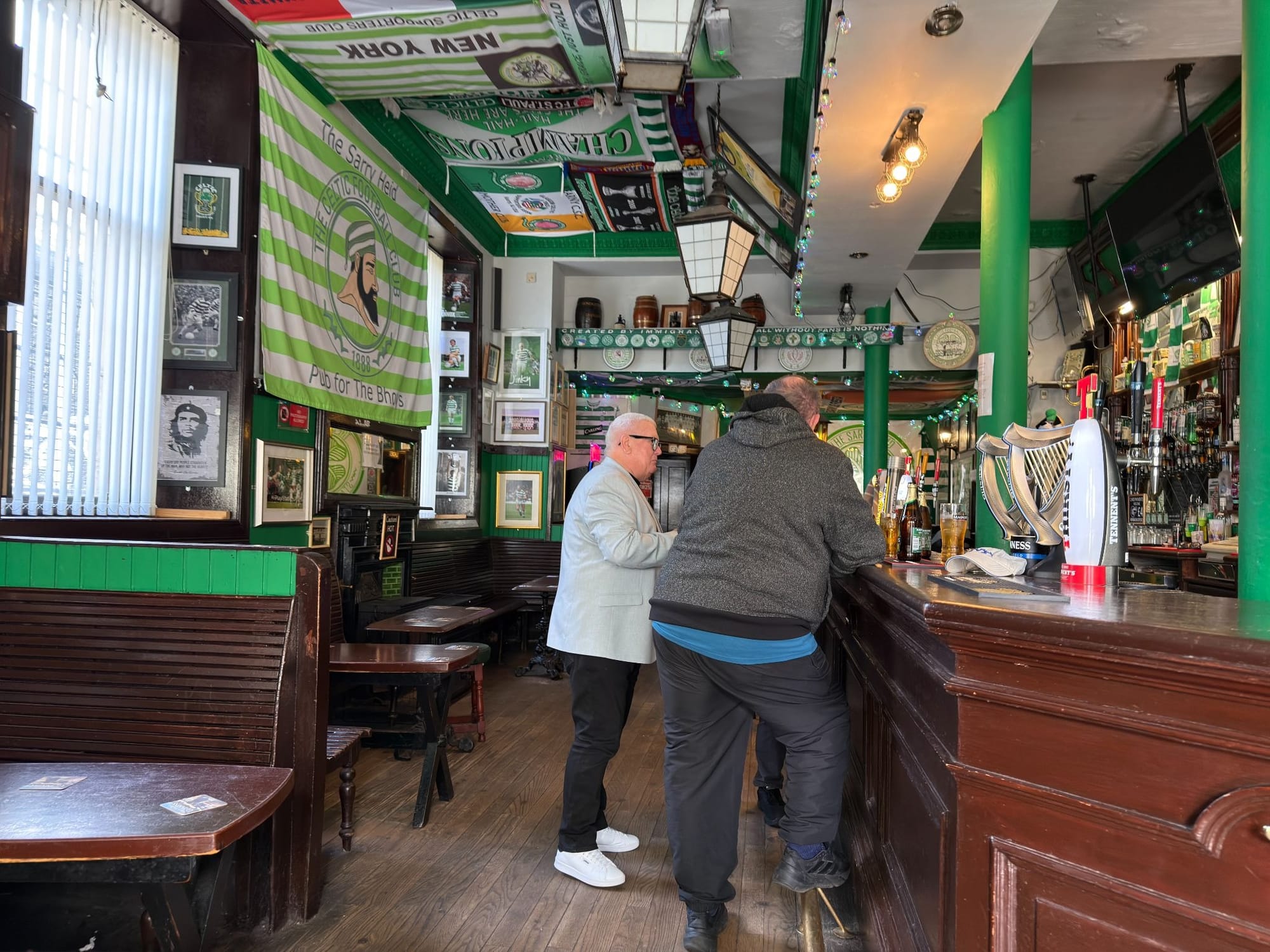
Finally, I make my way back to the Saracen Head. If you’re familiar with it, you’ll know it’s one of the many staunch Celtic pubs around the Gallowgate. One of the banners above the bar reads “CREATED BY IMMIGRANTS”, a reminder of what’s come before for this area. As historian Dr Martin Mitchell has written about, in 1847 alone, more than 50,000 Irish immigrants arrived in the city (and as we know, many of them settled around the Gallowgate). In the same year, the Glasgow Herald published a piece headlined “The Irish Invasion”, in which they described “the streets…literally swarming with vagrants”. By 1851, the Irish made up over 18 percent of the population of Glasgow.
This wasn’t a transition that was necessarily welcomed by Glaswegians, since the influx of so many impoverished Irish people, fleeing the Famine, strained the city’s already-pressed resources. Thousands of destitute Irish people were sent back from Glasgow under 1845 Poor Law removal orders.
But some new arrivals survived as new arrivals always have — by sticking together and setting up their own institutions: in the case of the Irish in Glasgow, with their own churches and schools (and a certain nearby football team). I would imagine the Irish then, as the Eritreans now, were accused of not integrating quickly enough. But picking up your life and moving countries is challenging — and moving continents even more so. Cups of ginger coffee with their countrymen are what pints in the Sarry Heid were all those years ago.
Welcome to the movement.
We're The Bell, Glasgow's new newspaper, delivered entirely by email, and bringing quality local journalism back to Glasgow.
Sign up to our mailing list and see a side of Glasgow you haven't before.
If someone forwarded you this newsletter, click here to sign up to get quality local journalism in your inbox.