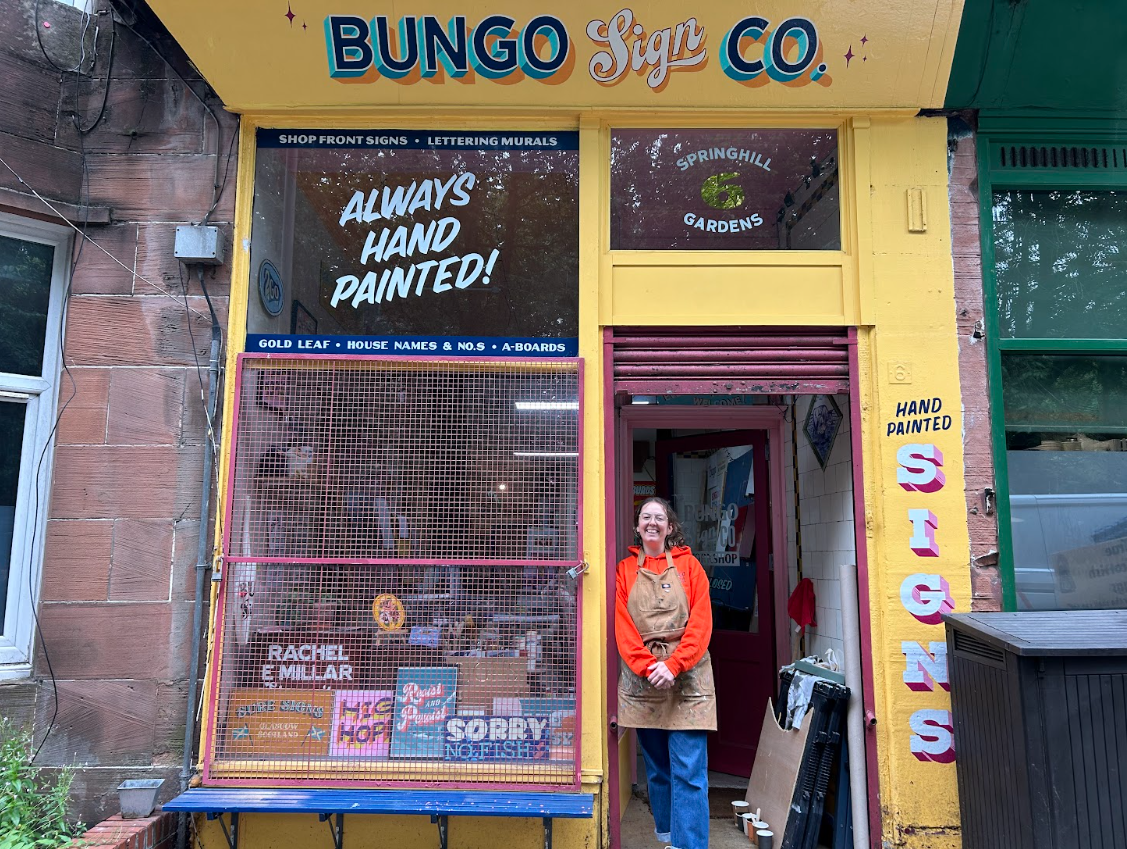
“Glasgow is the worst place in the world to do this job,” Rachel Millar tells me, laughing. We’re standing in the former dairy in Shawlands that houses her and co-owner Hana Lindsay’s business – Bungo Sign Co – and she’s explaining the perils of being a signwriter in this city. For one, there’s the rain, which can arrive without warning when hand painting a sign above a shop front (fine if there’s scaffolding up, but occasionally leading to a mad dash to get back inside the shop). Later, we’ll discuss more general issues — the cost, which is a massive thing for a business in its infancy. Moving parts such as scaffolding, painters, architects all need to be outsourced. But there is the joy of it, too. “It feels really good,” she says. “The best thing is that we’re simply just affecting the built environment, and it’s immediate.”
I’d contend that being able to affect the built environment is the aspect that makes Glasgow a great place to do this job. Walk down many high streets in this city today, and they feel like a copy and paste job. Instead of a baker, a butcher and a seamstress now stands a betting shop, a vape shop and a phone repair shop. Chains dominate, so too does a visual uniformity — a sort of dreariness in the fact that it doesn’t matter whether you’re in Broomhill or Easterhouse, it can all look the same. Unlike a lot of art that sits behind gallery walls, Bungo Sign Co’s work becomes part of everyday life on these high streets.
Bungo Sign Co is only four years old, but you can already see its signs across Glasgow – largely Southside, where both Lindsay and Millar are based, as well as Govan and Possil – and even across the UK. Millar tells me they’ve completed more than 500 projects, but opening their own shopfront in 2023 feels like an achievement in itself: it’s the only women-owned sign painting shopfront in the UK.
If you’ve browsed their Instagram, you’ll know their signs are meticulously hand painted, often skewing retro and daubed in rainbow brights. The inside of the shop feels as maximalist and inviting as their work: we’re surrounded by paint pots, half completed signs, sketches and rolls of material. Millar chats to me in an apron, paintbrush in hand – exactly how you’d imagine an artist to look – and while doing so is interrupted twice by customers. Similarly, while I’d planned to meet Lindsay, the other half of Bungo Sign Co, she isn’t here — she was called away for a job at the last minute. Signmaking might sound like a niche offering, but there’s plenty of demand for what they do. But how did they get here?
Finding a career in the details
Rachel Millar first became interested in sign design while studying graphic design at Edinburgh College of Art. In the third year of her course, she did an exchange to Boston and was inspired to think for the first time about lettering as a career. For one thing, there was the module she’d enrolled on at Massachusetts College of Art: ‘Using Type As An Expressive Medium’. For another, there was Boston itself — with its painstakingly hand-painted signs and chalkboards with fancy lettering “everywhere you looked”. Most people take souvenirs home from their travels: novelty fridge magnets or seashells or postcards. Instead, Millar took her new-found love for the medium, and produced her whole degree show project on painted wood in a traditional style the following year.
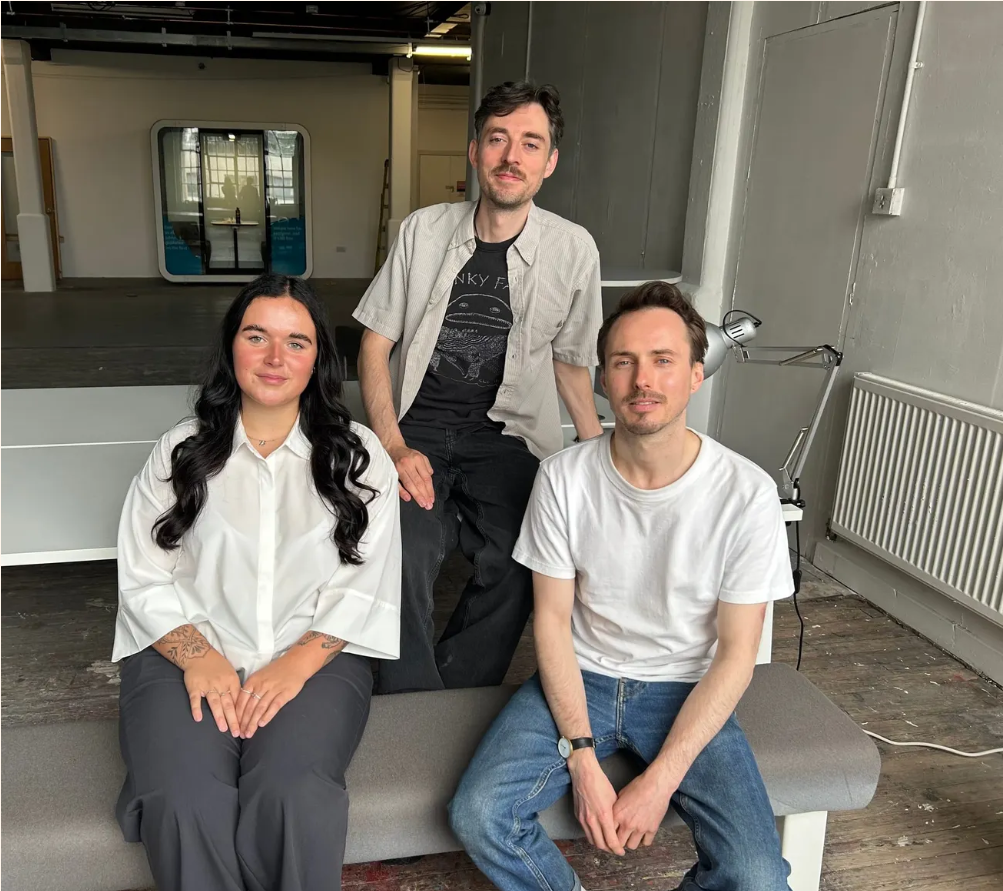
Beth here! Having been at the team just over a month now, I can assure you we are working hard every week to bring you great stories. I had a brilliant time this week speaking to the team at Bungo Sign Co and asking Glaswegians what they thought of them!
By signing up below you can read this weekend piece, and every other one forevermore, completely free! You also support us so we can keep doing the work that we do.
This story is free to read. You just need to sign up to join The Bell's mailing list. And why wouldn't you? You'll get our journalism in your inbox the second we publish, keeping up-to-date on this and all our stories. No card details required.
Already have an account? Sign In