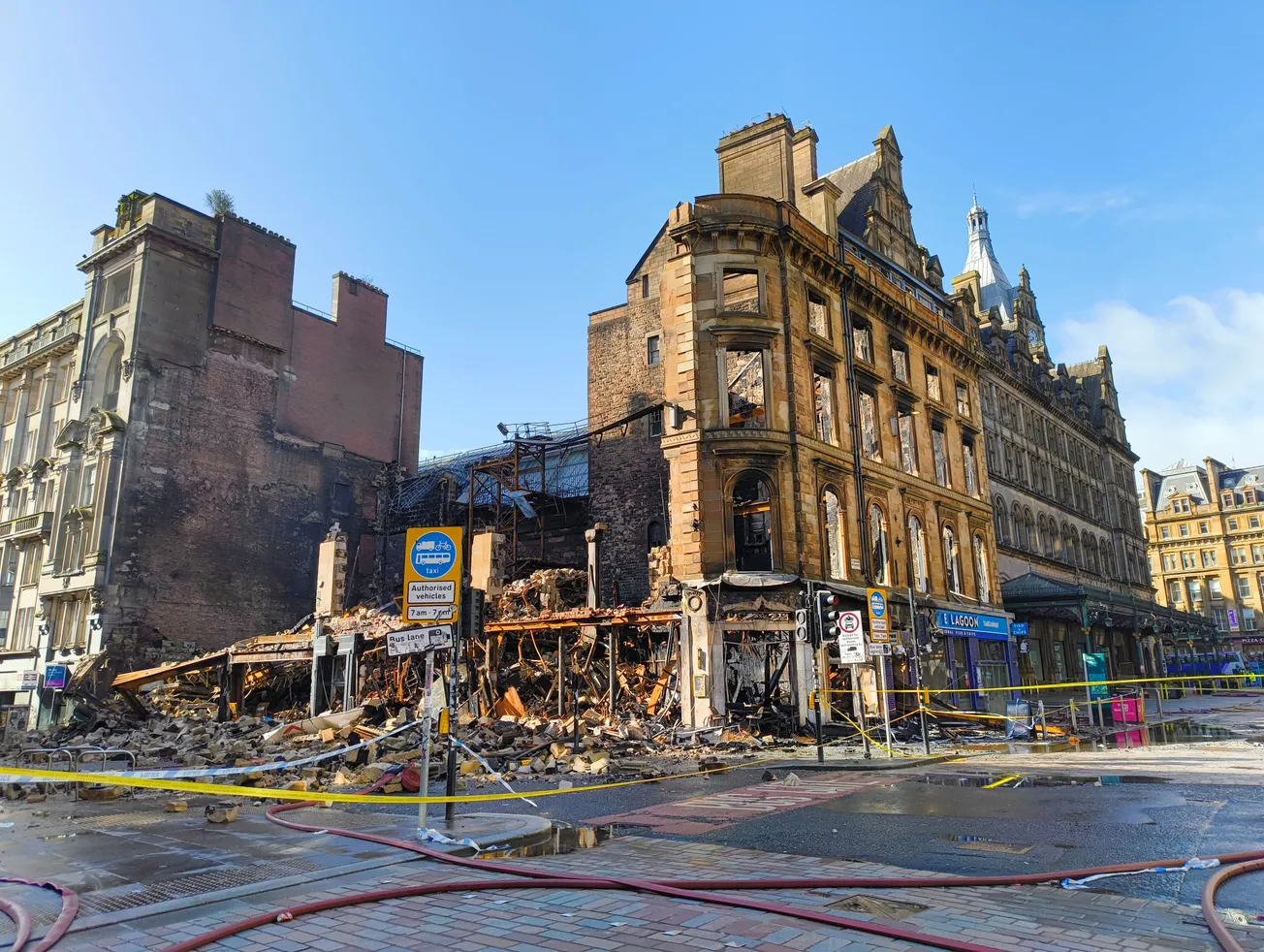
What is the oldest building on Union Street? It’s not the ornate Egyptian Halls (1870), or the voco Grand Central Hotel (once Central Station Hotel), that opened in 1883. And it’s not the now-destroyed B-listed building being referred to as Union Corner — that was built in 1851 for stationary company Francis Orr and Sons.
No, the oldest longest-standing ‘heritage’ property on Union Street — to our knowledge — is number 59: the Rennie Mackintosh Station Hotel. Since the very early nineteenth century, the Rennie Mackintosh has existed as a lodging house in one form or another, and from the 1870s onwards, it was a temperance hostel, offering an alcohol-free place to stay.
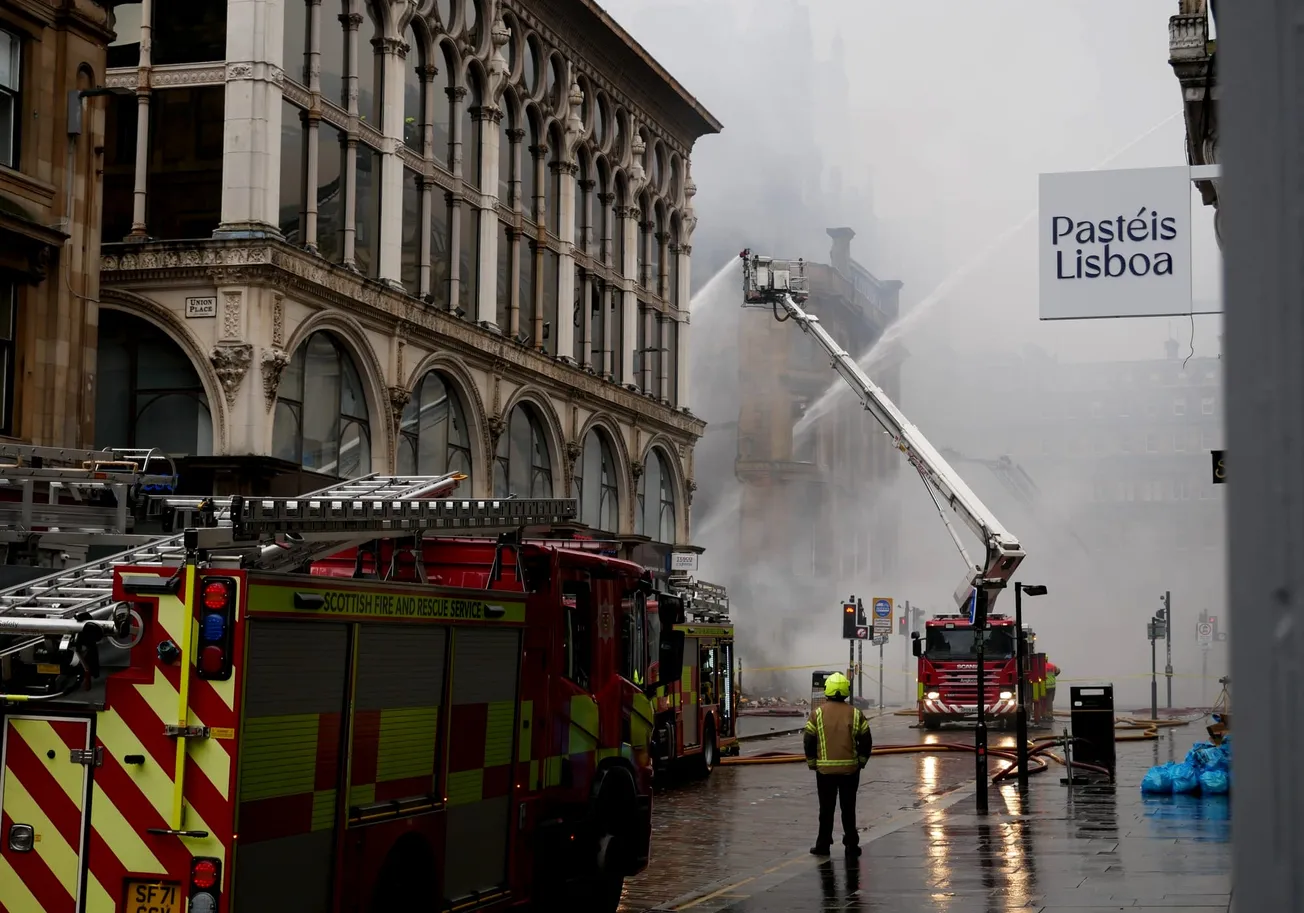
On 8 March, the current residents of the Mackintosh — as it’s commonly referred to — had their night’s rest interrupted. Not all were in their beds — the Mackintosh is now emergency accommodation for Glasgow’s homeless and many of its guests run nocturnal schedules. But for once, they found themselves in the same boat as those lodging at the four-star voco Grand Central down the road: evacuated from their rooms on Sunday evening and told to leave any belongings behind as a fire ravaged the buildings on the corner of Union and Gordon Street.
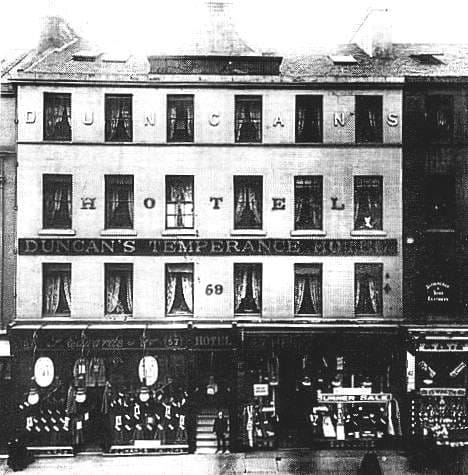
Those at the Mackintosh, however, have been afforded concessions Grand Central’s guests have not. From Monday evening, as police warded away worried business owners trying to cross safety cordons, the Mackintosh’s residents were the lone people being permitted access to Union Street and their rooms.
They were hardly returning to an oasis amid the chaos though. Three different sources, including two homeless individuals, independently told The Bell that on Monday, the Mackintosh had no power — “no electricity, no water, no nothing,” as Fiona*, who sleeps rough and spoke to us on Tuesday, recounted. “There’s smoke damage,” Fiona claimed. “They’ve just left them in there with smoke damage”.
Welcome to The Bell. We’re Glasgow's new newspaper, delivered entirely by email. In a week like this, a lot of people are coming across us for the first time. Why not sign up and get our journalism direct to you inbox? That includes a free Monday briefing with local news and reviews, and an in-depth weekend read like this one.
Try The Bell for free, no card details required.
The Mackintosh’s presence, and Union Street’s general status as a gathering point for the homeless, makes it no coincidence that two of those first on the scene on 8 March were unhoused. Lamin Kongira and James Welch were both filmed attempting to put out the first flames in 105 Union Street after the fire started just after 3pm on Sunday afternoon. Kongira, who’s lived in Glasgow for 16 years, told ITN reporters that he had been homeless for six months, after his marriage broke down, and was currently living in a hotel. It was his “duty as a citizen in Glasgow”, he added,“ to help my city.” Welch, 51, said the intense media attention for his heroics was resulting in “seeing generosity like never before”.
People like Kongira and Welch are part of the sometimes unappreciated modern ecosystem of Union Street. Until the 1990s, Union Street was one of the main shopping thoroughfares in central Glasgow. Several generations remember the iconic 1980s Irn Bru clock advert hanging above the building that burned down last Sunday, while affixed to the dome at the Gordon Street end was a giant glowing Bell’s sign. Remembering being “dragged” into town for shopping trips as a child, cabbie Mark recalls: “You knew when you seen the sight of the clock and the Irn Bru sign, you were on the last leg”.
But as shoppers moved their focus to Buchanan Street, and St Enoch’s Centre in recent years, Union Street has become somewhat of an outsider avenue. This is reflected everywhere from its traders — often independent and alternative, like Warhammer merchants, or wig makers — to its restaurants like Calabash, which offer havens for migrant communities.
That’s not to look at Union Street with rose-coloured specs; it’s got its fair share of struggles. Open drug dealing, violence, buildings falling into disrepair and plenty of eyesore tat shops (like the one at 105) that might provide the odd pedestrian with a handy lighter, but are often poorly regulated and don’t seem to be contributing much to making the street a place people particularly want to linger on. In many ways, Union Street’s positives and negatives are a perfect microcosm of Glasgow itself, all its good and not-so-good distilled into one city centre stretch.
But now a big chunk of Union Street has been, if not lost, then severely disturbed for the foreseeable future. CJ, who runs the salon Tangible Hairdressing says that she’s still “pretty disassociated” when The Bell speaks to her on Tuesday. It’s audible in her quiet voice, her words rolling out slow and heavy.
CJ, 40, was one of the dozens of traders renting premises on the upper floors of 111 Union Street, which was a warren full of tattoo artists, hairdressers and nail technicians. CJ only got news of the fire after a “late birthday treat” at a spa — her zen was short-lived after she saw that her studio of six years was on fire. Like her fellow tenants, CJ lost everything — all her equipment, as well as sentimental items, like trinkets and artwork gifted by grateful customers. She’s also lost physical access to her daily support network; CJ “knew people on every floor”.
On her breaks, she’d pop across the corridor to catch up with Annabel of the Willow hair salon, or the boys at Future Studios Barbers. Up on the fourth floor was her friend Jack Baxter, owner of Wig Chapel, a globally-renowned wig maker whose avant-garde creations turn up everywhere from drag shows to red carpets. CJ would often act as a model for Baxter between clients. These cubbies squirrelled away in Union Corner were “little havens” amid the bustle of town, particularly for those traders viewed as kindred spirits.
Hairdressing was “almost secondary” as an objective, CJ says. She just wanted to “mak[e] people feel better than when they [first] walked in the door”.
‘Why is it safe for them? It's either [the council] don't care or it is safe’
A few doors down from where CJ’s studio stood less than a week ago, and under the Rennie Mackintosh Hotel, is Calabash, a pan-African restaurant run by Elizabeth Ndungu. “Oh! Not good,” she says, laughing wryly, when The Bell asks her how she is doing. By Thursday, Ndungu still hadn't been able to access the property to assess damage and stock losses. She’d last been in the premises at 7pm on the 8 March, which is when firefighters evacuated her and Calabash’s staff and diners during a busy dinner service. Peanut stews and jollof rice will still be sat, half-eaten, on the tables of the subterranean restaurant.
Ndungu assumed that fire crews would be able to tackle the blaze quickly and everything would “go back to normal”. But that hasn’t happened. Instead, she’s in limbo and has heard “nothing” from Glasgow city council.
“We don't know the situation. We don't know what's going on. We have not had anybody to even address us and tell us this is exactly what is going on.”
She’s desperate to get back and re-open. The material driver is financial: her insurance won’t cover the loss of earnings from an indefinite closure; Ndungu has staff and rent to pay. But Ndungu also sees her restaurant as a key “hub” for Glasgow’s African diaspora. It’s why, in 15 years of operation, she’s never pinned Calabash to a specific country, like Kenya, where she’s originally from. “[People] know ‘if we walk in we'll get our food, we'll get a member of my community’. We tackle loneliness and isolation.”
One time, Ndungu remembers, two people walked in and “nearly wanted to fight”. One was from the Hutu ethnic group, the other belonged to the Tutsis — whom Hutus in Rwanda enacted a bloody genocide upon in 1994.
Ndungu and her late husband told the pair: “‘This is Glasgow, it is not about [this]’’. The fight was averted. “Now you will never know whether there is a Hutu or Tutsi,” she adds. “In Calabash, it made people, all Africans, become one. That is one of [our] achievements.”
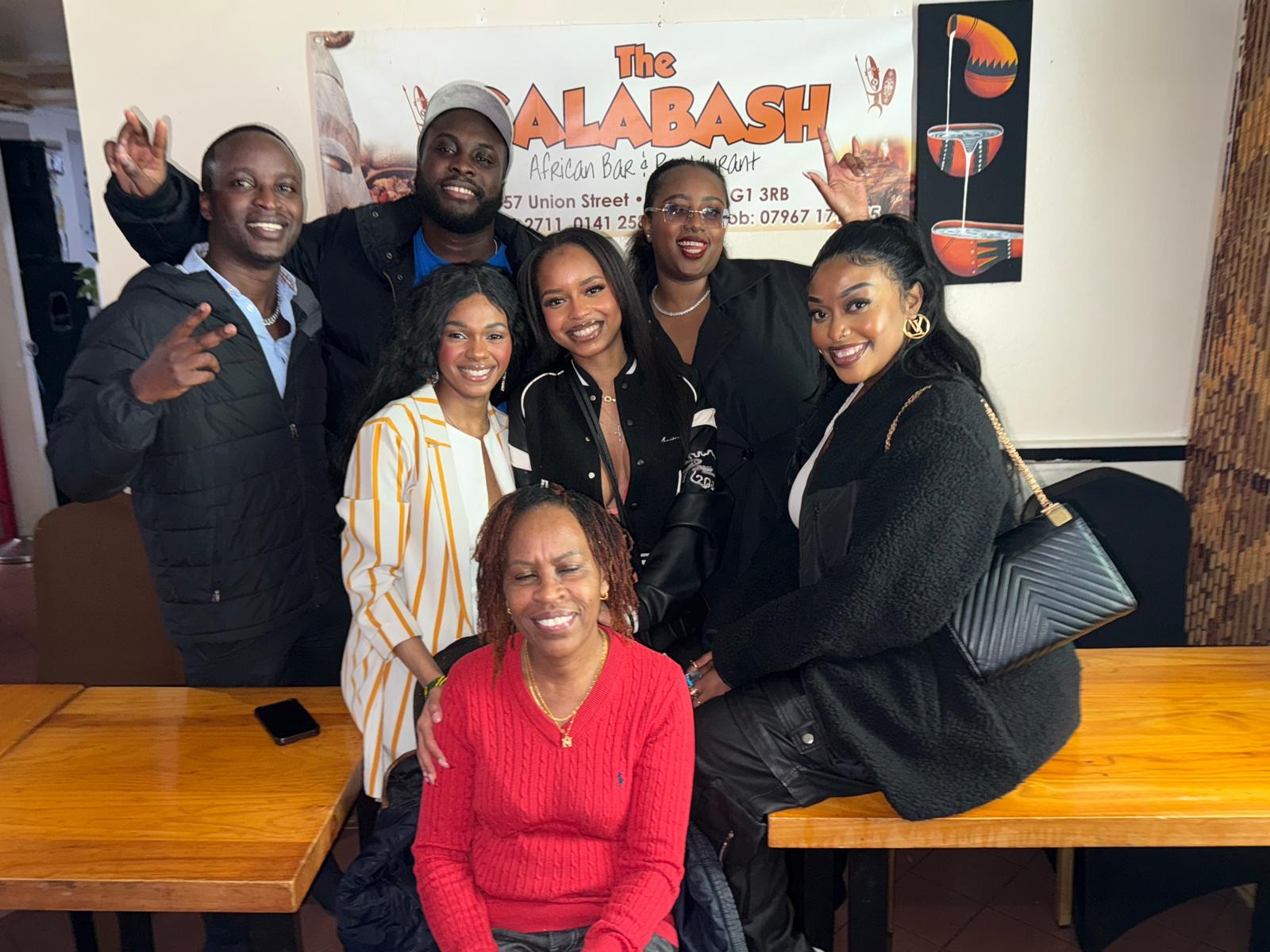
Being situated under the Mackintosh Hotel, Ndungu also worries for its guests — and questions their re-admittance to the site when everyone else has been turned away for their own safety.
“The homeless people are not considered as important human beings, or there's something very strange going on, because they are still living in that hotel,” she notes. “Why is it safe for them? It's either they [the council] don't care or it is safe. Because those people at the Rennie Mackintosh, they are human beings like anybody else, so if there was any danger, they should have been taken somewhere else. [The council] cannot say it's dangerous for some people and not dangerous for others.”
‘It's a bit of a double whammy’
Other Union Street business owners say that they have also been frustrated by disjointed — or absent — communication from the local authority. Sebastian Bacewicz, co-founder of Glasgow’s only specialist pasteleria and deli, Pasteis Lisboa, tells The Bell that for the first three days of road closures, staff had to to turn up to police cordons at 6am to check if they had access yet — there was no other channel to get information via. A dedicated council-run updates page didn’t have “a single phone number, not a single person to speak to. There’s not even an email address”. He notes that a “private insurance broker” set up a 24 helpline for businesses affected by closure. “That’s still more help than the council”.
We first speak on Tuesday; the next day Bacewicz texts to say local councillors have moved into action and put him and his partner and co-owner, Emma Airley, in touch with a manager from the business support team. By this point, Pasteis Lisboa has lost roughly £6,000 in total, estimates Bacewicz, — £2,000 a day. All their staff, bar one, are on permanent contracts, with guaranteed hours.
Now he’s finally got contact with the council, Bacewicz’s concerns have turned to the prospect of lengthy partial street shutdowns. Pasteis Lisboa only opened on Gordon Street — their second location — three months ago. He and Airley were excited; the spot was a “prime location” and the “perfect opportunity to expand the business”.
But, like other affected city centre entrepreneurs, their enthusiasm has been dealt a serious blow. They have business interruption insurance, so will try and reclaim losses for the enforced closure, but once the shop is re-opened, that’s void. Bacewicz worries that if Gordon and Union Street are not fully accessible for a long time, Pasteis Lisboa will be “losing money every day”. Ongoing roadworks are already causing disruption for their Byres Road premises so “it's a bit of a double whammy, but there's nothing we can do about it”.
For Stephen Howe’s regulars, disruption doesn’t just have an impact on takings. The shop he manages — the Warhammer store at number 39 — has a "relatively high neurodiverse customer base”. Occasionally punters come in, slightly shaken by the pace of life in the city centre. But once they’re in Howe’s care, it’s his job to answer questions, make them feel at home and understood. He tries to make the shop feel “safe for our customers”, whether they’re newbies to the craft and culture of Warhammer, or long-time enthusiasts, immersed in the lore that accompanies the paintable fantasy figurines.
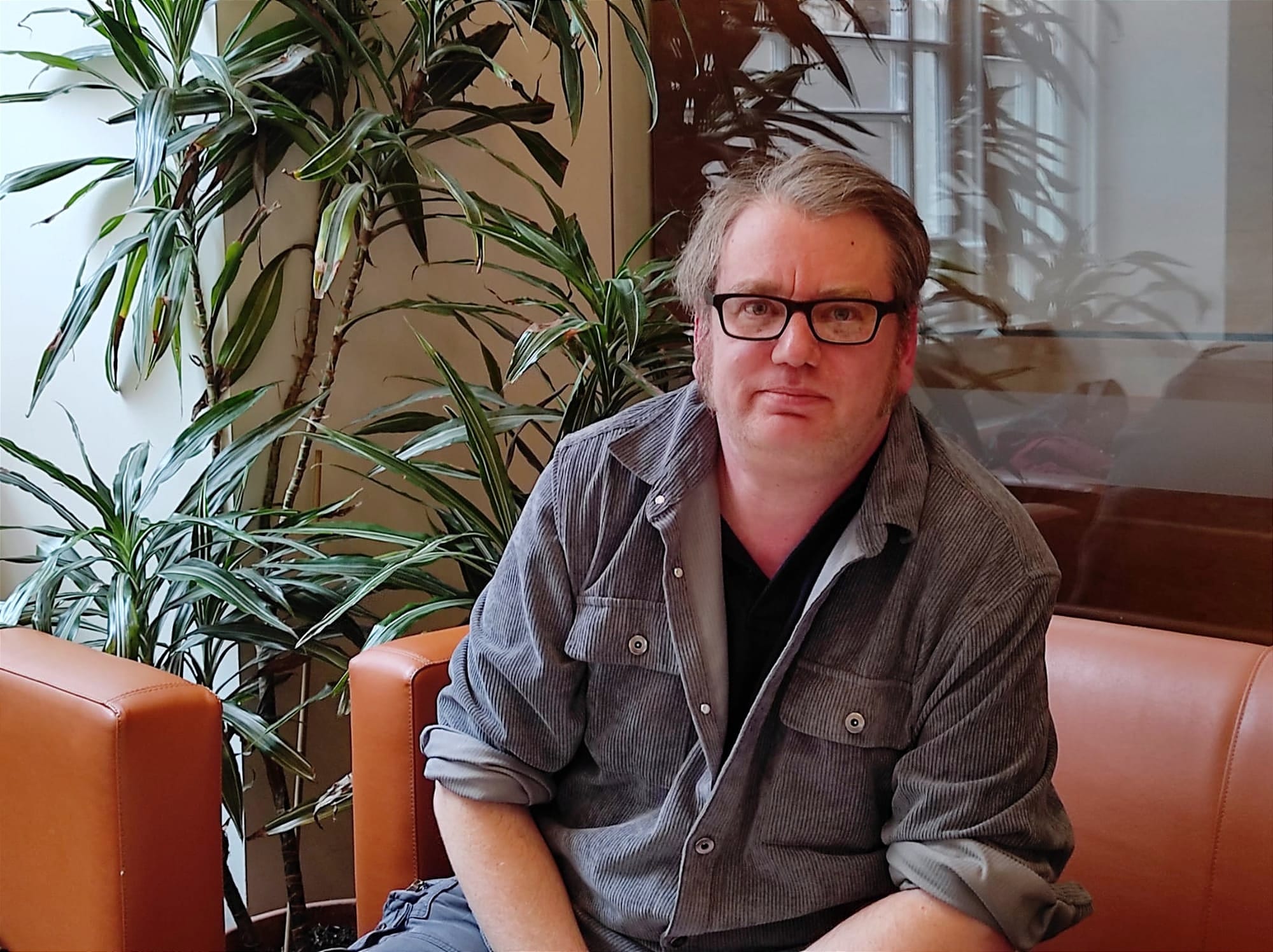
Howe’s guide role extends beyond the confines of number 39; he’s also the chair of the Grahamston Forum, a working group of businesses on Union Street and around Central Station. He’s full of facts about nearby retailers — did you know the Matalan on Jamaica Street is supposedly “the most shoplifted in the country”? — and is a familiar fixture strolling Glasgow’s grids, chatting to traders from behind dark-framed glasses. They’re a tight knit bunch; Howe recounts how the CEX lads over the road call him when someone walks in trying to offload boxes of Warhammer figurines they’ve clearly just lifted from his shop. He knows the people who run Tokyo Toys, the chefs at the Vietnamese restaurants, and was chummy with the folk at Geek Retreat, before they moved to pastures new last year. “It’s a really nice cluster of businesses”, he says in his Teesside accent.
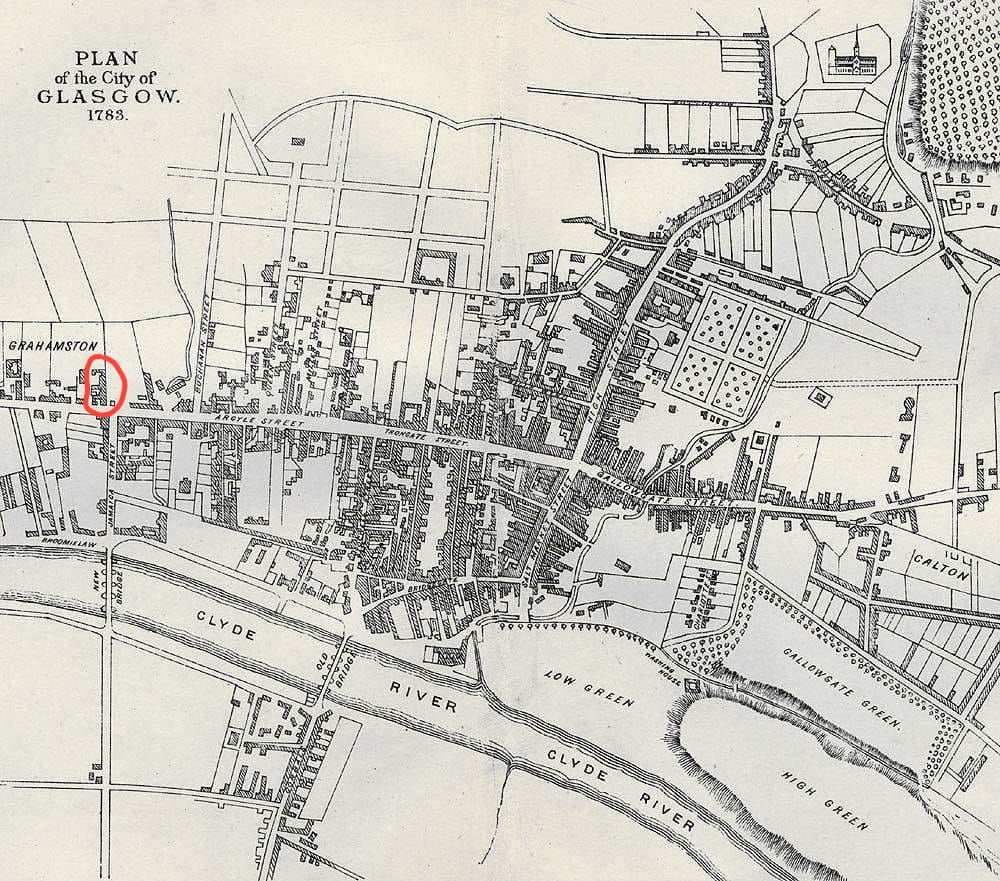
The Grahamston Forum is a relatively new formalisation of existing relationships between city centre businesses, set up after the pandemic to tackle anti-social behaviour on the Four Corners. The group’s called Grahamston after the lost village that once stood here from the 1600s until the 1870s, when it became Glasgow city centre. It was here that the Rennie Mackintosh had its roots. Union Street’s beginnings as part of a village on the fringes, before being suddenly anointed as the focal point of a major city lend an interesting resonance to the outsider culture that persists today. “You talk about spirits,” Howe imparts. “These places have a legacy, an impact on the city.”
Some of Union Street’s spirits are currently scattered, some temporarily, some for good. CJ’s immediate objective is to find new operating space anywhere; several of the 54 other small business owners who had studios in 111 Union Street have already been rehoused by local salons and beauty parlours. But public support has been “insane”, she says; her post-fire fundraiser has raised £12,000 out of a £20,000 goal in just three days, strangers chipping in to get her back on her feet. “I didn’t know how loved I was before this”.
Others are still drawn back to their stomping ground, cordon or no cordon. Fiona’s bed for the night was in Govanhill. But she came to Union Street first, looking for her fellows. “It’s crap, to be honest, because we usually stick by each other. But now everybody’s everywhere”.
Additional reporting by Robbie Armstrong
If someone forwarded you this newsletter, click here to sign up to get quality local journalism in your inbox.