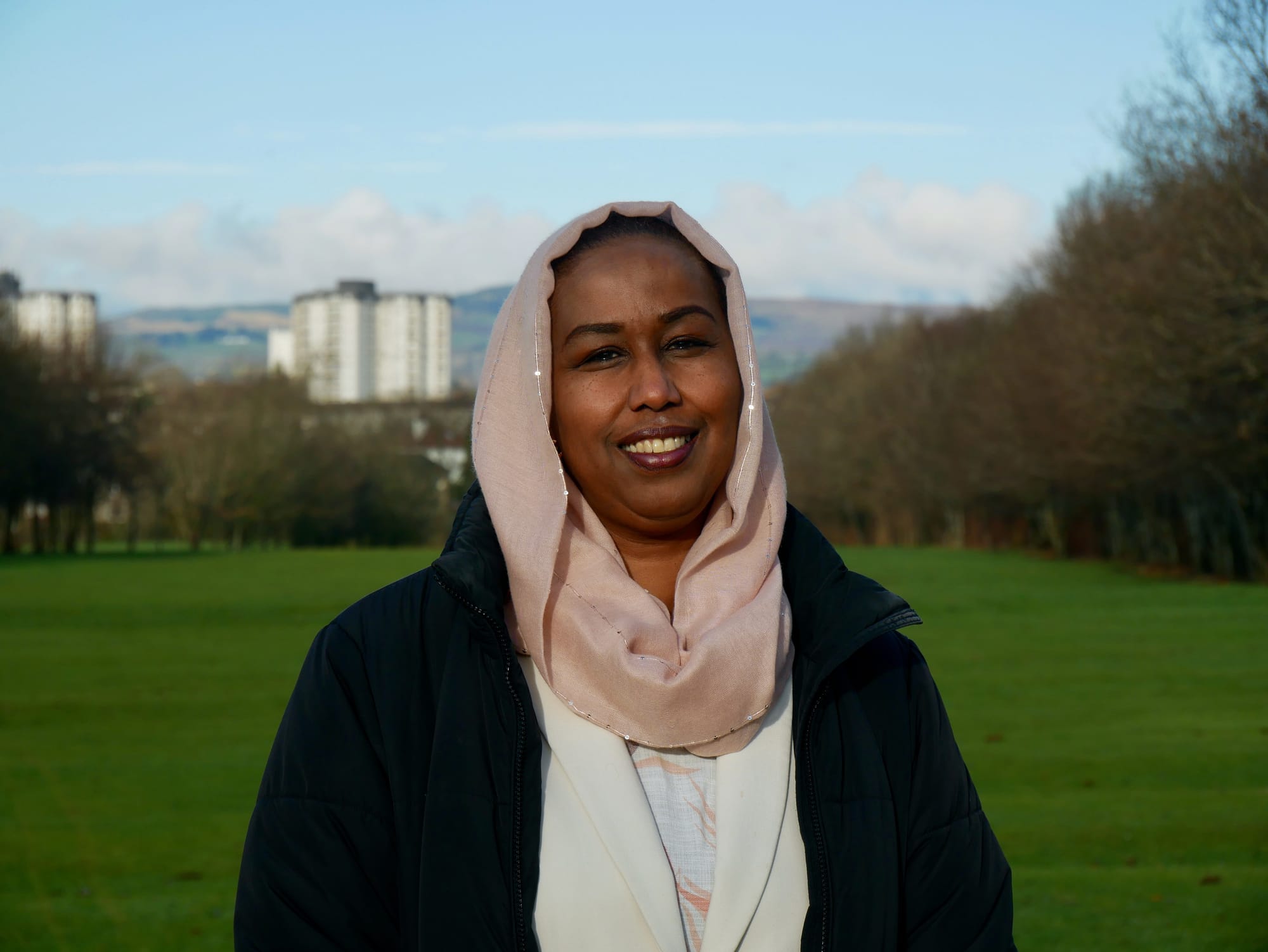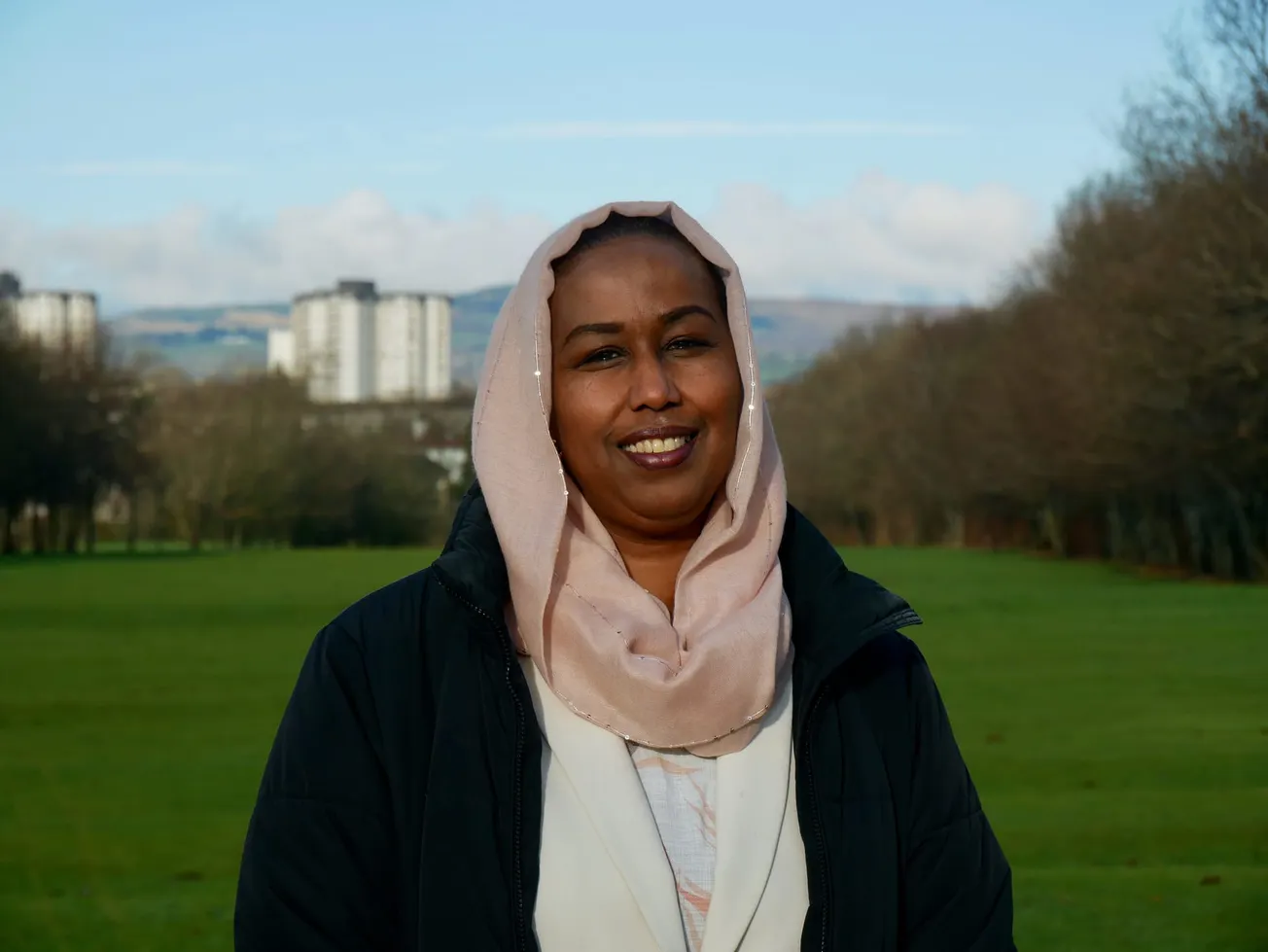
Dr Habab Idriss was on a field expedition in Kassala, shadowed by Sudan’s dusty orange Taka monoliths, when the first gunshots rang out in her home town. It was April 2023, and the paramilitary Rapid Support Forces had just descended on Khartoum, dressed in military fatigues and brandishing automatic weapons above their heads as they paraded through the streets triumphantly. It was the early stage of a coup d’etat, the internet had just been shut down and a blockade surrounded the ancient capital. Idriss — holed up out east — hadn’t heard from her family in days. She was put up in Kassala, and remained there, nervously waiting for word from her loved ones. “In Sudan, everywhere is home”, she tells me from a park in Knightswood. Three months later, the word finally came: “We’re ok, we’re safe”. Idriss sprang into action.
She packed her bags and crossed the border into Eritrea. In that instant, all her belongings on her back, she went from a doctor of archeology to a refugee. Idriss may have been separated from her family, but she wasn’t alone; she was but one of 12 million Sudanese fleeing the worst humanitarian crisis in the world. But how did she end up in leafy Knightswood?
“I don’t say this is my second home, I say this is my first home” Idriss explains with warm eyes and a wide smile — belying the struggle she’s faced to find sanctuary in Scotland, two and half years on from the conflict that plunged Sudan into chaos. “I was a very fragile person, you know, leaving the kids behind and everything. Very desperate, very vulnerable,” she explains. When she first settled in Knightswood, she would spend her days looking out the window of her Kingsway flat across Glasgow’s western sprawl to the Kilpatrick hills — the “nice fields”, as she calls them. Idriss speaks with a levity that contradicts the gravity of the words coming out her mouth, chuckling as she says: “I can’t just think ‘Oh my God’. I keep myself busy, right?” If she didn’t keep moving, she explains, she’d be left worried sick about her family, about her country, thinking “oh my god, what will be my future?” So she just gets on with it, one day at a time.
Fortunately for Idriss, her sister had already come to the UK two years earlier, where she eventually settled in Glasgow. And so, from Khartoum to Kassala to Eritrea, via Dublin airport and a ferry-hop over to Scotland, Idriss finally arrived right here. As her sister helped her move into her Kingsway high rise flat, she said to her, “‘Habab, there is something you can see from the window, you’ll like it.’” Three thousand miles from home, speaking now over a cup of tea in a Knightswood community cafe, Idriss explains to me what she saw: community connection.
Because, from high up in her flat — one of hundreds spread out across four grey 20-storey housing blocks — the first thing Idriss had spotted was the modest entrance to a community centre. “So I went there”, Idriss recounts, “I just entered with a nice voice”, she laughs cheekily. The first thing she felt upon opening the doors was a sense of “belonging”.
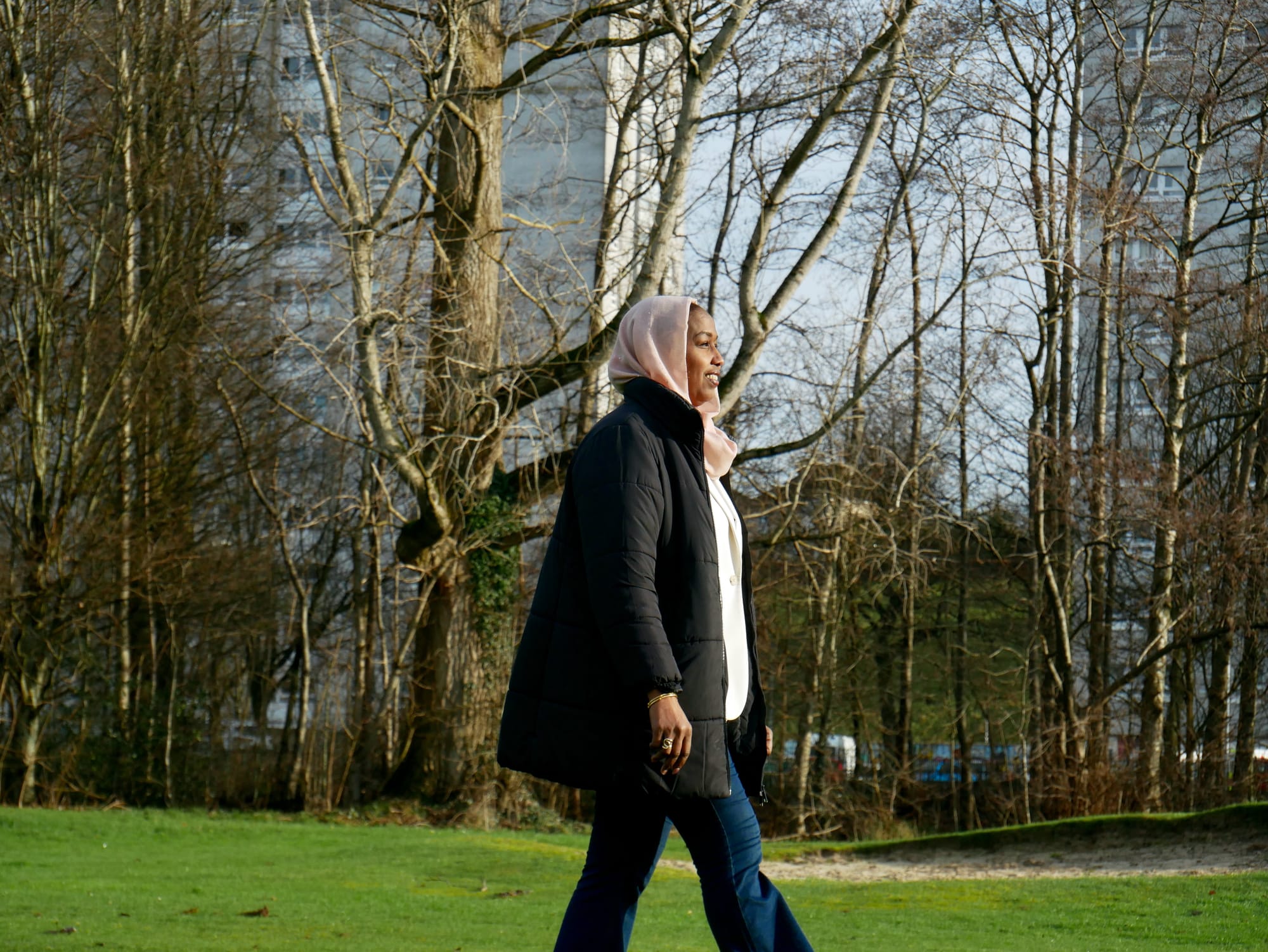
Idriss’ life was about to change. In the space of a couple of months, she’d go from worrying alone in her flat to volunteering for three organisations, setting up her own women’s group, and even landing a big job interview the day after we speak. It’s hard to imagine the journey it’s taken her to get here, all the way from war-ravaged Northeast Africa to an unassuming, residential suburb of Glasgow — but she didn’t end up here by accident.
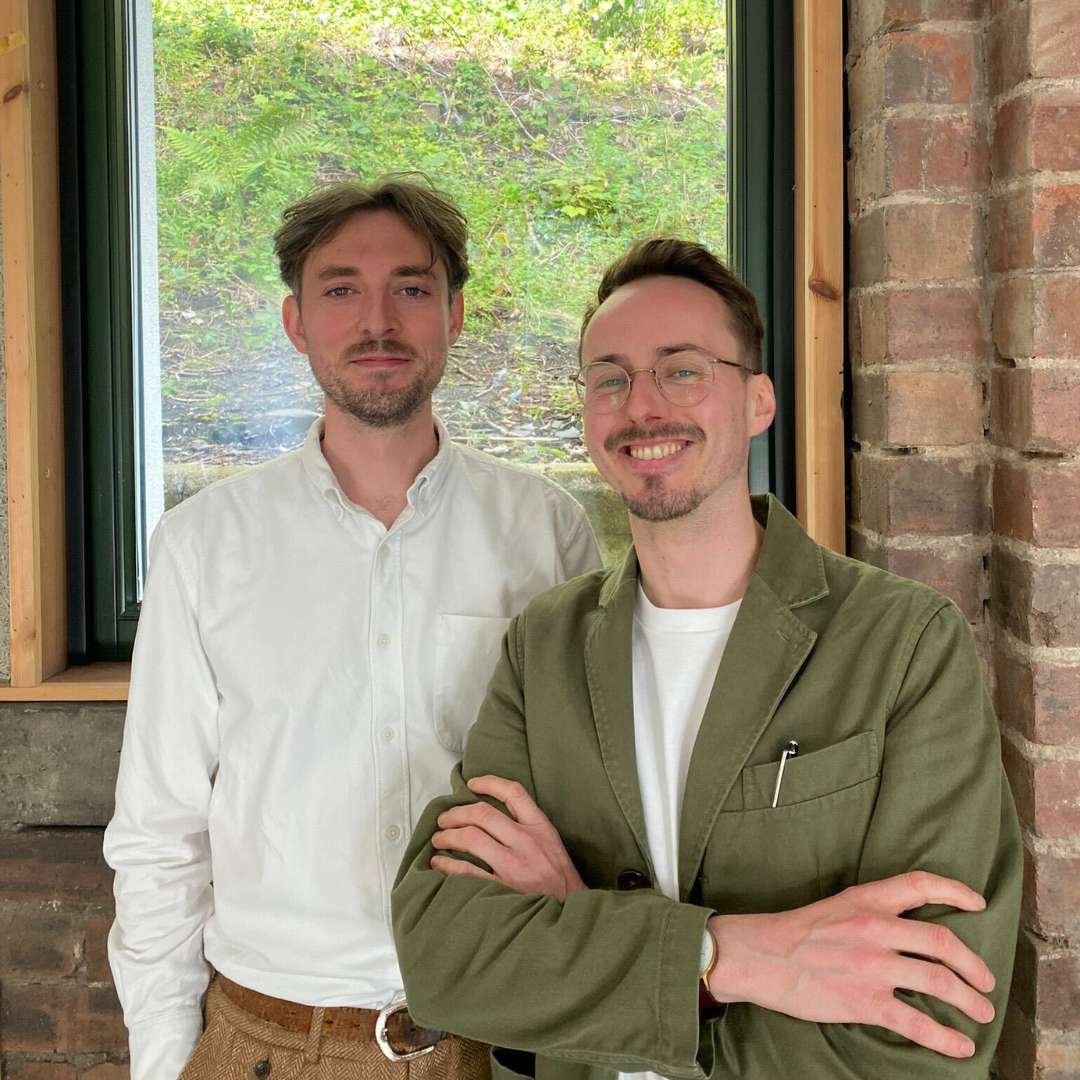
Hi, thanks for reading. We're Robbie and Calum, and we run The Bell. Today's story took about 6 trips to Knightswood and back to meet the characters (and many more) involved. Calum loved doing it, and Robbie hangs his hat on this kind of on-the-ground reporting. It's how we're able to squeeze so much life and local insight into our pieces - especially our Monday briefings, which you can read for free by signing up to our free mailing list.
No ads, no gimmicks: just click the button below and get our unique brand of local journalism straight to your inbox.
Global problems, local help
Knightswood has a long, proud history of welcoming asylum seekers and refugees. It was a flashpoint in the Glasgow Girls campaign in 2005. Then, students of Drumchapel High School led the charge in a campaign against New Labour’s dawn raids, standing firm in the face of the detention and deportation of their classmates.
At a recent screening of a film made by nearby drama group Ignite Theatre, ‘Glasgow’s Granny’ Jean Donnachie, who was instrumental in defending her neighbours from the raids, is in attendance. Speaking after the film, Donnachie tells the dozen or so in the room how, when the enforcement officers would come to the flats, lookouts would tell people to leave via a different exit. Officers came up the lift, residents “went doon the stairs”, Jean chuckles as she recounts the backdrop to the Glasgow Girls’ activism. There’s a friendly atmosphere that turns emotional after the film finishes. They’ve achieved a lot, but they’ve also suffered.
Last March, a 15 year old Kingsway resident called Amen Teklay was found dead in St George's Cross. It is alleged he was chased by a masked pair who attacked Teklay with a sword and frying pan. The community was devastated by his loss. Teklay was from Ethiopia, one of dozens of nationalities who’ve found a home from home in the Kingsway flats. But the welcome they’ve received in Knightswood hasn’t been universal. In August, racist graffiti was sprayed across bridges, walls and underpasses. Children would walk by hateful slogans such as “stop the boats” and “we hate “P****”.
Knightswood, which is wedged between Yoker and Anniesland, contains some of the top 5% most deprived parts of Scotland. Yet while the Kingsway and Lincoln high rises are susceptible to the same stresses familiar to many parts of the city, they are also among the most resilient, supported by a wide network of community organisations.
At its outset, Knightswood was built with the wellbeing of its residents at its heart. In the 1920s, so-called garden suburbs were all the rage. The concept was simple: a network of green satellite communities not too close or too far from the city centre, surrounded by parks, greenspace and tree-lined streets. Cycling around today, the grand concept endures over a hundred years on. Even in the middle of winter there are leafy trees, birdsong and pockets of calm.

As well as wellbeing, community power was also brought here by design. In 2000, the Dumbarton Road Corridor Social Inclusion Partnership dedicated funding to setting up groups such as Kingsway Community Connections (KCC) — that charity Idriss first stepped foot into in 2024 — and the Glasgow Eco Trust. Not only that, but community asset transfers meant that places like the Knightswood Community Centre could remain community-run. So, what are the effects of this pioneering experiment 25 years on?
‘I'm an independent woman’
“I don't know how to describe it. It's like [if you’re] in the middle of the jungle, the middle of nowhere, can you find a door? A way out? Kingsway for me, it's really a door.” On that day she arrived in May in 2024, a staff member invited her to join KCC’s board. Idriss was stunned, taken aback, but leapt at the opportunity. “Can you imagine that?” Idriss asks me, eyes wide, “it’s like a dream … I want to feel valuable”.
Idriss got stuck in immediately. She started attending a women’s group, advice sessions, and making use of the big dining table in their offices where you can just sit and have a cup of tea. “What you need sometimes is just someone to listen, not a solution. Because what can they do when my kids are there [in Sudan]? They can’t bring them, but at least they can support me to stand up and continue. And this is exactly what they did.”
Gradually, she started helping with interpreting. From there, Idriss’ confidence grew until, one day, she heard a group of Sudanese women talking. She was shocked — she had no idea there were others like her living right here, so far from home. She could smell their coffee and what she calls the “special incense” that all married Sudanese women smell of. After speaking to her compatriots, who’d been here for three or four years, she soon realised it was they that needed the support.
In her former life, a 20-year career in archeology working for the National Corporation for Antiquities and Museums in Sudan, Idriss honed her English, perfected working with academics from all backgrounds, and spent time educating local communities on their cultural heritage. “I’m an independent woman”, she laughs. There was plenty she could apply to her new life.
Idriss quickly realised she could help the women learn English while they all supported each other through the terror that had ripped their families and country apart. Kingsway Community Connections gave Idriss a room, and the Sudanese women’s group was born.
Linking ‘New Scots’ and old
On a bright blue January afternoon, I cycle the five miles from Bell HQ to the Lincoln flats, just down the road from Kingsway. Linkes Community Project is a newer version of Kingsway, there to fill the same holes and help residents overcome the same barriers. Language, cost of living, health, loneliness. After arriving, I’m quickly ushered into the community shop. Run by Good Food Scotland, a membership costs £1 per month plus the cost of the shopping. Its brochure reads, “Just like a supermarket but at a fraction of the price!”

As I enter, a family is leaving with bags of crisps, strawberry milk and excited looking children in tow. Paul McCann and Janice Docherty greet me inside. “I’m like the great big uncle to all of the kids here”, Paul tells me, his kind smile beaming as brightly as the orange hi-vis he’s wearing. Volunteering is good for his mental health, he says, otherwise he’d just be sitting at home in the flats that tower above, watching the news, which he finds “depressing”. His antidote? “I try to spread a little love and happiness in my part of the world.” It’s working. The children who patronise the place, invariably for sweeties, love him. Two young Syrian sisters with saucers for eyes and cheeky grins come over. One gives McCann a hug and then some cheek. I don’t quite catch what she says, but their rapport is immediately obvious. They leave shortly after with some marshmallows. After them, there’s a young boy of maybe eight years who fills his arms with five bags of Haribos. Docherty tells me that he belongs to one of two Iranian families who frequent the shop. They’ve been “really sad” over the last few weeks given the protests and brutal crackdown from the Islamic regime. Some haven’t heard from family members since the protests started.
The recent “stop the boats narrative” and accompanying graffiti “boils my blood”, McCann says. Despite this, he believes that the area’s rich array of community groups keep the “New Scots”, as he describes them, going — giving them the strength and wherewithal to build a new life in Glasgow as events in their home countries turn millions of lives upside down, like the Iranian family McCann’s just waved goodbye to.
‘I used to call them angels’
Things turn serious when I bring up the death of Amen Teklay with Idriss. His unnamed alleged killers are set to stand trial in June, also children. They deny the charges. Idriss attended the vigils and supported whoever she could, but “couldn’t stop [herself] from crying”. Her oldest son, who was still in Sudan at this point, is around the same age as Teklay was. One evening, not long after all three of her children had been reunited with her in Glasgow, she hadn’t heard from her eldest son. Her mind started to race. ‘Has he got in trouble? Is he in danger?’ she thought. After several hours of no contact, she texted Jamie O’Neill, a youth worker at KCC. Jamie replied almost instantly by sending a photo of her son, safe and sound, with the words “he’ll be with you in three minutes”.

Over the phone, O’Neill explains to me that he’d heard trouble had been brewing between a group of young boys at a nearby Tesco, so he drove over to disperse the crowd. “One of them was Habab’s son and I said ‘do me a favour, go home’”, O’Neill tells me, matter of factly. That’s when he sent the message to Idriss. All in a night’s after-hours work for the Drumchapel man. O'Neill first arrived at KCC aged 14, and 24 years later, he's the one keeping kids from getting caught up in sticky situations on the street. The young people, Idriss assures me, accord him the sort of respect that can only be earned by having once walked in their shoes.
Back in the community cafe, Idriss is in a reflective mood. “I used to call them angels”, she tells me, referring to the KCC staff. She can tell the difference, she says, between someone “doing your work and doing your work from your heart”. Paul McCann over at the Lincoln flats is the same. He says they’re “lucky to have so many people who care”.
The day after we speak, Idriss is interviewing for a community interpreter role at Glasgow Life. I wish her good luck, and tell her I’ve no doubt she’ll get it. I’m about to pack up my things and go, but before I leave, I ask her where she wants to be in five years’ time. She pauses, then gives me a look I haven’t seen from her before: her eyes are a bit fiercer, but the smile is still only a flicker away. “I’ll be in the parliament”, she says confidently, “I’ll be in parliament. For sure.”
If someone forwarded you this newsletter, click here to sign up to get quality local journalism in your inbox.