It is a drab winter morning; seven degrees with a chance of rain. But nevertheless I am swimsuit-clad at Pinkston basin, a post-industrial dead end of the Forth and Clyde canal in Port Dundas. I get into the filtered canal water, swim for a few seconds, from one ladder to the next, scream, and stagger out.
“It’s cold! It stings!”, I shout, in buzz-filled delight.
Zen-like open water swimming coach, Lisa Boonsanong, who is running five ‘swim and sauna’- sessions this morning, has seen this behaviour before. She calmly reminds me to breathe, before she zips open the door and lets me into the hot sauna tent.
“Some people are a bit anxious at first. But they come out of the water with a smile”, she says, looking stoic and grounded in multiple layers, finished with a Dryrobe and bobble hat.
A new wave
I have always loved wild swimming. Not in the Wim Hof, “endure an ice bath” kind of way, but in a “get out of the house and have an adventure” way. I love the buzz. An outdoor dip blasts away everything from a hangover to worries. It resets me.
I moved to Glasgow in 2002 and have been looking for places to swim throughout my time here, from the cold of winter to the slightly-less-cold of summer. In the beginning, I settled for Loch Lomond, but then, during lockdown, I discovered Abie’s Loch near Mugdock Country Park. Suddenly people were looking for outdoor pursuits closer to home, and the place got busy, “like Sauchiehall street”, especially on sunny days. Swimmers with their neon floats, paddle boarders, and lake-side picnickers set an idyllic scene. This summer someone even played 4 Non Blondes on the guitar on the beach.
So far, so rural. Other cities like London, Leeds and Liverpool now have urban swimming spots in cleaned up areas of waterways. Dundee’s old city quay now boasts ‘Scotland’s largest aquapark’. But what about city swimmers in Glasgow? This question is what led me to Pinkston Watersports.
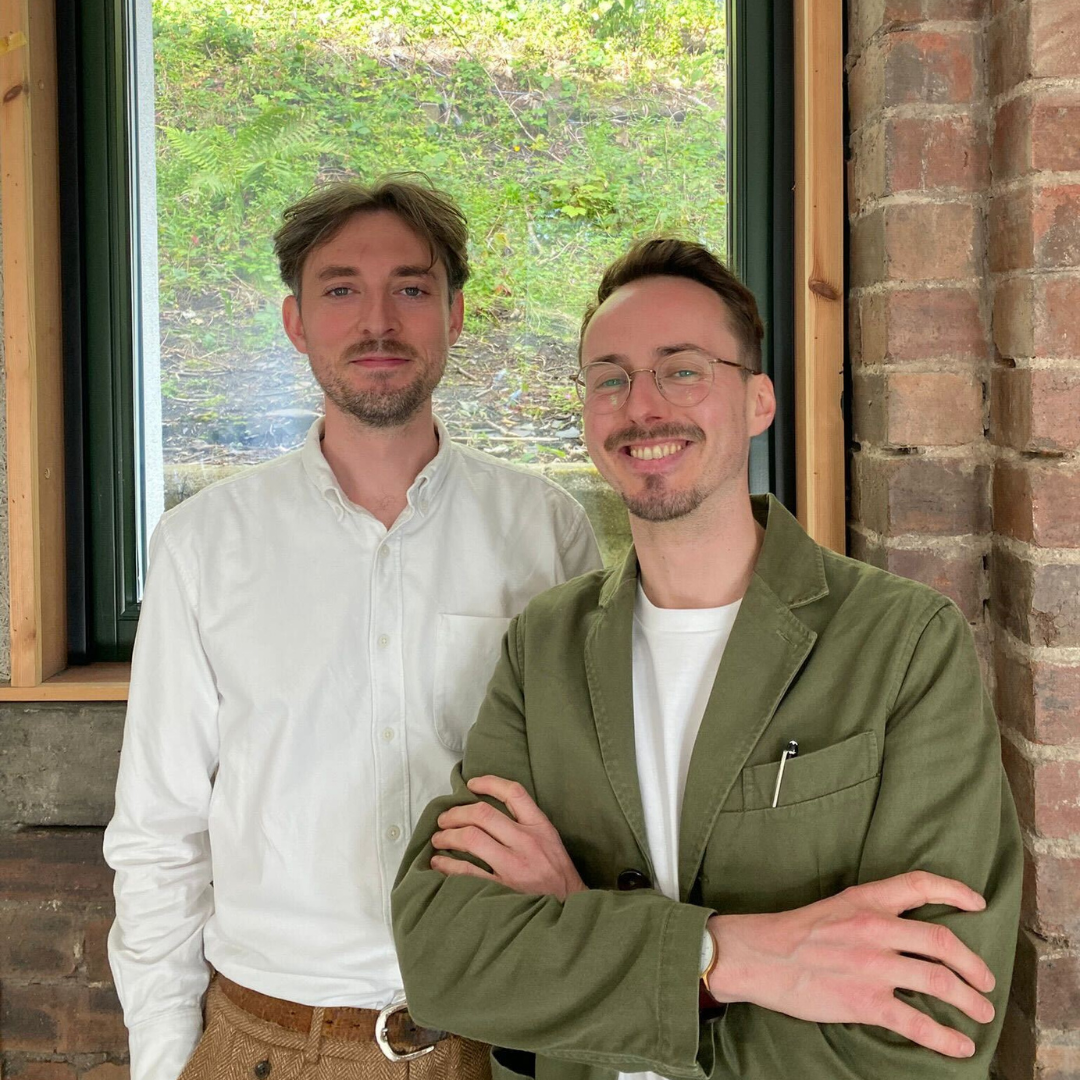
Hi, thanks for reading. We’re Robbie and Calum, and we run The Bell. Today’s story is Ingvild’s debut for The Bell, we're delighted to welcome a new and experienced contributor like her to our ranks. To report this, she braved the icy waters of Pinkston. This is the lengths we go to to bring Glasgow great local journalism. Sign up for free to get more weekend stories like this, as well as our jam-packed Monday briefings. It’s great to have you with us.
A feat
Inside the basin-side sauna, the chat is in full flow. “I love outdoor swimming and have been wanting to come here for ages”, first-time visitor, energetic twenty-something Frances Leahy-Kelly, says. She is there with her similarly-enthused friend Megan McLaughlin, another keen wild swimmer, who has also tried the waters at Liverpool’s docks.
They take smiley poolside selfies and tell me that Pinkston feels like a new discovery. Water is pumped into the 145-metre-long, 28-metre-wide basin from the adjacent canal, filtered and treated to swimming quality and tested regularly. It is mainly a watersport centre, a charity promoting access to paddlesports, but lately swimmers have also been using it.
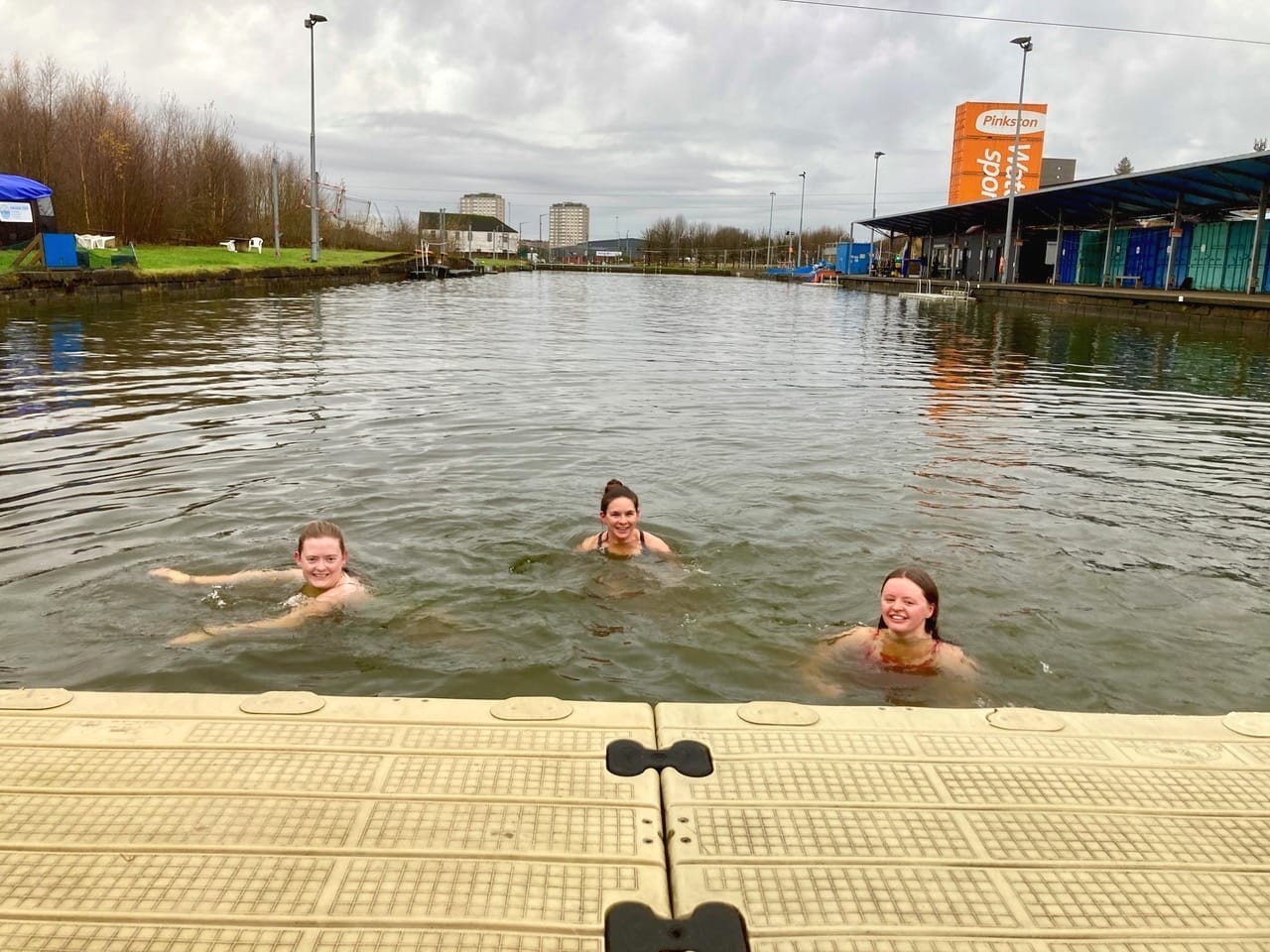
“The interest in swimming really took off during covid and now we have three sessions a week, and sometimes swim and sauna too,” says general manager, Jo Airey. The basin used to provide the cooling water to Pinkston power station, a coal-fired plant that supplied electricity to Glasgow’s trams. But, mid century, as trams went out and buses rolled in, Pinkston was no longer needed. It was demolished in 1978 and the basin, connected to the Forth and Clyde canal, lay vacant.
Its renaissance has come from an unlikely source: slalom kayak and canoe polo players. “This place was derelict for many years. But when the commonwealth games came to Glasgow in 2014, some kayakers saw an opportunity and pushed to make the watersports centre happen”, Airey explains. Pinkston is a 2014 legacy project, costing £3.25 million; funders include Scottish Canals and Glasgow city council. “This was a post-industrial, vacant land in a deprived area,” Airey tells me, watching a cormorant land in the pool. The water is a bit choppy. “A no-go zone. So Scottish Canals, who is the landlord, really supported the project. They wanted to see regeneration. A vibrant and lively canal.”
New flats have now been built up the hill, and many who live there come to swim, according to Airey. “Pinkston is a huge feat. It shows what can be done when people work together.”
Dark, dirty, dangerous
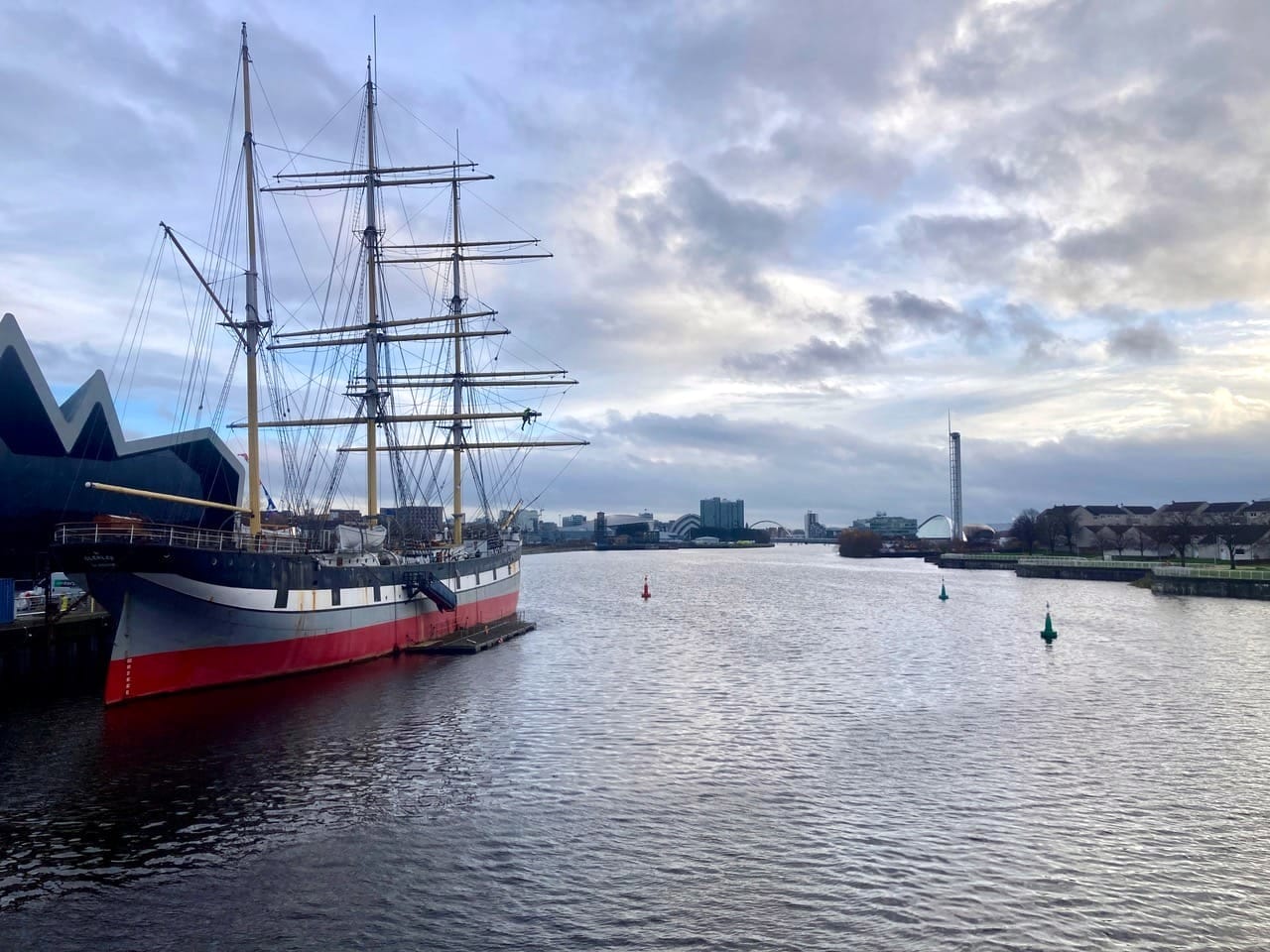
So the prognosis looks good for the swimmability of Glasgow’s canals, or more precisely, one small bit of them, but what about Glasgow’s river? Could something similar happen on the Clyde? Walking along its banks, it seems unlikely: the water looks dark, dirty and dangerous.
But according to Jude Barber, a director at Collective Architecture, I shouldn’t count out the river just yet. Barber knows the Clyde well — together with author Louise Welch, she discusses its role in the city on the duo’s award-winning podcast, “Who owns the Clyde”.
She is enthusiastic about a future, swimmable Clyde, though she’s keen to emphasise that we’re nowhere near close at present.
“I want to stress that swimming in the city centre is not an option at the moment; it is way too dangerous,” she tells me when I meet her at the Collective Architecture offices, on the fourth floor of an ornate sandstone building in town. There are still huge barriers to swimming on the Clyde, she says, including a complicated patchwork of ownership, restricted access, polluted water and safety concerns. It is a tidal river, and through the city centre the water levels can rise and fall by four metres, twice a day. There are strong undercurrents, steep quaysides, drownings and a general lack of water literacy in the population.
Yet this could change in the future: “The question is how and where”, Barber says, “and it would be a gradual process, getting closer to the water step by step”. Rather than seeing a foreboding riverside when she walks along the Clyde, the architect sees possibilities everywhere, “There are, for instance, plans to make the river bank opposite Custom House Quay more naturalised. There is an opportunity there for some sort of urban beach”, she tells me, “or at least a place where you can put your feet in the water.”
The Govan Graving Docks’ project website also suggests a riverside park with houseboat moorings and access to the water. “And you could imagine something like a floating pool round about the Science Centre,” Barber muses, citing Berlin and its floating Badshiff pool as a potential model.
Barber and Welsh aren’t alone in their quest — they’re signatories to the Swimmable Cities initiative, an international grassroot movement working to clean up urban rivers and waterways and make them safe and accessible for the people who live there. The initiative was launched during the 2024 Paris Olympics, where swimming in the river Seine was brought back after a 100-year ban. “I lived in Paris 30 years ago, and the idea of swimming in the Seine would be unthinkable,” Barber says. The river was noisy, dangerous, smelly, inaccessible. But last summer, three urban swimming spots opened there, complete with lifeguards and sundecks and even a family pool.
It shows that transformation is possible — and it’s an example that participants at a round table exploring Swimmable Cities ideas for Glasgow, planned to be hosted at Collective Architecture´s offices in February, will have at the forefront of their minds. “I have seen how other cities engage with their rivers and the benefits it can bring. I would love the same for Glasgow,” Barber says. And besides, “the concept of urban swimming in Glasgow is not new. People have swum in the Clyde in the past.”
All the rage
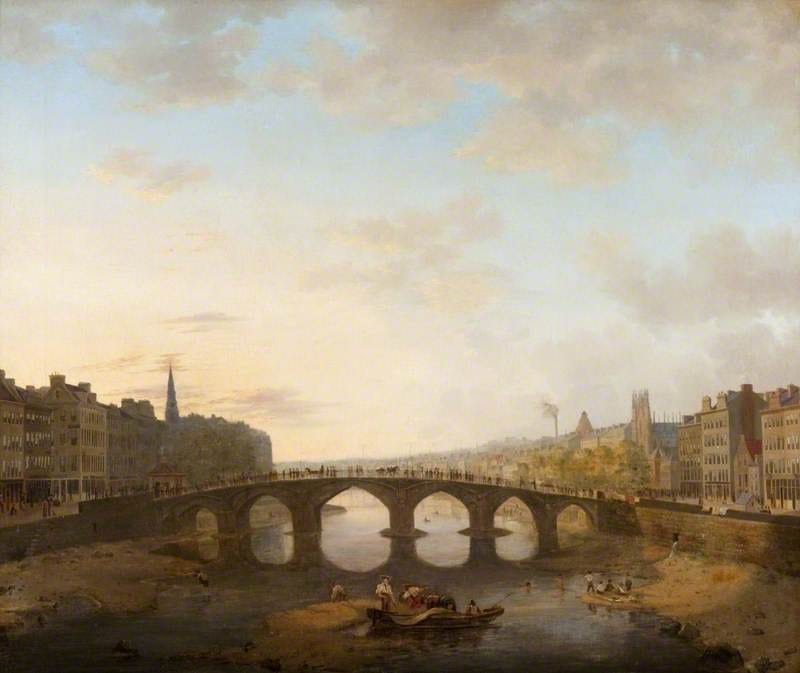
There’s a painting, hanging on the first floor of Kelvingrove Art Gallery simply named Stockwell Bridge, Glasgow. The Dutch painter Henricus van den Houten conveyed to canvas what he saw in 1838 Glasgow while he was living on Renfield Street. In the painting, the bridge, which for 400 years was the only crossing over the Clyde, stretches over bathers splashing in the low tide. To researcher Lucy Janes, who is working on a PhD about the social and cultural role of swimming in Glasgow between 1850 and 1950, this hints that “swimming was a common occurrence in those days.” By the 1860s, the practice was all the rage, but Janes stresses that the Clyde “was a different river then, narrower and shallower with grassy banks. It later got widened, deepened, industrialized and too polluted.”
I meet Janes on a sunny but baltic afternoon at Victoria Bridge, which replaced Stockwell in 1854, where cars now roar and the river flows fast. We walk along the Clyde towards Glasgow green, past the tidal weir, until we spot the West Boathouse, newly restored and housing two rowing clubs. Further along is Glasgow Humane Society, which has been saving lives on the city’s waterways since 1790, a reminder that the river can be dangerous.
The path narrows, the bank gets overgrown with brambles and trees. Here, Janes stops: “This is Flesher’s Haugh, a popular swim spot in the 1800s. Quite nice, right?”
Picture it in the 1840s: there were four springboards here, and the council had funded steps to access the water and benches to sit on. On a Sunday, a boat from the Humane Society would stand by, acting as a lifeguard.
“It was a place for washing and hygiene”, but also fun — so called ‘gamboling’ — Janes tells me. First-hand accounts talk about boys playing in the water; “ducking, diving and doing fantastic tricks”.
The gamboling lasted for about 50 years, and ended when pollution from factories and sewage got too much and the trend for indoor swimming pools took over. The wild swimmers of the past did try to improve the conditions, and even organised a petition to protest “gas-tar” in the water — but by 1877, the springboards were gone.
Swimming still happened, though, according to Janes.
New Year spectacle
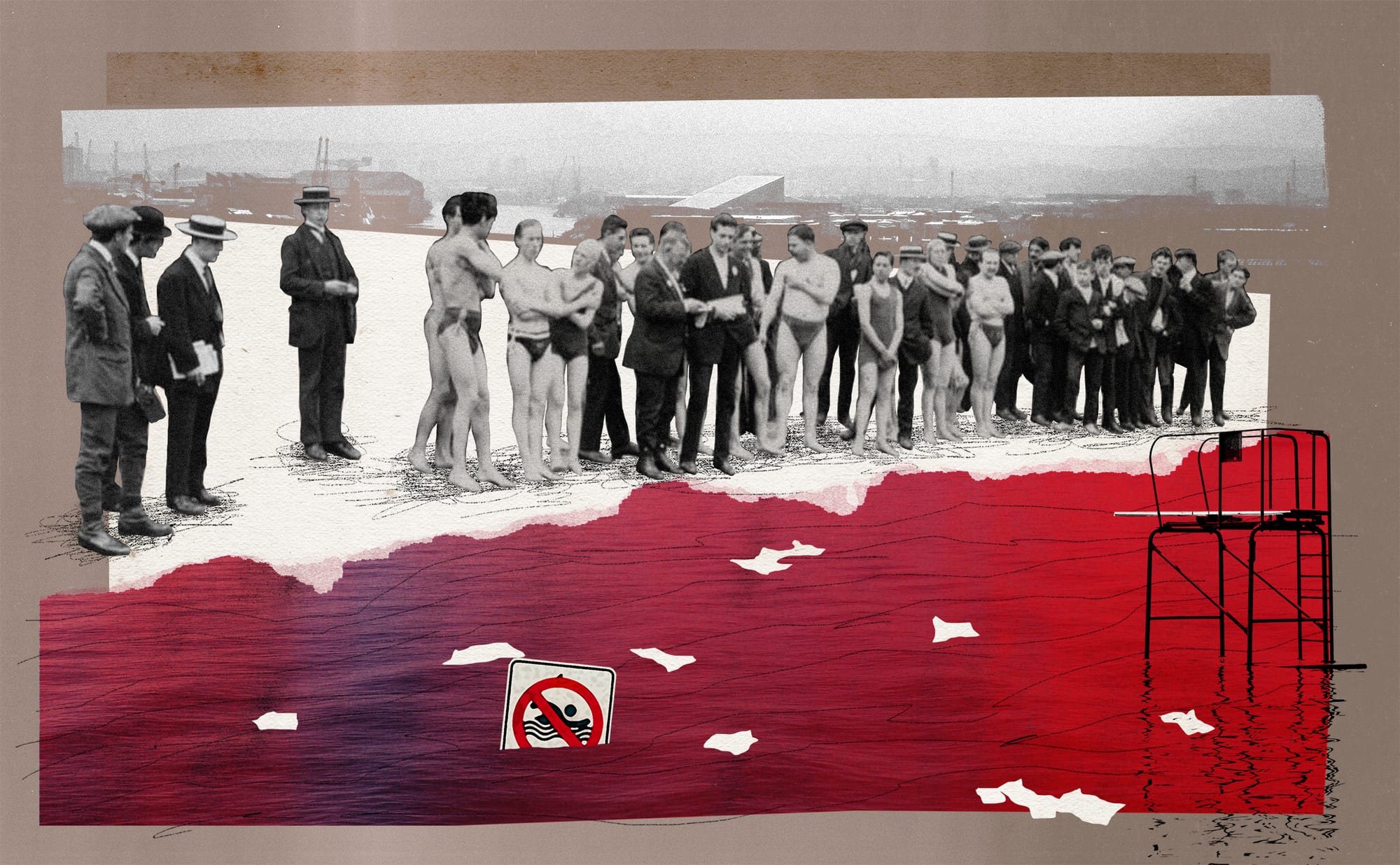
From 1878, a swimming promoter called William Wilson, arranged annual New Year races to highlight the virtues of swimming and lifesaving, in “any conditions”. According to Janes, swimmers, having been granted “special permission”, swam around 100 metres in the freezing water near the Humane Society. “It became a big annual event until 1889. Thousands of spectators would line the banks.”
Wilson was the bath master of first Arlington and then Victoria baths, a keen swimming influencer of his day. He wrote books about swimming, taught swimming and debated it in the newspapers. His wife Ruth was also a swimming teacher for girls, and the Wilsons were keen believers that women could be just as capable swimmers as men — a new concept back then, when it was not common for women to learn how to swim. After a spat about this in the paper, Mr Wilson arranged for two teen girls to swim 800 metres in the Clyde to prove his point. He swam along, too. And 6,000 spectators watched.
Janes does not encourage swimming in today’s Clyde, but hopes her research can inspire the growing outdoor swimming movement in their push for safe and accessible urban swim spots. “Industrialisation and urbanisation made the Clyde unswimmable,” Janes laments. “But maybe our legacy can be to make, at least parts of it, swimmable again.”
Thinking big
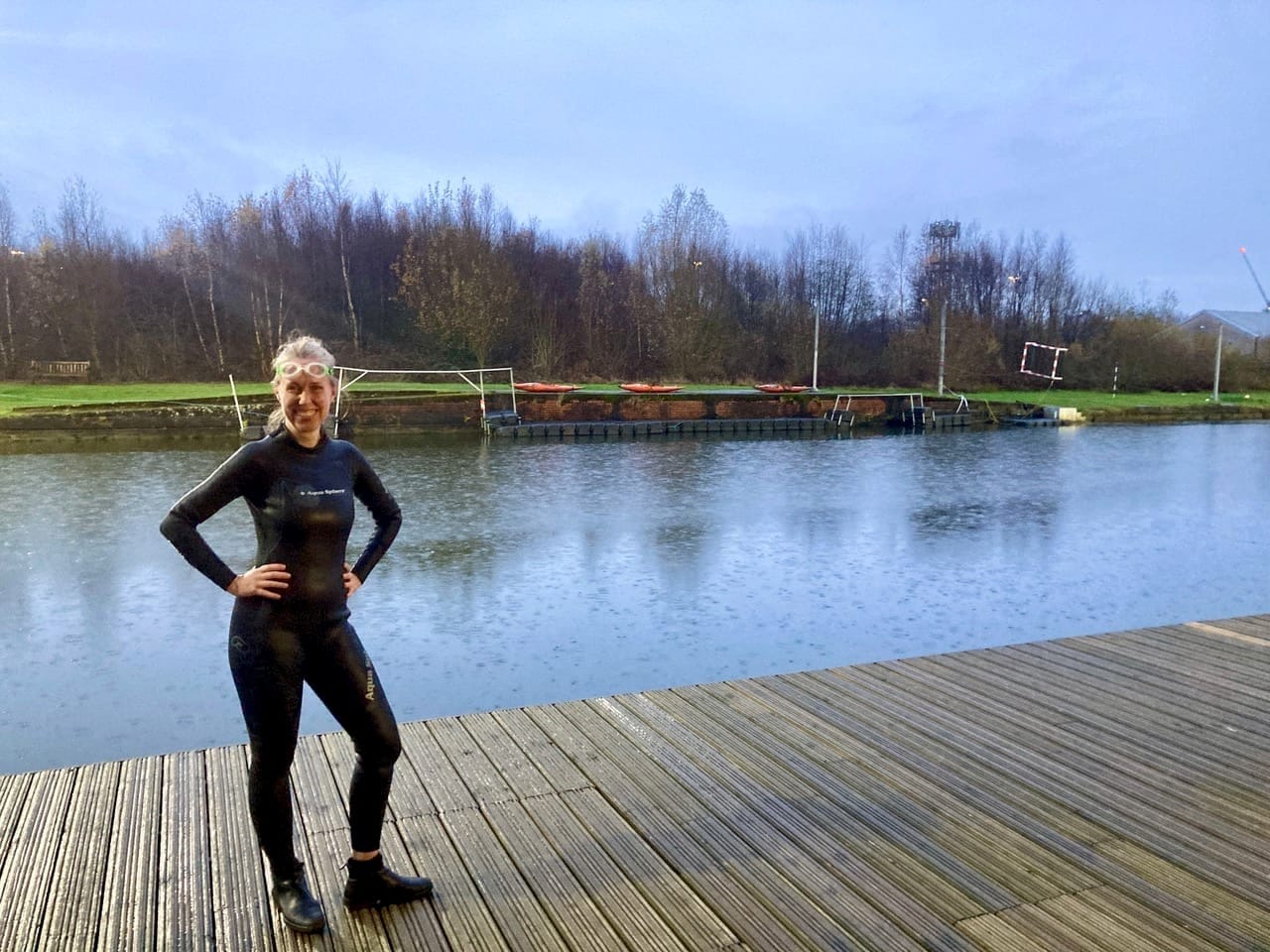
I am back at Pinkston Watersports. This time, it is a Monday night, dark and no sauna. The swim attendant informs me that the basin was covered in thin ice just a few days ago. Thankfully, I have my wetsuit.
It is strange swimming in the dark, my breath puffing white along the surface and the lights of the city glimmering beyond. On my way out, happy and energised, I meet another swimmer, Dale Todd, who has just been for his weekly after-work dip sans wetsuit. “I come here after a busy day and get full of endorphins. It improves my mood and is great for my mental health”, he says. “This is a hidden gem.”
Todd heads home, up the hill, wearing flip flops. This scene would be unthinkable at this old bit of canal 20 years ago. But the kayakers and the canal authorities made it happen. Who knows, maybe in the future, where now there are shopping trolleys and washed up rubbish, you'll be sunbathing with your toes in the Clyde?
If you’re thinking of taking a dip in wild water, anywhere, please check out the water safety code.
Thanks for reading Ingvild's story. Whether your bag is breast stroke or front crawl, there are loads more stories that will be right up your... lane. You can sign up to The Bell for free and get two totally free stories per week. No card details required.
If someone forwarded you this newsletter, click here to sign up to get quality local journalism in your inbox.