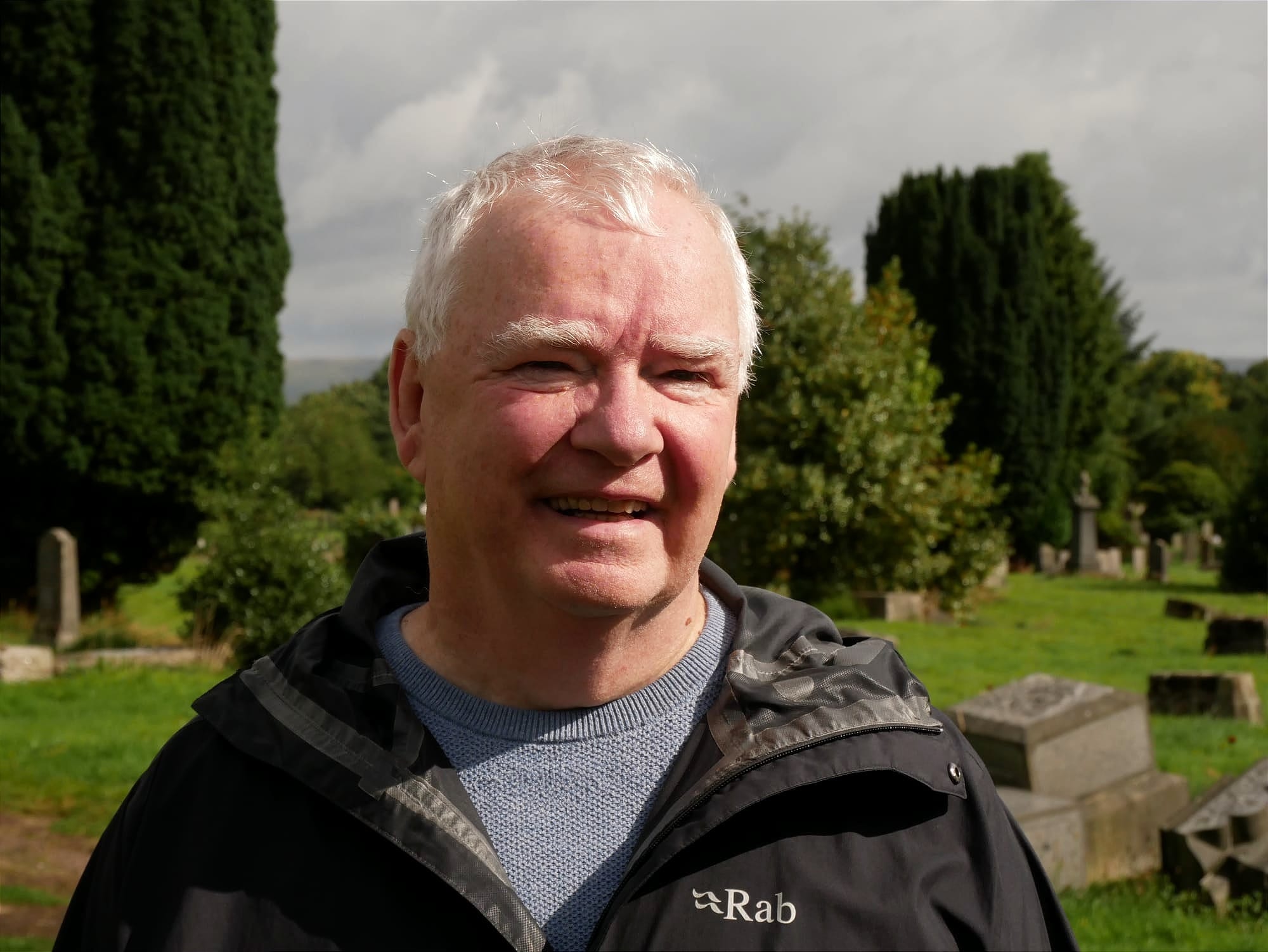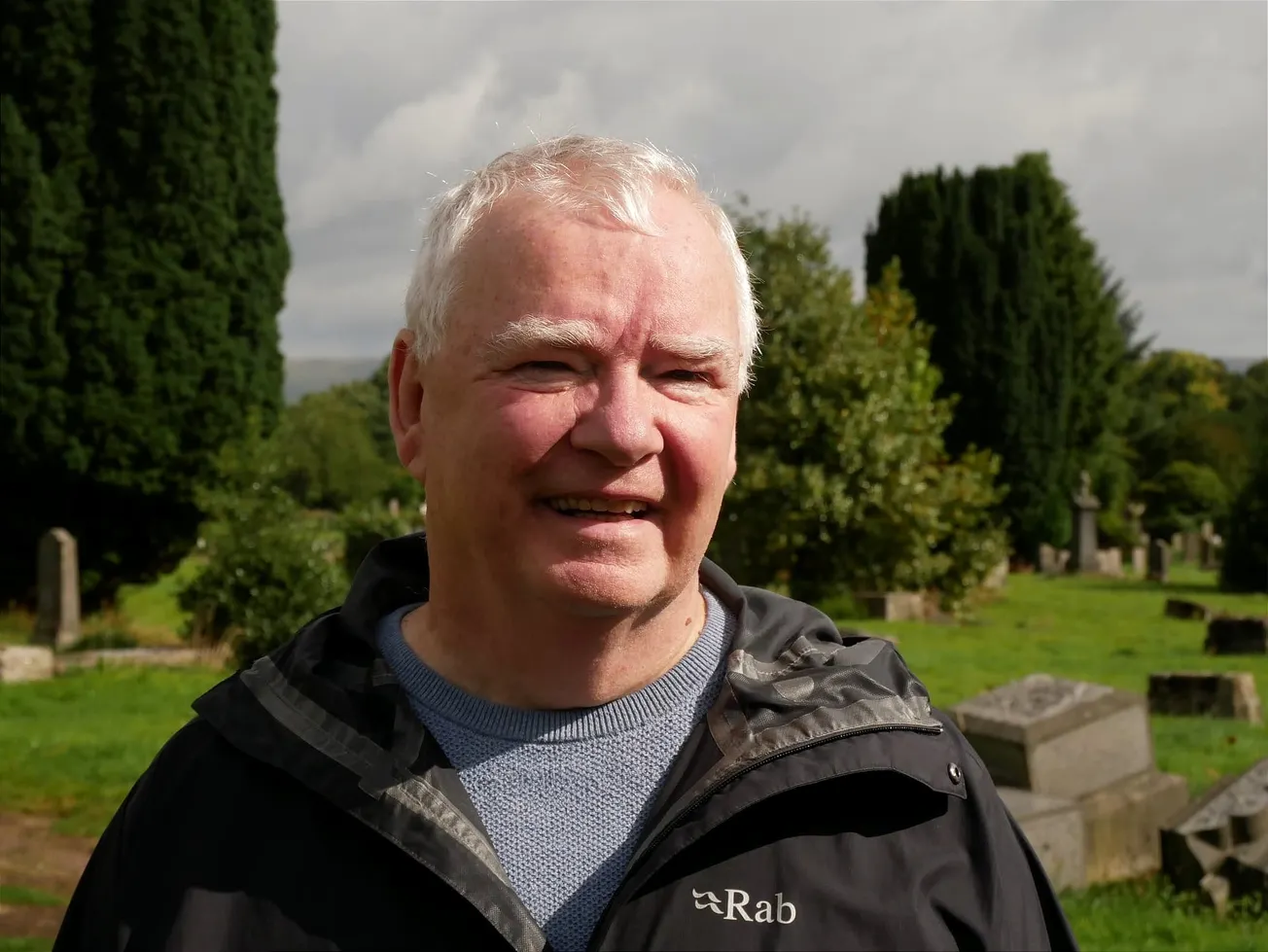
Chris McKay has been coming to St Kentigern’s Roman Catholic Cemetery on the northern cusp of Glasgow for the last four years. He’s not mourning. He’s not cutting the grass or cleaning the graves. He’s photographing them — 30,373 pictures and counting. I’ve also come to St Kentigern’s, but for the first time, to understand what could motivate a man to dedicate around 15 of his golden years to noting down the final resting places of 106,137 different people around Glasgow. There’s no word for the type of man McKay is, so I’ll go with ‘gravefinder’.
We meet on a bright day of McKay’s choosing; he doesn’t come on dull days as photographing faded inscriptions on 140-year-old headstones needs dynamic light. I hop into the passenger seat of his shiny Volkswagen SUV and we crawl towards the heart of St Kentigern’s. As we talk, it’s already clear that McKay and I see cemeteries very differently.
I don’t subscribe to the ‘creepy’ school of cemetery thought; I quite like them. I find them peaceful and sometimes beautiful, especially when overgrown, as St Kentigern’s is. But where I see quiet serenity, McKay, 64, sees a rich history of the city in death. “See the one stone at the bottom there?” he asks me, pointing to a small, lonely headstone in a small clearing, “[That] whole part of the land [is] where they sent children to be buried.” Pointing to a seemingly-empty section, he tells me it’s actually ‘common ground’, a resting place for those with no-one who is able to make arrangements. “The person who's died, the family don't have tuppence to rub together… and the cost is covered by the council or the church.”
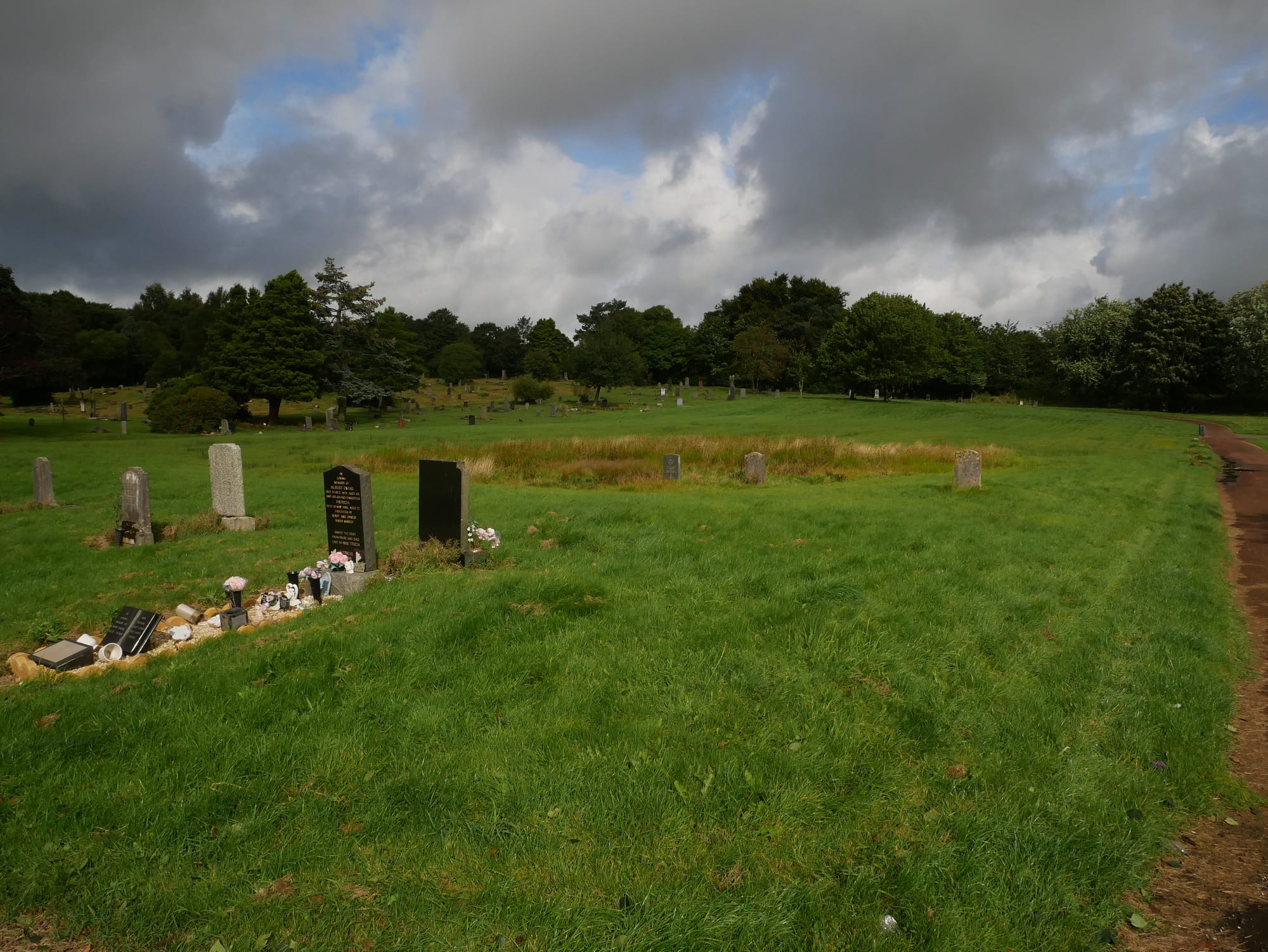
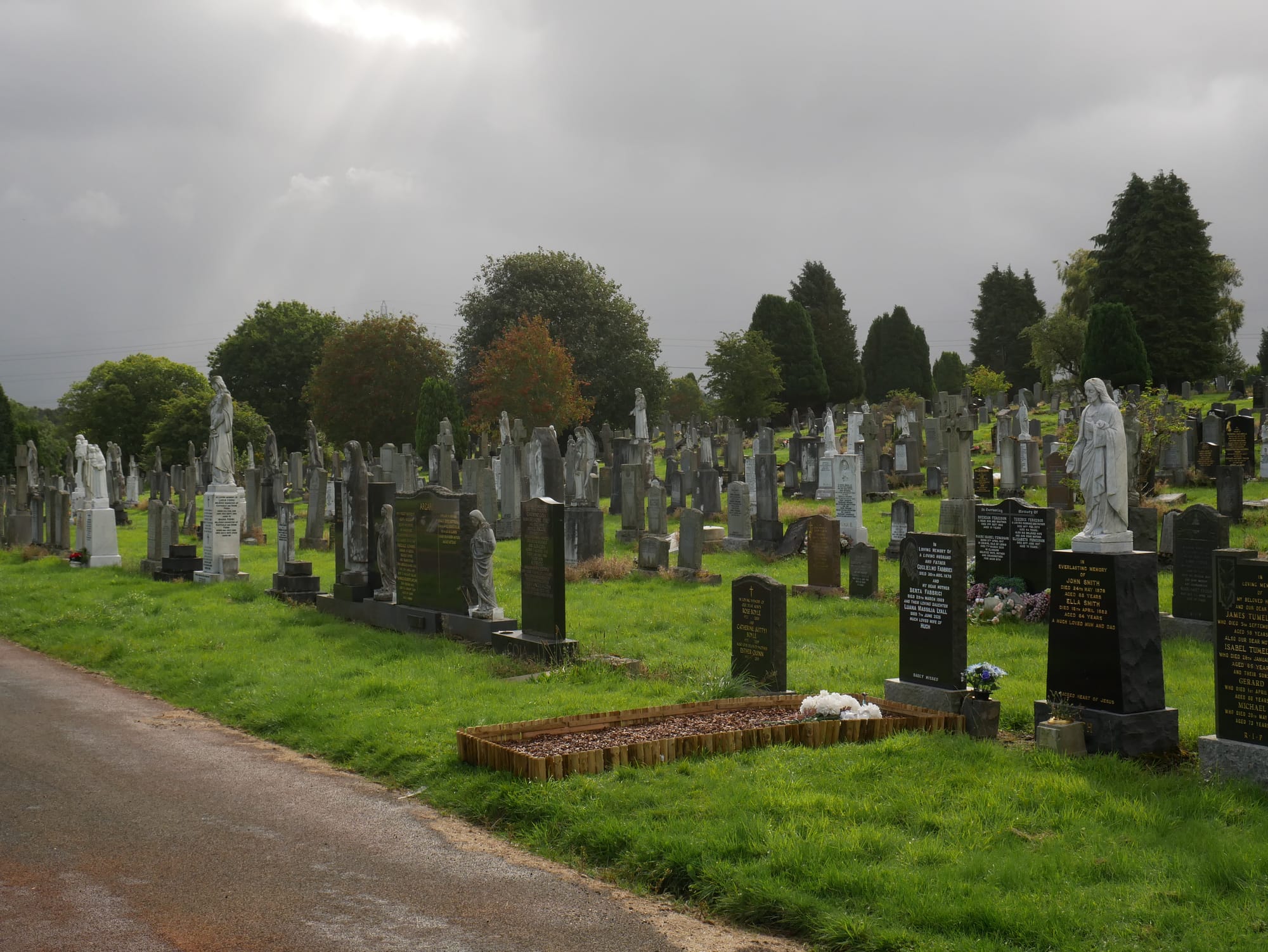
The common ground versus the private plots. Photos: Calum Grewar/The Bell
We park between sections four and five, on the western side of the cemetery. Over the thick woods behind us is the Western Necropolis. Just beyond a narrow boundary to the north is Lambhill cemetery. This is the land of the dead, but the living have certainly intruded. McKay points out headstones that were pushed over, too heavy to be affected by storms. There’s much older vandalism too: McKay recalls a time when the workmen in the cemetery were preparing a grave to add a coffin to the family’s lair “and they found at least half a dozen urns inside. Nobody knew they were there.” This happened across Glasgow, as buying your own lair and stone was expensive in the late 1800s, so people would dig up a fresh grave under cover of night and add their relative’s remains to it.
Each headstone we pass, at one time or another, has had the white-haired, friendly-faced and firmly-built McKay hunched over it, photographing its inscriptions. When he’s done for the day, he takes his trusty Sony camera and uploads the images onto his computer. He goes through each picture, usually two per grave, and notes down the name and dates of the deceased. He cross references these with publicly-available lair books, logs of who was buried where and when. And then, that’s it, from what I can tell. Stones matched to lair numbers. Data inputted to spreadsheet, saved to drive. Job done, for now.
This story is free to read. You just need to sign up to join The Bell's mailing list. And why wouldn't you? You'll get our journalism in your inbox the second we publish, keeping up-to-date on this and all our stories. No card details required.
Already have an account? Sign In