I’m standing furtively in the new Shawlands branch of Paesano Pizza, with absolutely no intention of ordering a pizza. A group of friends are in front of me, enquiring about wait times. As they chat to the friendly waitress, my eyes are elsewhere, darting behind her head to a shiny black pizza oven at the back of the open kitchen.
I’m here on a tip I hope won’t prove true, concerning one of the city’s culinary crown jewels. If artpop, Turner prize winners and a world class clubbing scene represented Glasgow to the outside world two decades ago, today — for better or worse — we sell ourselves on three things: international events, a statue with a cone on its head and Paesano. People embark on pilgrimages to the city just to try its pizza, made to “Napoletana standard”. We Glaswegians feel pride in this bonafide homegrown success.
But is the honeymoon finally over? Last year, Paesano was bought by the DRG group, the parent company of Di Maggio’s, an Italian-American style chain many view as the antithesis of the Paesano brand. In the sale’s aftermath, consensus began to build: Paesano is just not as good any more. In September, comedian Christopher Macarthur-Boyd publicly waded into the debate, writing in The Skinny: “The Di Maggio’sification of the brand has been sudden, jarring, and unwelcome.“[A]t least I was in my twenties when Paesano’s was cheap and good”.
Is such critique warranted? Or are we all simply looking back on the past with San Marzano-tinted glasses? As The Bell’s self-promoted pizza correspondent, I have a duty to find out the truth. But first, we need to travel back to Glasgow in the early 1980s, when a young man was sowing the seeds of a restaurant empire. If we want to understand the direction Paesano may now be headed in, we need to find out where it all began.
You’ve got tatties on the brain, son
In 1983, Joe Conetta had a dream. While Italian-Scots before him — like his own dad — had opened cafés, shops, ice cream parlours and chippies, the few Italian restaurants in the city at the time were stuffy and staid. He wanted to do things differently, and had his sights on a spot on Ruthven Lane, off Byres Road. He brought in his nephew Mario Gizzi, and in 1985 they opened the first of what would become many Di Maggio’s, marrying classic Italian dining with American flair. Together, the pair ushered in a more casual approach to eating out, summed up in their motto ‘our family serving your family’ — welcoming large groups and messy kids with open arms. It was also the first place in Scotland to offer home delivery pizza, a revolution at the time.
Hi folks, this won’t take longer than the time it takes to cook an authentic Neapolitan pizza. Robbie’s investigation into the goings-on at Paesano has taken weeks to prepare, and is the sort of thing we honestly can’t imagine reading anywhere else, if we don’t say so ourselves.
Here at The Bell, we believe stories like this one deserve to be told properly, in depth and with rigorous research. This isn’t just pizza after all, it’s an institution.
To make sure you never miss another article from The Bell, why not sign up for free, no card details required?
In the early days though, they had a problem. Poor old Joe didn’t know his orecchiette from his agnolotti. Conetta, you see, was a product of his environment. He was obsessed, and had been from his earliest years, with chips. His family claimed the first word he spoke was not ‘mama’ or ‘dada’, but ‘potato’. He’d worked in the family shop, before breaking off to realise his dream, opening a chippy on Macduff Street off London Road. Fried food was his bread and butter, not pizza and pasta. He was badly in need of an Italian, and not the sort born in the east end of Glasgow like himself.
Enter Giussepe ‘Pino’ Livia. The chef had been working in a restaurant owned by Mario Gizzi’s uncle — until they couldn’t afford to pay him, that is. Before sending him packing, Gizzi introduced Livia to his uncle Joe Conetta. They’d just opened Di Maggio’s West End, and needed a chef to help them open a new branch in Shawlands. But as a bona fide Italian, Livia had his work cut out for him.
He set about sorting out the Ruthven Lane restaurant, then a few weeks later he was off to Shawlands to open their second spot on the corner of Minard and Pollokshaws Road. “It was very popular at the time,” he remembers today. “When we opened it was unbelievable.”
Glaswegians couldn’t get enough of this new flavour of no-frills Italian, the 75 year-old says down the phone. “When I opened Di Maggio’s, for six months it was just a queue.”
Behind the scenes, the chef was doing most of the heavy lifting. “They [Conetta and Gizzi] didn’t know what to do … The only thing they knew about was chip shops. They had no knowledge of food whatsoever — but anything they touched just turned into gold.” Livia would stay with Di Maggio’s as it scaled up rapidly. Over the decades, DRG grew into a behemoth, employing 1,000 people with an annual turnover in the region of £45 million.
‘The only thing they were interested in was cash’
Di Maggio’s has never been known for the authenticity or quality of its Italian food. Today, the menu serves everything from loaded fries and cajun chicken pizza to something called ‘bad ass wings’, not to mention Livia’s unique contribution: ‘Jimmy Style’: a half pizza served with half a plate of pasta.
Despite it being the “best job” in Scotland he ever had, the chef grew disillusioned. “Di Maggio’s at the beginning were wonderful people to work for, they let you do anything you wanted,” he recounts. “But as soon as they got knowledge of how to do it, they cut corners — that’s what they did all their lives. The only thing they were interested in was cash.”
Livia pauses for a moment, then decides to let rip. “Everything is frozen,” he says of Di Maggio’s. “The prawns are Sri Lankan, calamari is frozen, they buy frozen chips, the salmon is farmed. How the hell are you going to charge £25 for a plate of pasta with seafood? Does it come from a golden pond? It’s shocking.”
He hints at souring relations as the business expanded. “They buy Porsches and Ferraris and big cars and they don’t have time for staff. I was shocked because I was the first chef to work for them and I opened all their restaurants.” Livia finally decided to hang up his Di Maggio’s apron 12 years ago, after almost 25 years at the company. He offers a conciliatory word though. “But I still enjoyed it.”
Vini, vidi, verace
Forty years after the first Di Maggio’s opened, another Glaswegian had a vision to change the way his city ate. Paul Stevenson opened Paesano Pizza on Miller Street in 2015 with a singular mission: to bring authentic Neapolitan pizza to Scotland. The premise was simple: import the highest quality ingredients, ferment slowly with a sourdough and hybrid yeast and cook in ovens heated to 500°C by burning wood. In short, stay true to Napoletano form, as close to ‘verace’ — authentic — Neapolitan pizzamaking as possible. The name Paesano, Italian for peasant, signalled intention: affordable food from the land, made humbly with respect to tradition. A margherita cost only £5.
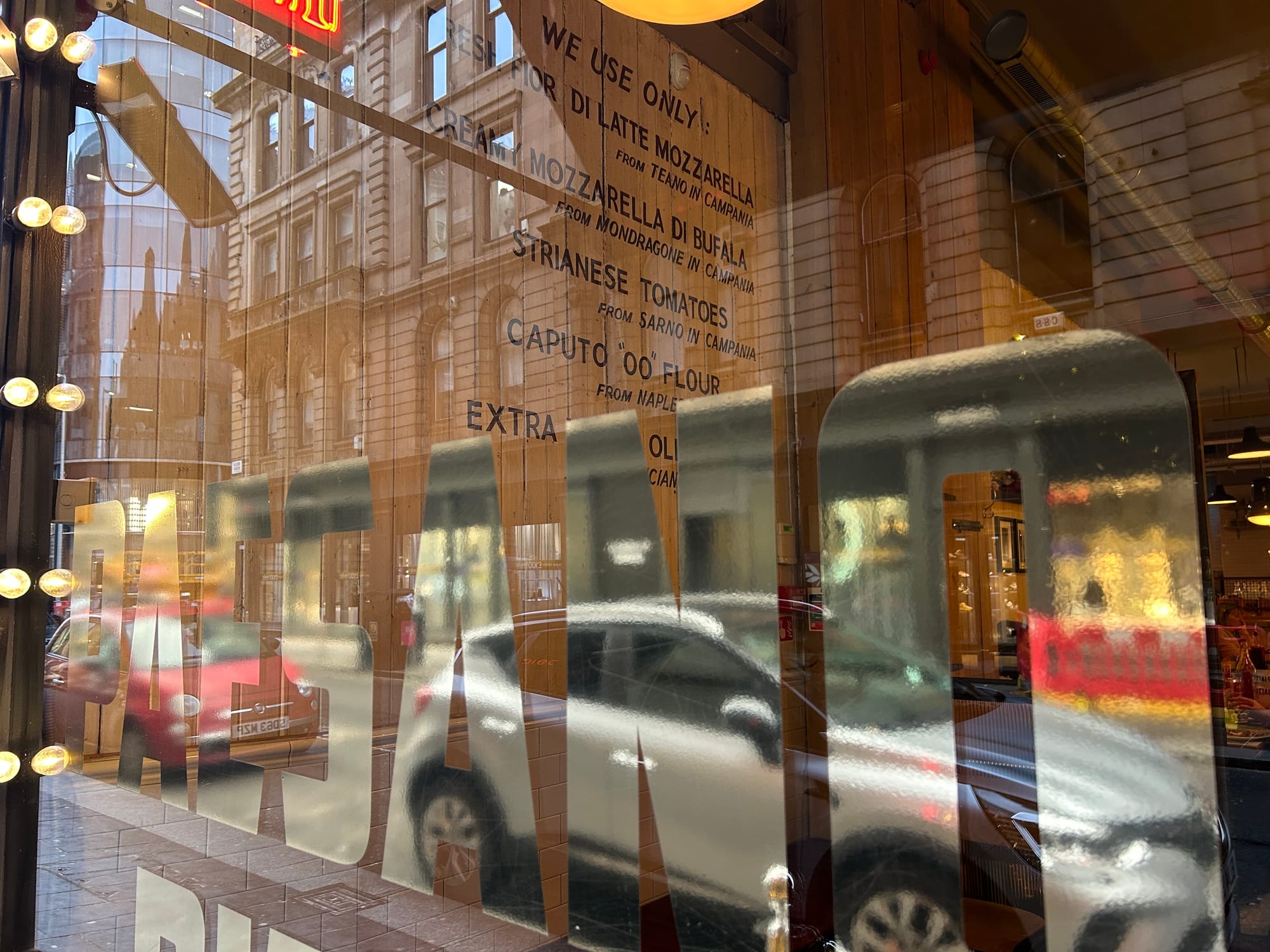
In line with this, the restaurant's wood-fired ovens were shipped over from Gianni Acunto in Naples, a family business making specialist ovens since 1892. Ingredients were sourced from various small towns and villages in Campania and Abruzzo and their Caputo “00” flour was from Naples — the same brand used by the world-famous pizzaiolo, Gino Sorbino. Even the pizzaioli who constructed the pies were transplanted, verace Napoletani. This slice of Napoli quickly became an emblem of Glasgow’s maturing palate, its hunger for provenance and authenticity.
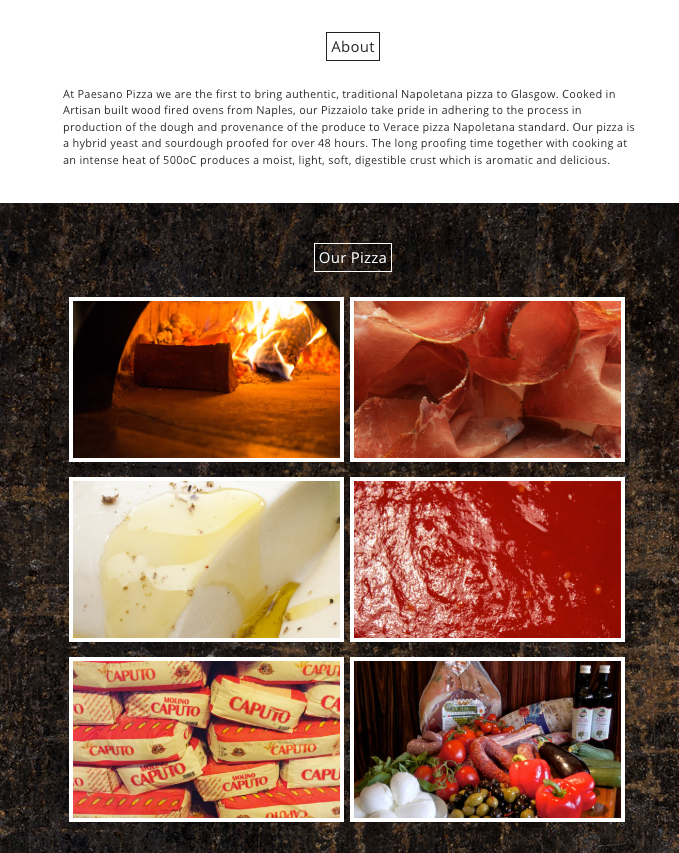
“When Paesano arrived, it changed everything,” says food reviewer Rocco Guidice. The wood-fired ovens were the crucial element, he notes, introducing: “that smoky, charred flavour that was non-existent in Scotland. It truly opened everyone’s eyes to what real pizza really was.” For Guidice, Paesano wasn’t just a new pizza place; “it was a complete culinary shift that significantly elevated the standard of casual dining and pizza in Glasgow.”
The model — rely on sheer number of covers and rapid turnover of tables to turn a profit — paid off. By 2023, Paesano had expanded to a second location in a former bank on Great Western Road, along with a city centre sister pasta restaurant, Sugo, in the ground floor of Mackintosh’s Lighthouse building. The business was turning over £15 million a year, with upwards of 200 staff on the books and 22,000 visitors a week. Its success attracted multiple acquisition offers, from private equity groups and big restaurant chains. One after another, Stevenson turned them down.
Then, in 2024, DRG came calling. They made Stevenson an offer he couldn’t refuse, purchasing Paesano Pizza and Sugo for at least £10m in June 2024 (the exact figure has never been disclosed). Stevenson remained fairly tight-lipped about the sale, but appeared to have finally agreed to sign over his pizza empire-in-waiting to a fellow Glasgow-based, family-owned business.
This story is free to read. You just need to sign up to join The Bell's mailing list. And why wouldn't you? You'll get our journalism in your inbox the second we publish, keeping up to date on this and all our stories. No card details required.
This story is free to read. You just need to sign up to join The Bell's mailing list. And why wouldn't you? You'll get our journalism in your inbox the second we publish, keeping up-to-date on this and all our stories. No card details required.
Already have an account? Sign In