The email from Piers North, chief executive of Reach Media, arrived in employee inboxes at around 1.45pm on Tuesday 10 February. “You’ll often hear me say that our print service is exceptionally well run,” he wrote, after some preamble. “However…”
Journalists at Reach have recently had cause to become fearful of words like “however” in memos from top brass. The newspaper group announces editorial job cuts in the same way that shops announce discount sales. Employees always have a sense when they’re under threat — which is about once a year at this stage, according to one Glasgow-based Reach staffer.
But few internally had guessed that the print sites could be at risk, especially when two-thirds of Reach revenue still comes from print sales. Yet North’s email went on: “... now is the right time to consolidate our printing work to continue to serve our customers and deliver on our strategy.”
North, appointed in March 2025, oversaw a first year of swingeing lay-offs, removing about 200 jobs in total, following what the National Union of Journalists’ Reach chapel branded the “debilitating drain of morale” caused by job losses the previous year. He began saying things to interviewers that could either be interpreted as vapidly foreboding, evasively hollow, or both. He told The Media Leader in October 2025: “I don’t know if we’re going into winter or we’re going into spring, but the seasons are changing.”
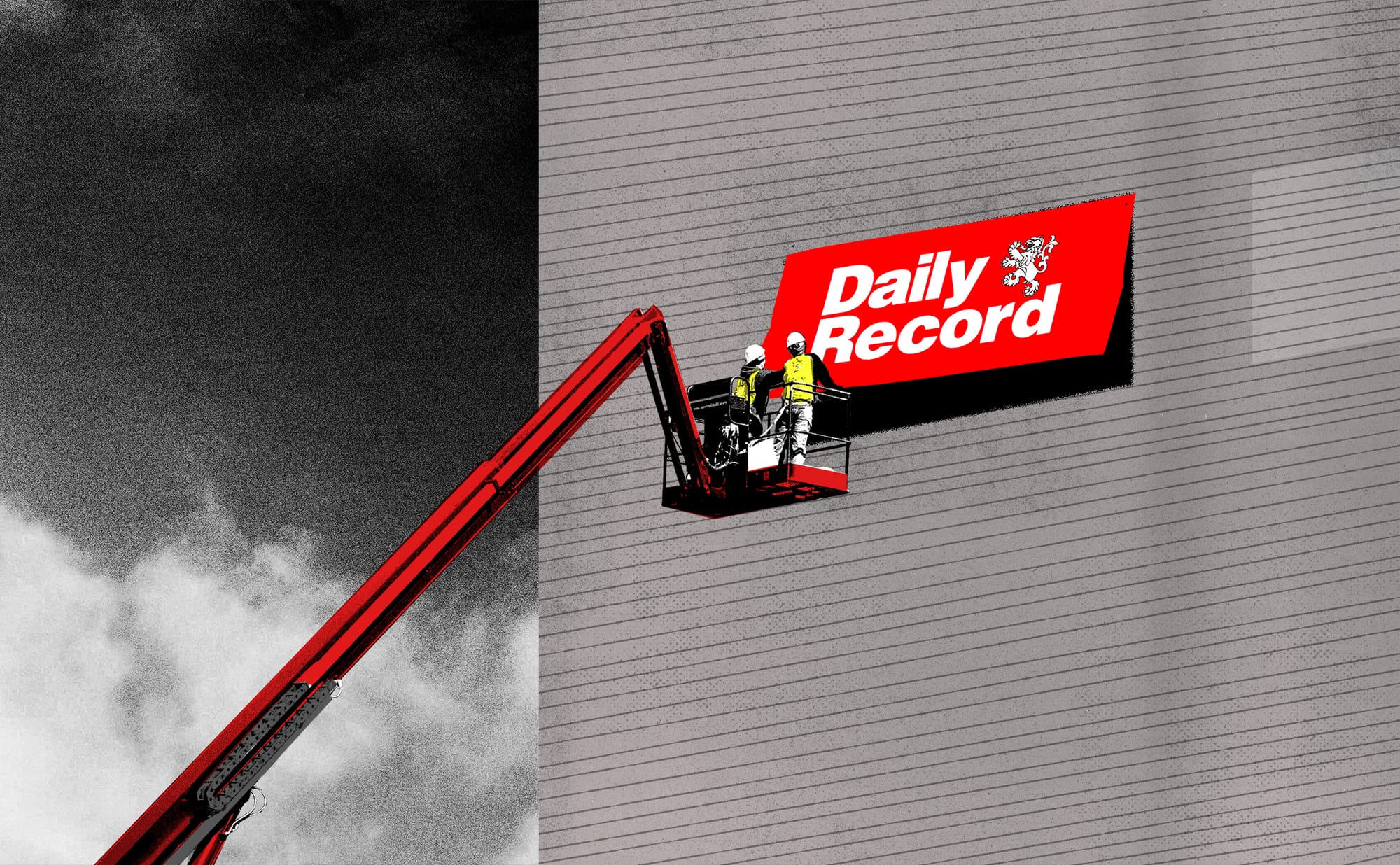
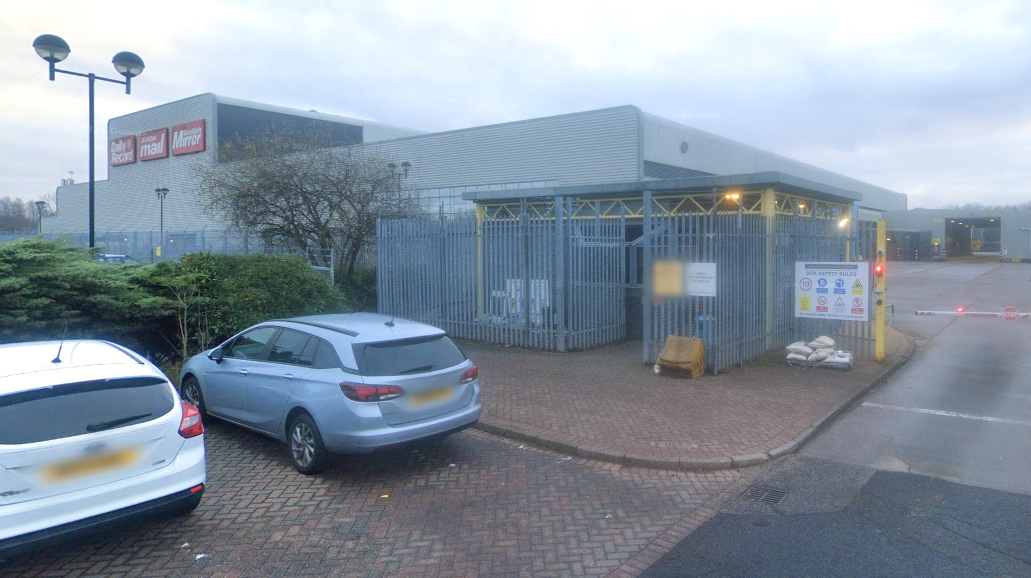
Now, in the lunchtime email, North revealed his plan for a shock twin closure. Reach’s 12-acre Saltire print operation would be wound up and its staff laid off (or potentially relocated), he announced. A sister print site in Watford, one of the oldest newspaper presses in the country, would also be closed down. For the first time since 1895, the Daily Record would be printed outside Scotland, shifted to the press lines at Oldham.
The Bell is Glasgow's new newspaper, delivered entirely by email, so we don't have to worry about the decline of print journalism. But the struggles of traditional local press should concern everyone.
Sign up to our mailing list and get two totally free editions of The Bell every week. That's high-quality, boots-on-the-ground reporting from our Glasgow HQ.
‘No one saw this coming’
North’s decision came as an “utter shock”, according to the Unite union. His usual memos were described to me by the employee in Glasgow, where Reach prints the Daily Record, Sunday Mail and 17 Scottish weekly and daily regionals, as dependably bland. “Just business garble.”
“Our Google chat lit up when it was announced,” said the staffer, speaking to The Bell anonymously. “Everyone was like ‘that’s appalling’. Everyone reading it was furious.” In Glasgow, where a consultation process for employees is underway, the news could mean the loss of about 92 jobs, and there are plans to sell off equipment and buildings.
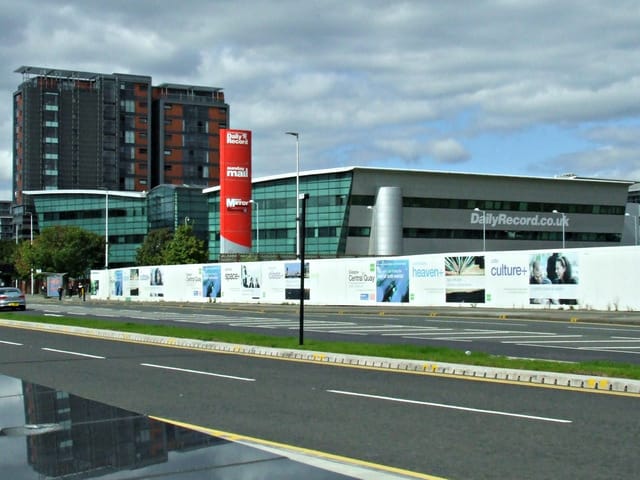
Reach’s bricks-and-mortar Glasgow newsroom was itself phased out from Anderston Quay during a mass work-from-home transition across the company in March 2021.
Glasgow’s editorial operation had already seen its numbers periodically slashed (“‘trimmed back’ doesn’t cut it”, said the staffer) and with many of the classic newspaper jobs vanishing — photographers, production staff, editors — the business was left seemingly floating midair. But still, “no one saw this coming”, the Reach employee said.
Closing the email, North noted: “Speak to your leader if you have any questions”. When I called up the Cardonald print site to ask to speak to someone myself, a predictable echo of this line came back. “Any statement comes from London, you’d need to speak to Canary Wharf,” a receptionist told me.
Then, on 3 March, North delivered further mixed messages in the announcement of Reach’s latest results. The Press Gazette reported that “Overall digital revenue fell 0.9% to £128.9m in 2025 and print revenue fell 4.6% to £388m. However, cost cuts meant profit actually grew 2.4% to £104.7m.” Last week, the Unite union called for Reach to reconsider its proposals for the print site closures.
“Rather than ‘it’s closer to the end’, the consensus is it’s a ticking clock to when things run down. Nothing is being added into the company. If someone’s off long term sick, there’s no one to replace them,” the Reach employee in Glasgow said.
“You never get the idea that there’s any thought that’s gone into it. We have some regional titles that sell 100 copies, and you don’t need to be a mathematician to go ‘that's not working’. Decisions could have been made better.”
Circulating the drain
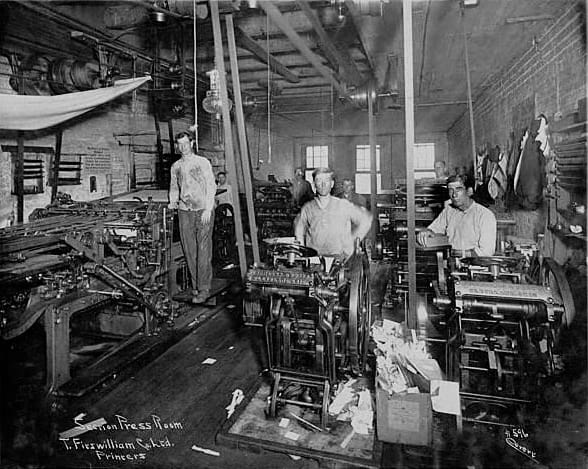
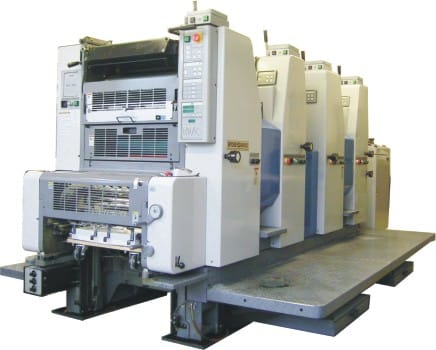
The Saltire operation opened in 1995 on a remediated landfill site in Cardonald, hard by road thunder from the M8, with four Bavarian-made print lines capable of rushing out 70,000 papers an hour. It was so cutting edge and so well funded — a £100m investment from Trinity Mirror — that then Labour leader Tony Blair cut the ribbon, saying: “The plant is high-tech and high-skill — just what we want.”
At a party at the riverside Moat House Hotel to mark the Record’s centenary that weekend, then Mirror Group chief executive David Montgomery said: “There are papers purporting to speak for this nation, but they are dressed in tartan rags and don't really represent the soul of Scotland. But the Record not only champions Scotland — it is Scottish born and bred.”
The Record had successfully evolved with Scotland, Montgomery boasted. These days, it is the publishing medium that a news operation has to respond to in order to survive, less so a national identity. And the way Reach is structured makes its mission to “go digital” especially difficult.
The publisher, like a pub landlord, owns scores of local weekly and daily papers with rural and small-town audiences, from the Black Country Bugle (circulation 2,597), to the East Grinstead Courier (circulation 252). This is alongside tabloids Daily Express and The Mirror, metro flagships such as the Manchester Evening News, and the Daily Record here in Glasgow. And to serve this huge portfolio, Reach has three print sites in Cardonald, Watford and Oldham (some others have already been shuttered).
Print enjoyed a pretty long boom in Glasgow’s golden industrial era, riding off a long and voracious tradition of newspaper readers in Scotland. The Glasgow Advertiser and Evening Intelligence started in 1783, renamed the Glasgow Herald in 1802 before becoming just ‘The Herald’ in 1992. The Daily Record was a relative latecomer, launching in 1895. At the end of the second world war, there were three evening papers in Glasgow, in addition to the morning Herald and Record. The Record’s circulation was still an impressively robust 360,000 in 2008 — a year after Steve Jobs announced the first iPhone.
Circulation in 2022 for the Record was audited at 68,954, which dropped to 37,145 by December 2025. While print circulation is caught in a long, industry-wide decline, Reach titles have web pages stickered feverishly with ads, but by its own admission Reach failed to fully monetise its content online until paywalls started to go up in November last year.
‘It looks like a panic move’
Print may be nearly dead, but there’s life remaining, and the management rationale of the closures isn’t clear to everyone. For one thing, the so-called “nightly miracle”, in which papers are printed as the city sleeps, baled up and distributed by morning to shops and newsagents, will not be a local, low-carbon affair anymore.
“You think ‘that road’s not good at the best of times [ the M6 from Oldham]’,” the staffer added, bemused at the environmental logic. As for North’s mention of a strategy, that seemed to cause just as much confusion. “What is the strategy? They can never tell you.”
In response to a request for comment, a Reach spokesperson told The Bell that the revised press deadline for print slots in Oldham had yet to be finalised. But the company says it “will ensure that the new workflow will be achievable within the current editorial resources and give the best possible service to readers.”
In its 2024 accounts, Reach Print Services Ltd, run separately to the main holding company, posted £101m in revenue, a decline of 18% on the previous year. But a cost-cutting “structural programme”, it said, had nonetheless resulted in £8.68m in profit in 2024, which went into reserves.
Garry Richmond, director of trade body Print Scotland, of which Reach is not a member, said the wider printer workforce is ageing out as “tangible” news has lost ground to publishing on smartphones and websites. “There's a skills shortage within the industry, and there's a long term decline. It’s a struggle to get new blood. I hope that the printers [at Saltire] can get a job.”
The technicians and production managers who work inside the plant are mixed in age but there is concern that for some facing redundancy it may be too late to retrain, the Reach staffer said. “The main worry was more so for the people who were going to be losing their jobs. These are experienced people who provide a valuable service, we’re wondering what the methodology is. It looks like a panic move.”
And what of the print titles themselves? Neil McIntosh, Editor-in-Chief, Scotland at Reach, told The Bell: "The decision changes nothing about the content of our titles, which continues to be produced by our dedicated people who live in the communities they serve across Scotland.
"We are committed to telling their stories wherever our readers want them, which is increasingly online, in text, audio and video."
Meanwhile, until the presses are stopped, perhaps as soon as April, the night print shifts will continue in Cardonald, on machines that only a handful of people in Glasgow understand. Adjusting reelstands, plating and de-plating the press, changing the ink and water balances. North must trust that the logistics from Oldham, when finalised, will ensure his print customers won’t get the papers late — and that once the pages are in readers’ hands, they won’t notice the difference.
Welcome to The Bell. Our stories are delivered entirely by email. Sign up to our mailing list and get two totally free editions of The Bell every week: a Monday briefing, full of everything you need to know about that’s going on in the city; and an in-depth weekend piece.
If someone forwarded you this newsletter, click here to sign up to get quality local journalism in your inbox.