Afternoon Bellters, welcome to the final week of February — it’s been a long one, folks, hasn’t it? There’s been some debate at Bell HQ on whether we have now entered the dreaded ‘fool’s spring’, the seasonal false sense of security belying the recent warm weather. We remain optimistic.
Calum has returned from a brief sojourn in Munich. He is now proselytising to all who will listen about the Germanic holy trinity of bratwurst, sauerkraut and mustard, bemoaning what he describes as Scotland’s “lack of great beer food”. Fight him in the comments, if you so wish.
Did we mention we’re hiring another full time reporter? If you or someone you know is an intrepid reporter with a great nose for stories, look no further.
 djstimms1
Now, your briefing.
Glasgow in Brief
🎞️ Behind the facade of all built heritage stories there’s usually a lot more going on than meets the eye. Recently, we’ve been wondering if the battle over an Art Deco cinema is really a proxy war between Glasgow’s built heritage bigwigs.
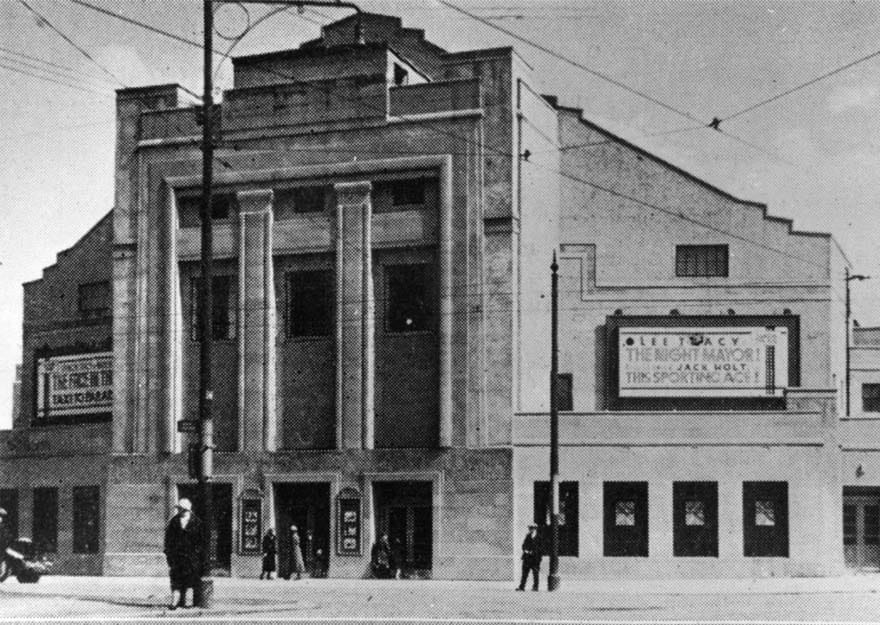
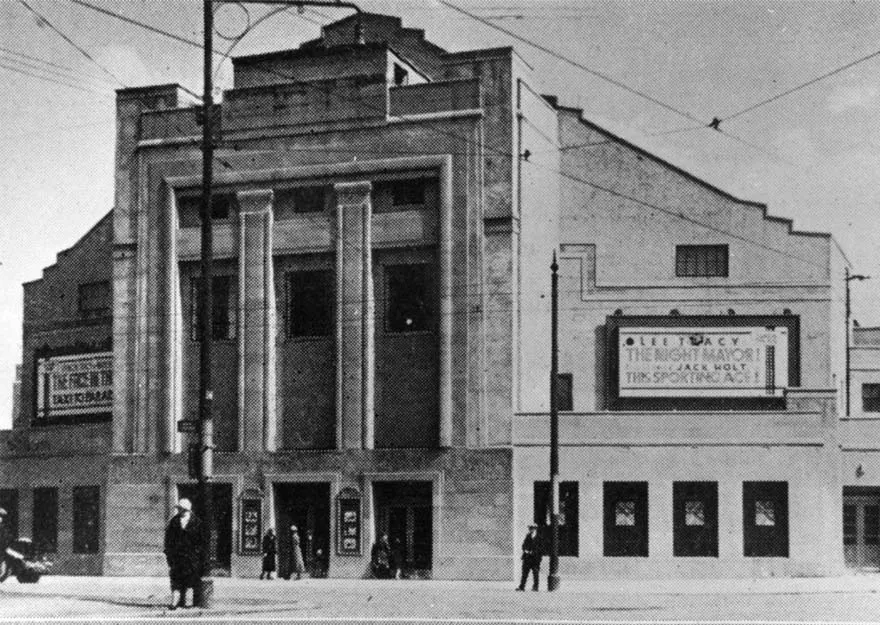
The building in question is the Vogue cinema on Balmore Road in Possil, which has been the focus of stories in the BBC and The Herald over the weekend. Designed by James McKissack (who also designed the GFT), campaigners want to save the former cinema, arguing that locals deserve to celebrate their built heritage just as much as those in more affluent neighbourhoods. Others point to the harsh economic reality of investing millions into a building at a time of high building costs and potentially low returns.
The Vogue is owned by Allied Vehicles, who want to demolish the building and build a warehouse and housing in its place, creating dozens of jobs. Allied Vehicles is a north Glasgow powerhouse, with its 28-acre manufacturing site stationed on Balmore Road, where they convert vehicles for uses such as taxis, school minibuses, and mobility solutions. Its founder, Gerry Facenna, also owns the nearby Glasgow Tigers speedway team and their stadium, Ashfield. A big ‘Tigers’ logo adorns the side of the cinema.
Back in early 2024, demolition of the Vogue was underway, with Allied Vehicles securing permission to bash on with their plans to develop the land. But, following a campaign to save it, a last-minute building protection notice was issued by the council to save what was left of the building — which by that point was only the facade and a rather skeletal roof. The Facennas’ plans were paused. In the interim, Historic Environment Scotland listed the building, which prevented future work without express permission from authorities. The Facennas appealed this decision, but that was knocked back last July.
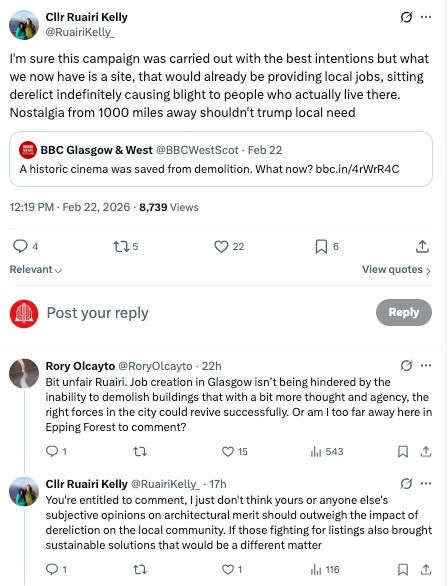
This brings us to the BBC’s weekend article: ‘A historic cinema was saved from demolition. What now?’ It's a question that isn’t easily answered, and built heritage councillor Ruairi Kelly admits he “doesn’t know” now that the building is protected but mortally wounded by the initial demolition work. A case was brought to the Court of Session by Allied Vehicles last September, which again seeks to appeal the listing of the Vogue. If upheld, demolition may resume. Otherwise, there’s a serious risk of “indefinite dereliction”, according to Kelly. His ultimate position is that, while the ideal scenario would be to develop a strong business use of the land while preserving the architectural integrity of the former cinema, there just isn’t the economic incentive for a private owner to do so. Kelly added that the eleventh hour blocking of demolition back in 2024 was “poorly dealt with by all around”, and will leave locals to suffer another long-term vacant building.
The other side of the coin is represented by Labour MSP for Glasgow, Paul Sweeney. Long a champion of Glasgow’s built heritage, he told The Bell that a “compromise” can be reached that doesn’t “sterilise” the use of the building or site while fulfilling Allied Vehicles' aspirations to “create a major landmark” for their company. Sweeney also jabs what he sees as a lack of ambition in the council: “it’s rather disappointing that councillor Ruairi Kelly, who is supposed to be the lead for built heritage in the city, doesn’t see good examples of best practice in Glasgow of doing a facade retention option, which can provide a good compromise on facilitation of new development whilst retaining the city’s heritage.”
🚳 News of a police officer telling High Knightswood and Anniesland Community Council that they plan to crackdown on illegal e-bikes wouldn't usually make our briefing, but something in the National’s report caught our eye. An officer is quoted as saying that “police have requested extra resources from the Violence Reduction Unit, who can pursue the riders on bikes, as this cannot be done using vehicles”. Is this to say that the VRU, Scotland’s pioneering public health approach to policing violence, will now spend their time in hot pursuit of off road and electric bicycles? Seems unlikely. The Bell asked Police Scotland to confirm whether this was indeed a new policy. Somewhat disappointingly, they told us the officer in question spoke “in error”, and that the VRU would not, in fact, “pursue people on illegal e-bikes as a matter of course”.
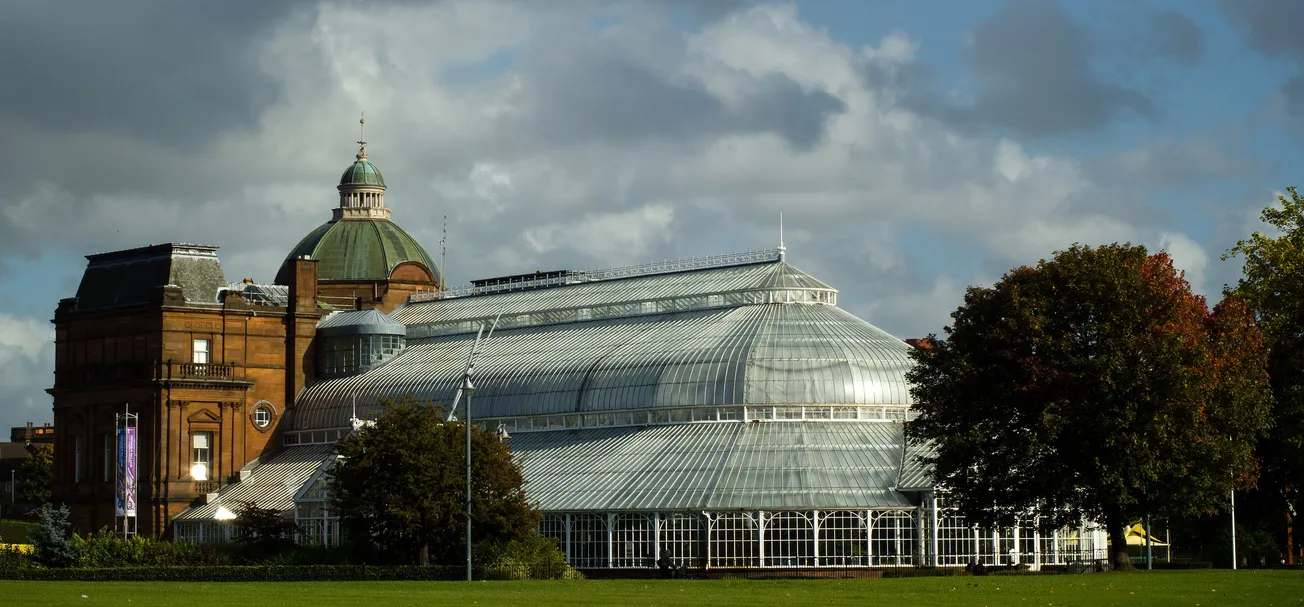
🕳️ We’ve been pursuing the story of the closure of the People’s Palace since the end of April 2025 — to little avail. Then last Monday, we reported that there was a £12m black hole in the finances of the People’s Palace and Winter Gardens renovation. A lot’s changed in a week. Four days after we reported the funding shortfall, it was announced that the reopening of one of Glasgow’s most-loved museums would be “delayed indefinitely”.
The 1898 museum has been closed since 2024 for a £35.9m renovation and restoration project, while the winter gardens glasshouse has been closed since 2018 for safety reasons. It had been due to reopen in 2027. Glasgow Life director Bill Garrett told a Holyrood culture committee last month that funding for the city’s cultural sector was “really vulnerable”, highlighting that the city’s museums do not receive any funding from the Scottish government, despite being “internationally significant assets for the country”. At the time the People’s Palace was closed two years ago, it was reported that Glasgow Life was working with “other public and private sector funders” to secure the remaining investment required. Last week, Glasgow Life told The Bell the £12m shortfall was a “fundraising target and not a ‘shortfall’.”
This morning, Glasgow Life, which runs the building on behalf of Glasgow City Council, told us: “As is common with large-scale capital projects involving major heritage structures, timelines, options and cost estimates continue to evolve as more detailed technical information becomes available and as funding discussions progress.” They will announce an “exciting reopening programme and will confirm a revised date for this as soon as practically possible”. At this rate, we might be waiting a while.
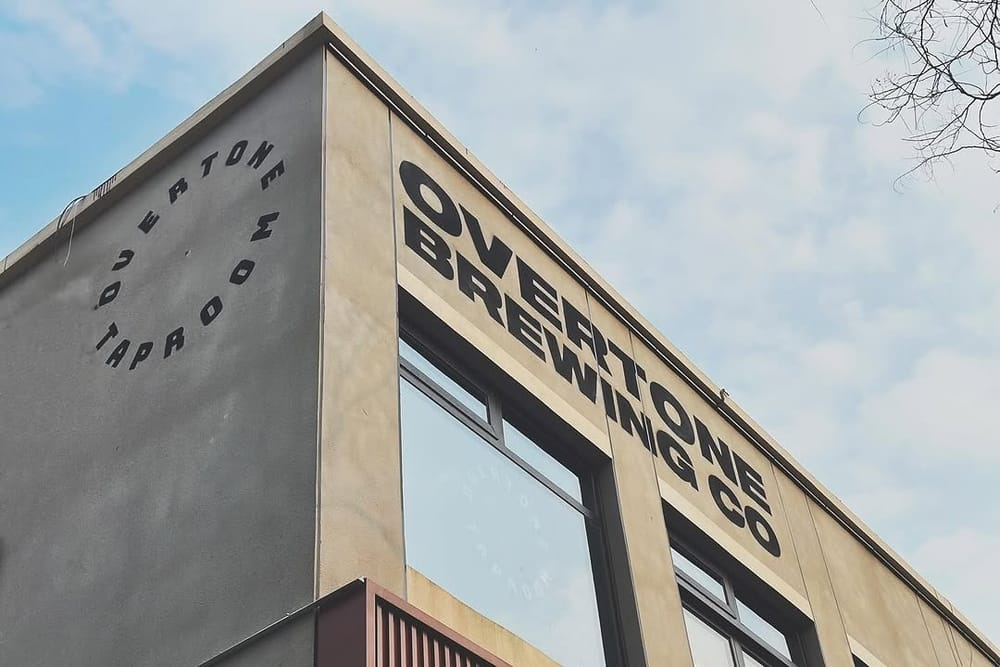
🍺 Last week it looked like the taps were off at Overtone brewery. The beloved beer brand went into administration last weekend, and insolvency company Begbies Traynor has now been appointed to liquidate and dissolve the business. All hope is not lost; “[A] new owner will continue to operate the brewery and brand in the future,” Overtone told The National. The new company, Playlist Brewing Ltd, was incorporated on 17 February at the same address in Yoker, as beer writer Laura Hadland reported last week. One of the new directors is Scott Williams — who founded Williams Bros brewing with his brother, Bruce, in 1992. Alongside him is business partner, Iain Allan — both he and Williams will have 75 shares in the new company. Overtone founder Bowei Wang is part of the new company, as a minor shareholder with 50 shares. With Wang part of the new business — and Playlist itself the name of a past Overtone birthday party event — this may be business as usual, albeit with a different sonically-inspired name and more craft beer clout running operations behind the scenes. We live in hazy hope.
Stories you might have missed
🏠 Work to dry out Charles Rennie Mackintosh’s Hill House at ‘critical’ stage | The Times, £
🔍 Evidence around unsolved murder of Glasgow man Alexander Blue under review | STV News
🏗️ Plans for flat blocks near old Victoria Infirmary in Battlefield given go-ahead by councillors | STV News
Enjoying your Monday briefing? You can get this and a weekend story from The Bell totally free every week by signing up to our regular mailing list. Just click the button below. No cost. Just old school local journalism.
Read/listen/watch: Welcome to G-Town
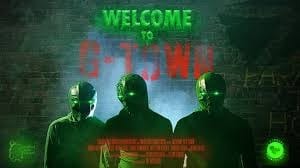
Bothwell’s had a lot of bad press lately. Thankfully, Nathan and Ben McQuaid are here to spin some good PR for their hometown, with a debut feature length film set to premiere at Glasgow Film Festival this weekend. The micro-budget horror — which the brothers successfully crowd-funded for — is set in Glasgow, with three graduates becoming embroiled in a shape-shifting alien conspiracy. If that sounds a bit weird, it’s because it is. “This is a truly home grown project made by an extremely passionate cast and crew hoping to make a film that is unique to the industry here,” they said in their Kickstarter appeal. The pair were also profiled in the BBC recently.
Welcome to G-Town starts 28 February. Tickets and info here.
More Glasgow Film Festival events can be found here.
We also rec:
- Alasdair Gray Day: A cultural, literary and feminist legacy
- I grew up with writer and artist Alasdair Gray as my dad and loved him
Catch up and coming up:
 Gordon Cairns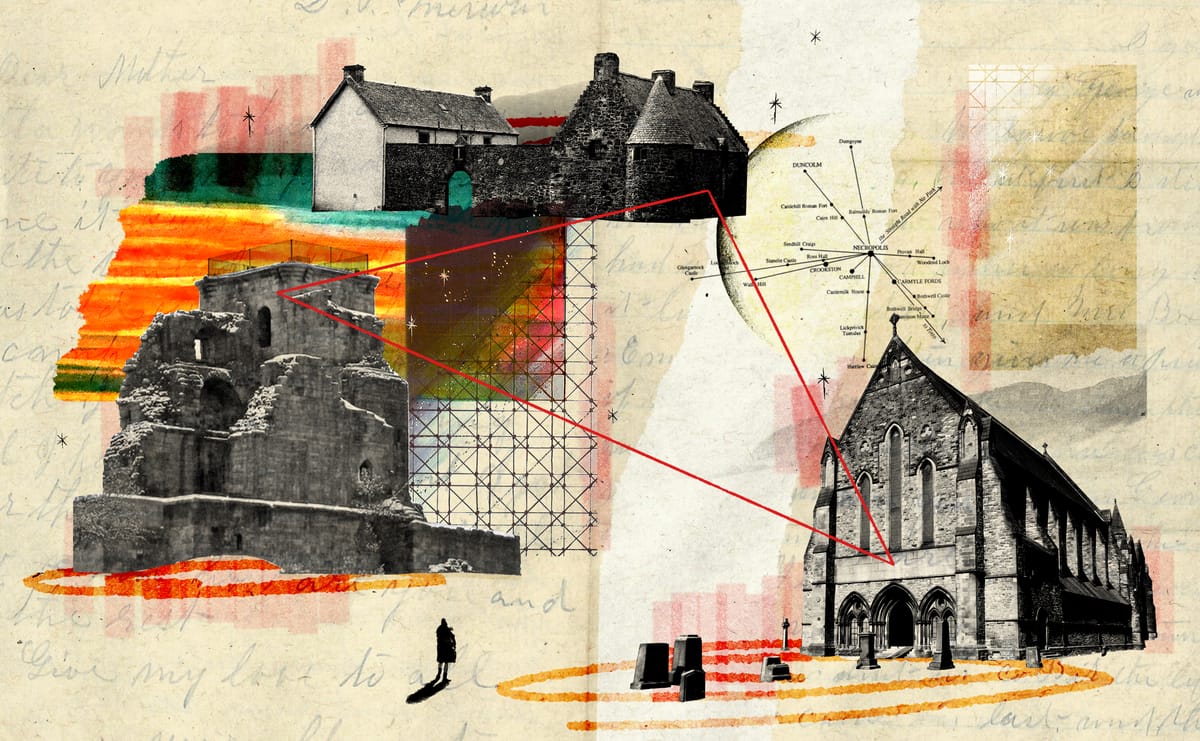
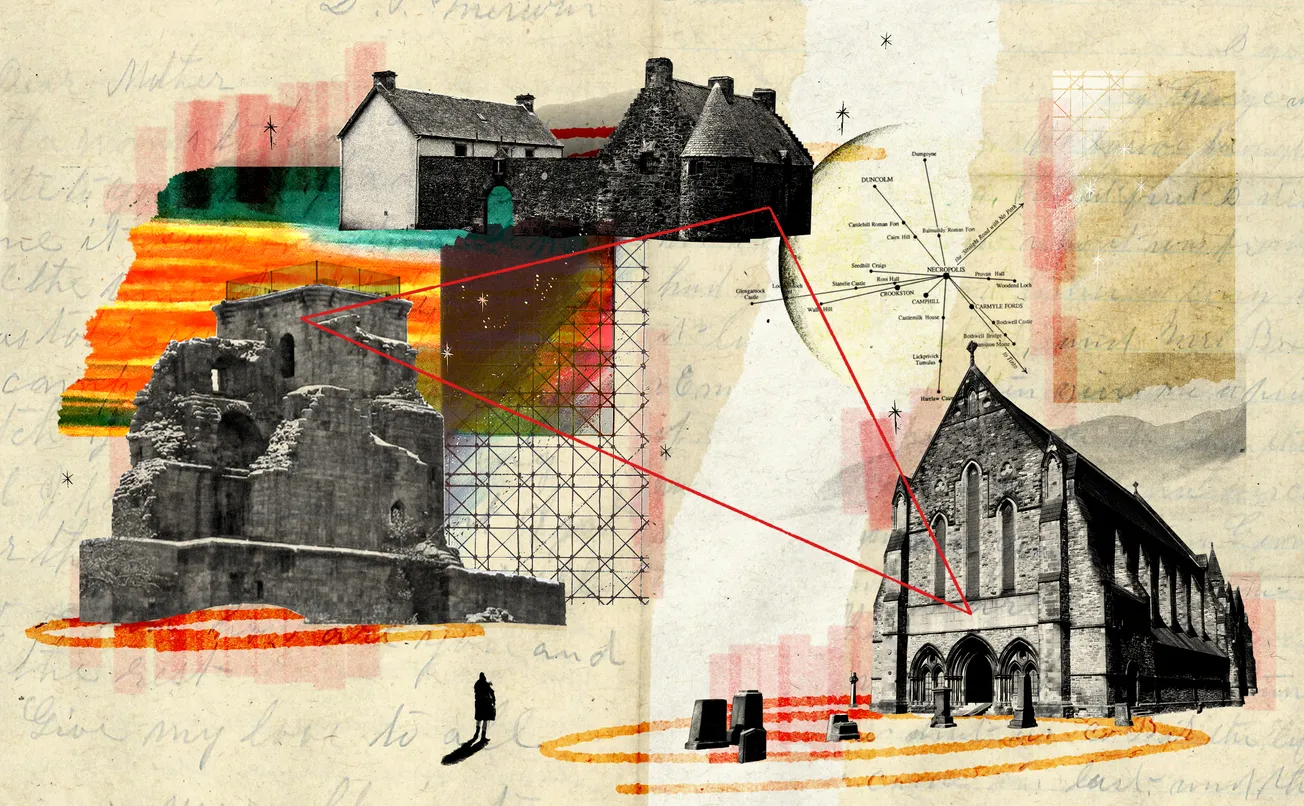
- Saturday’s read was another delve into an unexpected world courtesy of Gordon Cairns, who’s fast becoming The Bell’s niche affairs correspondent. In looking at the cult book on Glasgow’s “sacred geometry”, Gordon stirred a few impassioned responses from readers. Mark had this to say:
Pretty much every paragraph in this contains a question to which the answer is 'no'. It's very easy to draw up ley lines and make them fit a mystical purpose - I used to do it myself in Shropshire back in the late 1970s, and my home county has many thousands more suitable "ancient" sites than Greater Glasgow. It can be fun but it's often part of a rejection of modernity and can get pretty conspiracy-theory-adjacent.
One of the "standing stones" on my lines turned out to have rolled down a hill into its 'significant and ancient location' after being dug up by a local farmer constructing a barn.
Meanwhile, Jeremy saw it thus:
It's a lovely story and appeals to our collective unconscious (if that's a thing, see Jung), however as a thought experiment imagine archeologists digging up the foundations of various Asdas in 10 000 years and making similar maps of how this society linked these mystical sites.
- In the upcoming weekend, Moya Lothian McLean is making a welcome return to our bylines with a drama-filled piece on the latest dispute in Glasgow’s favourite topic: bakeries.
Re:view: Mosob, 56 Dundas Street
Wandering down the Gallowgate today, the number of Ethiopian and Eritrean cafes, restaurants, mini-markets and shops cements the area’s status as something of a Little East Africa. Mosob, a Glasgow OG where East African cuisine is concerned, has been punting “Authentic Ethiopian and Eritrean cuisine” for years now — nestled above the chaos of Queen Street, and indeed, one of the city’s most infamous kebab shops (the owner of which may have been heard swearing at passersby after a recent Mosob visit).
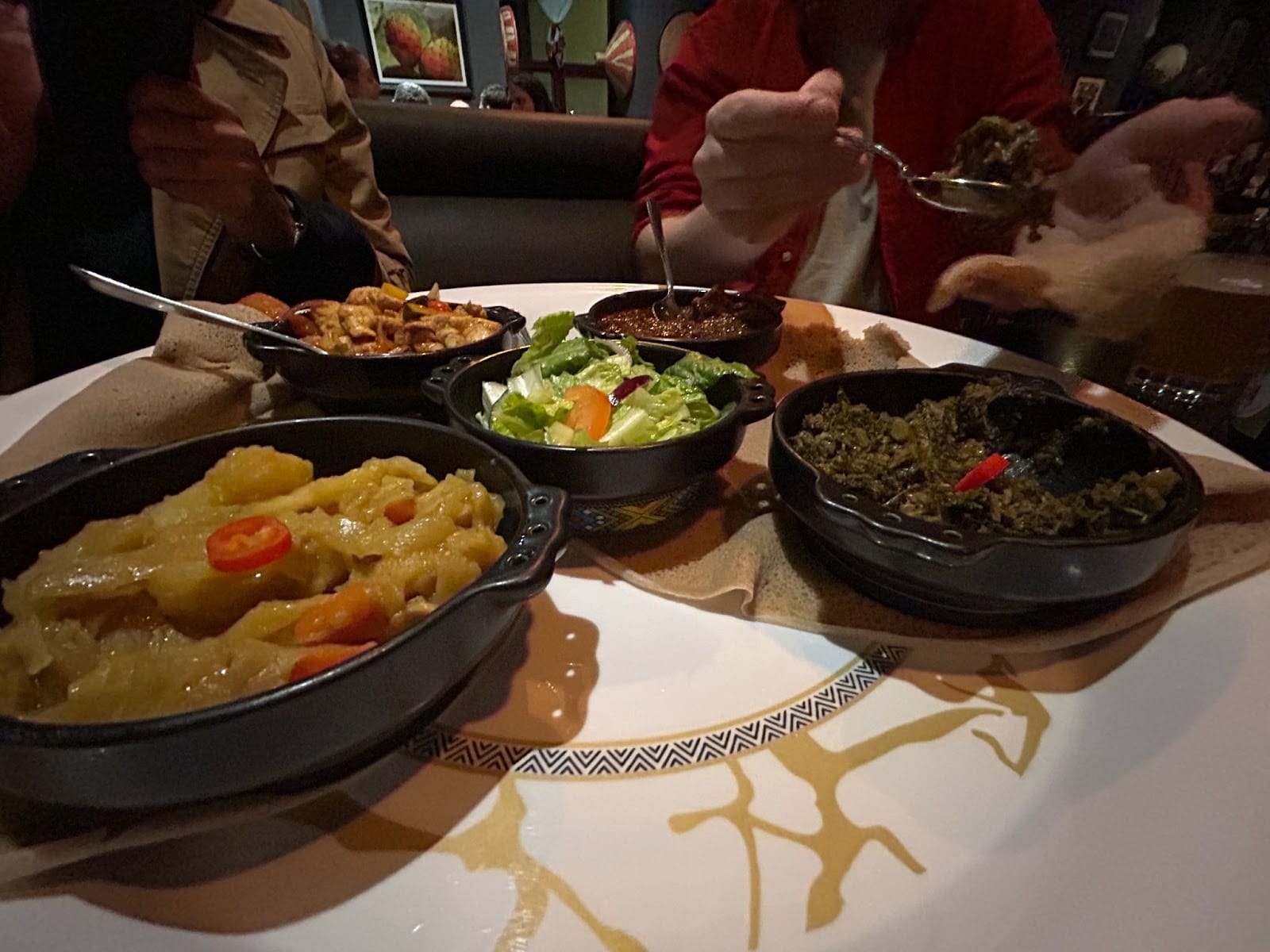
While Ethiopia and Eritrea are distinct sovereign nations with their own complexities, the cuisine is united by injera, a fermented pancake placed atop the ‘mesob’ basket-cum-table, upon which food is then served. The palm leaves with which the mesob is made are famed for their strength. The basket has strong cultural symbolism, a focal point around which to eat, it represents community, unity and hospitality. The best thing to do then is order a shared platter, and heap all the food on top of the injera, breaking the bread apart and eating with your hands. It’s delicious, affordable and the service is friendly. Fire in.—Robbie

Welcome to The Bell. We’re Glasgow's new newspaper, delivered entirely by email. Sign up to our mailing list and get two totally free editions of The Bell every week: a Monday briefing, full of everything you need to know about that’s going on in the city; and an in-depth weekend piece like the one you're currently reading.
No ads, no gimmicks: just click the button below and get our unique brand of local journalism straight to your inbox.
If someone forwarded you this newsletter, click here to sign up to get quality local journalism in your inbox.