On their first day of secondary school, Angus MacInnes and Julia Sutherland weren’t warmly received by their fellow pupils — they were outnumbered. The year was 1988 and the pair had just made history as part of the inaugural student cohort at the city’s first Gaelic secondary unit.
Gaelic pupils coming from across the city were bussed into Hillpark School, unlike the 500-odd English-speaking pupils, who had to schlep their way to the top of the steep incline that gives the area its name. They didn’t take kindly to the Gaels’ mode of transportation, banging on the bus windows as it climbed the hill. Soon, they’d nickname it the ‘Special Bus’ and the ‘Garlic Unit’. It didn’t matter though; the six pupils were pioneers.
Forty years on, Glasgow has become a stronghold of the Gaelic language, home to four Gaelic primaries and the Àrd-sgoil Ghàidhlig Ghlaschu, the only Gaelic secondary school in the world. In the 1980s and 1990s, a movement to ensure the survival of Gaelic on the mainland resulted in the birth of Gaelic Medium Education — a holistic curriculum that didn’t limit Gaelic schooling to the language itself, but also taught all other subjects in the tongue, along with cultural instruction in history, tradition and folk song.
Today, Gaelic education is at a high watermark. Demand has rarely been higher. As of 2024, more than 1,380 children attend GME schools in the city. But new learners don’t come from the quarters one might expect; around 80% of families sending their kids to Gaelic school in Glasgow have no prior connection to the language. Many are Anglophonic Scots or English, but the language is also popular among families of diverse backgrounds.
Glasgow is home to 10% of Scotland’s speakers, the largest number outside the Western Isles. This has come with a kickback, complaints that Gaelic education is swimming with cash (untrue) and that only bougie middle class parents send their children to GME (also untrue) for the free buses (maybe true; who doesn’t love free buses?).
Some are wondering what the future looks like for Gaelic. If pupils merely learn Gaelic at school, then return home to speak English — or any other language — new learners are unlikely to gain proficiency and ensure Gaelic’s ultimate survival. The success of Gaelic education has come at a cost, and has brought with it a different sort of precarity. What’s the language without the culture?
Welcome to The Bell. I'm Robbie. Stories like this take weeks, if not months to report — but we think the legwork is worth it. This is what we do at The Bell, and it's the type of reporting you can get by signing up. Our free mailing list gets you two totally free editions of The Bell every week.
No ads, no gimmicks: just click the button below and get our unique brand of local journalism straight to your inbox.
The medium and the message
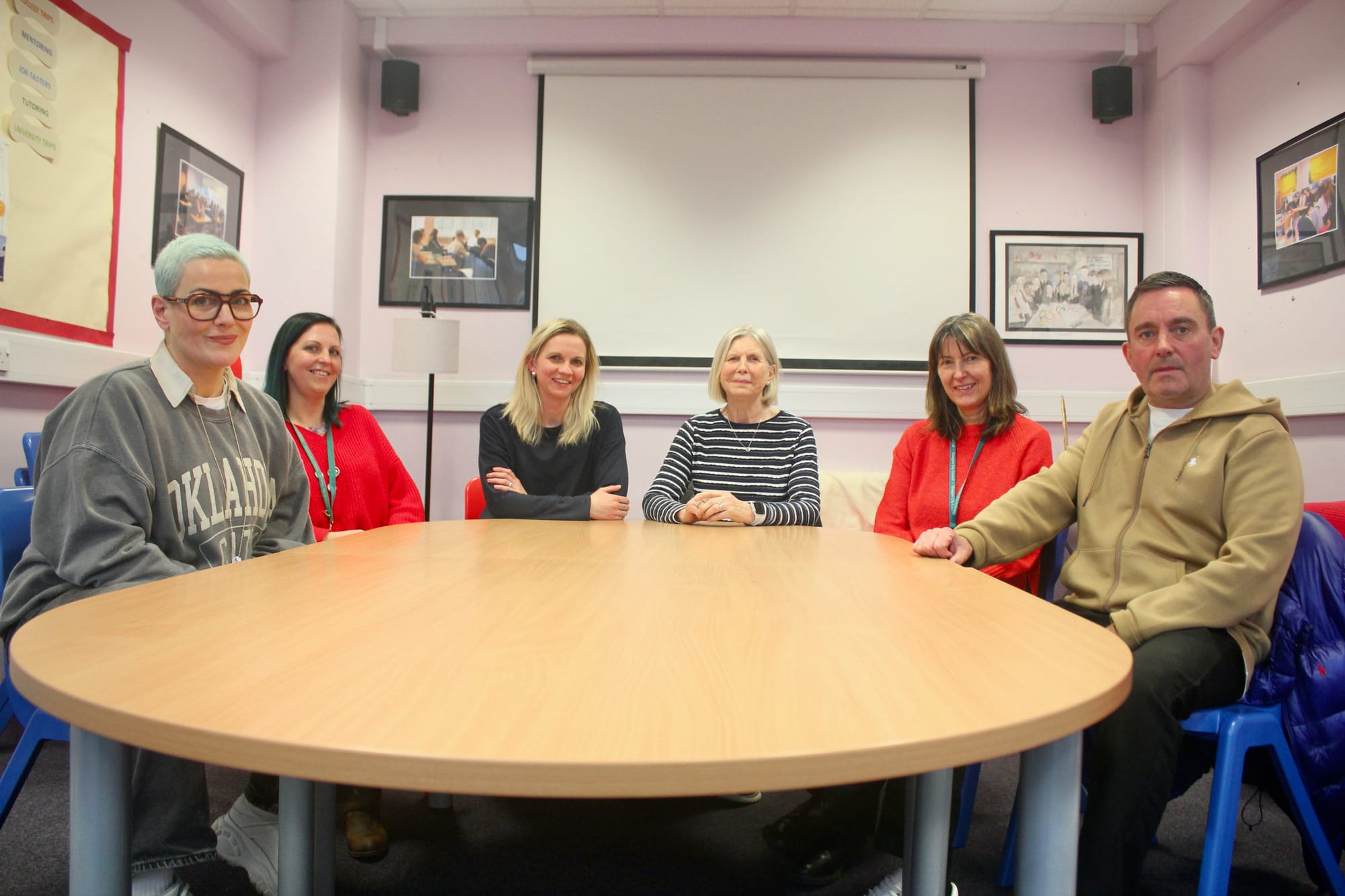
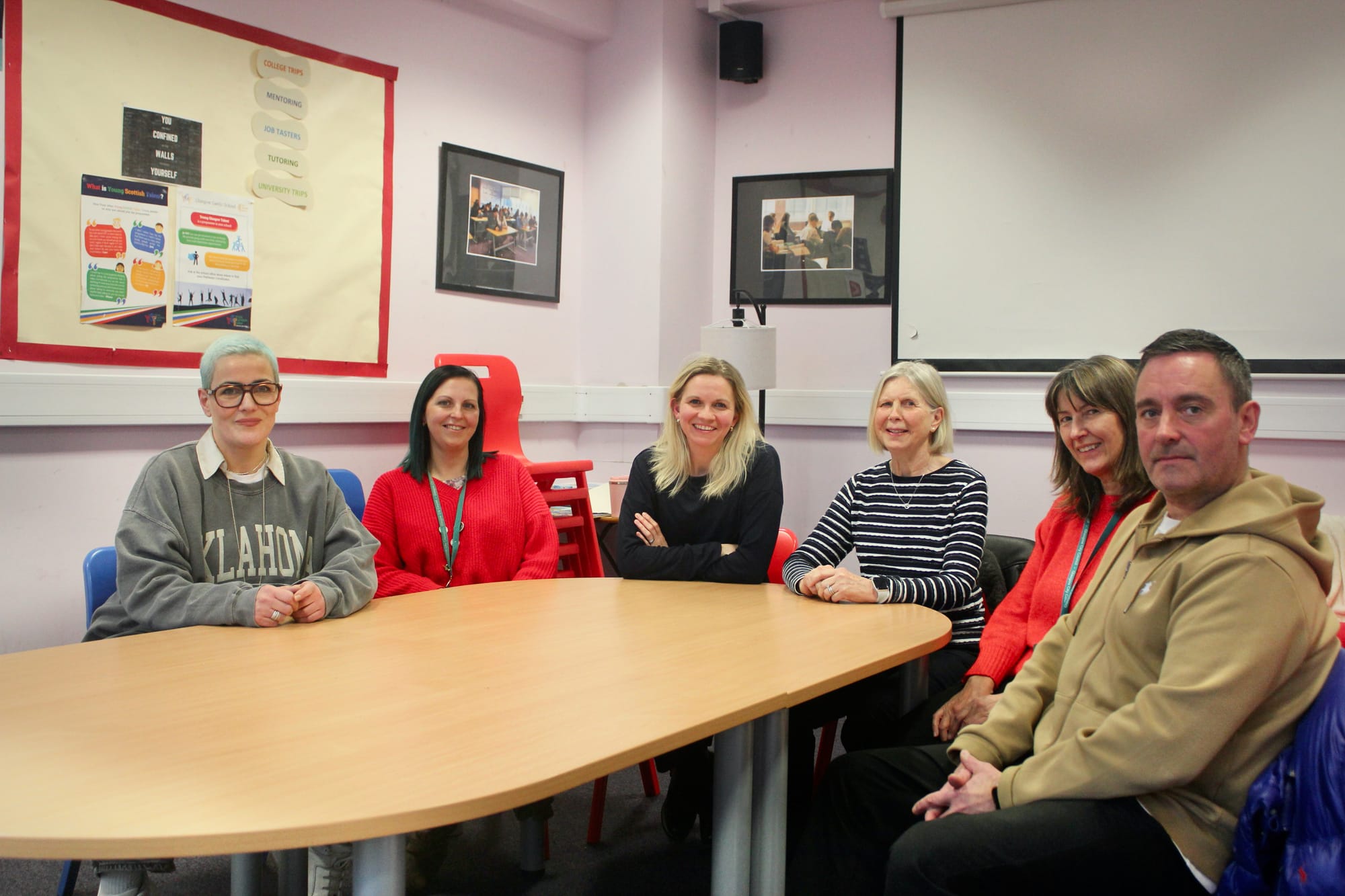
Sutherland and MacInnes didn’t realise it then, but they were part of a vanguard that would help ensure the survival of an endangered language. Today, the pair are sitting with several others around a large table at the Sgoil Ghàidhlig Ghlaschu on Berkeley Street, which contains both the secondary, a primary school and a nursery.
The meeting is something of a reunion; also here is Fiona MacIsaac, one of the first pupils at Sir John Maxwell, the school which established the city’s first Gaelic unit in 1985. She’s now acting deputy at the Bunsgoil Ghàidhlig Ghlaschu, Glasgow’s main Gaelic primary. Also present is Catriona MacNeil, who was a few years behind MacInnes and Sutherland at Hillpark, and Anne MacLeod, a retired teacher who also taught at the school.
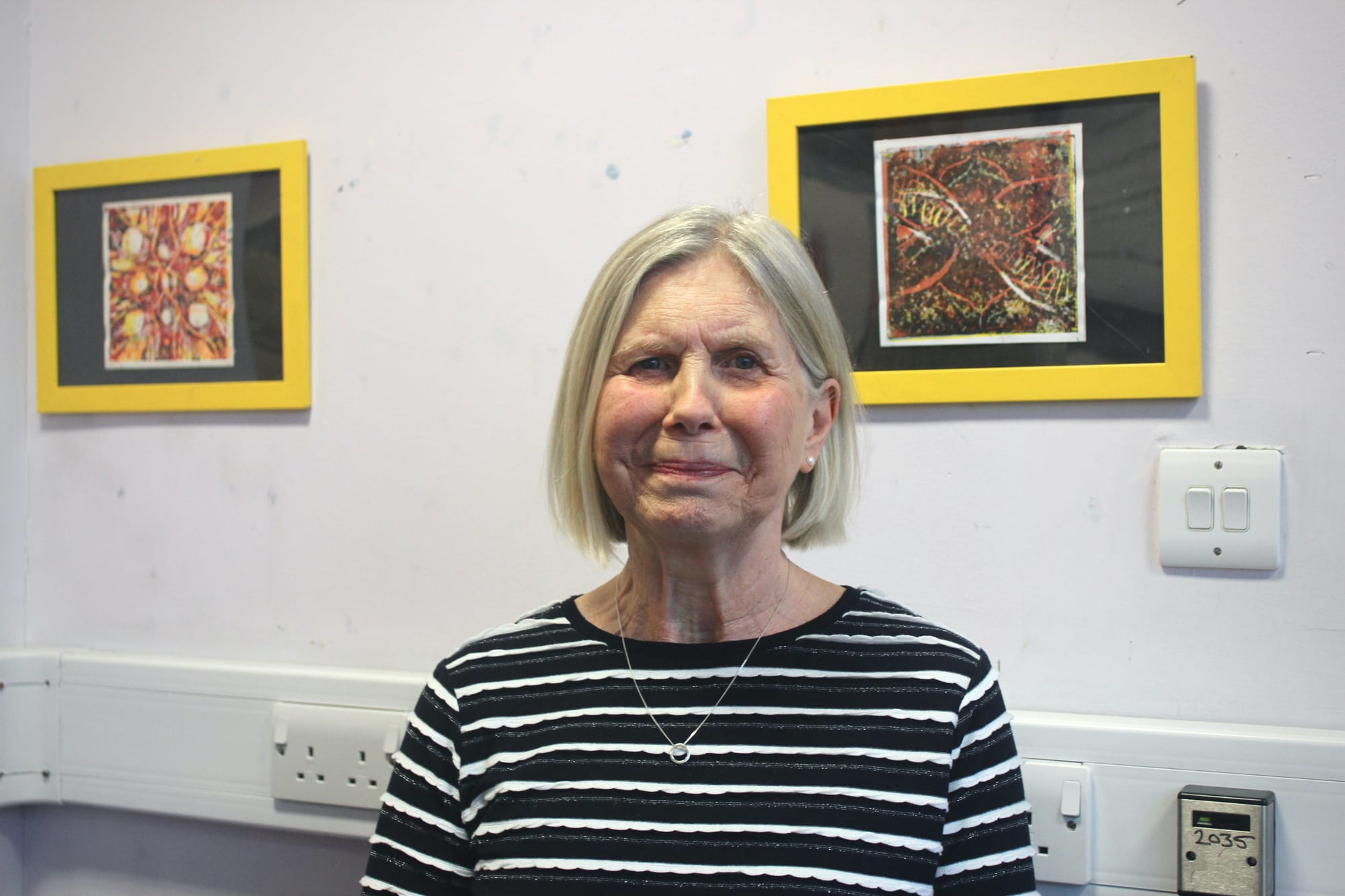
Despite MacLeod’s protestations that the Glasgow Gaels are “not clannish”, it quickly transpires that Catriona MacNeil and MacIsaac are cousins. Oh, and MacLeod is actually Catriona’s mum. “All these cousins are keeping us in business,” jokes Julie MacNeil (no relation), who arranged today’s meet up. She first became a secondary teacher at Hillpark in 1990 — “very chaotic,” MacNeil recalls with a smile — and now teaches in the school we’re sat in.
MacNeil’s mother grew up in the Outer Hebrides and “got the belt for speaking Gaelic” — even though no one spoke English in their daily life. That generation “were made to feel like you’re not going to get anywhere in the world if you speak Gaelic … it was hammered into them”.
“There was a sort of weird resistance to it,” says Sutherland. “I think it was born out of ignorance. People didn’t understand that we’d had this language stolen from us and beaten out of us”.
The Gaelic language is around 2,000 years old, and was the primary tongue of Scotland in the 13th century. Through various forms of suppression and political and economic pressure, especially in the 18th and 19th centuries, Gaelic suffered a calamitous decline.
But in 1999, while national levels of Gaelic speaking had never been lower, the language was resurgent on the political stage — and in Glasgow.
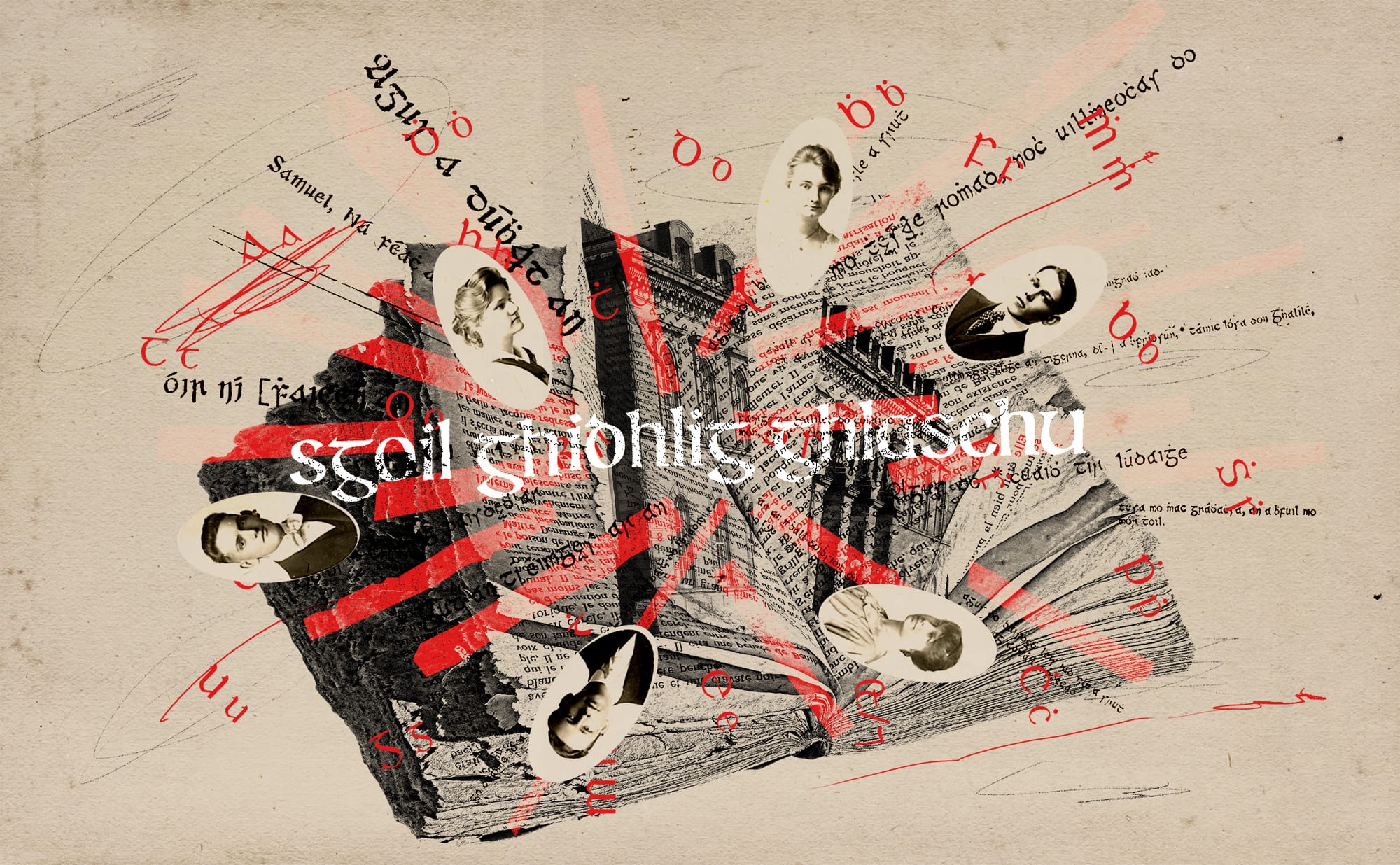
Winnie Ewing MSP, first to take the oath in the re-established Scottish parliament, repeated her words in Gaelic. That year in Glasgow, Bun-sgoil Ghaidhlig Ghlaschu opened in Woodlands, the first standalone GME school in Scotland. Its 109 pupils would spend their entire day immersed in the language, from canteen menus to textbooks. All 13 members of the teaching staff were Gaelic-speakers, as well as the janitor.
By 2006, Gaelic education in Glasgow was no longer an experiment, but worthy of a £4m investment. The Sgoil Ghàidhlig Ghlaschu opened on Berkeley Street, replacing Hillpark secondary unit and the Bun-sgoil Ghaidhlig on Ashley Street. This time, Gaelic would be taught from the ages of three to 18, to 320 new pupils.
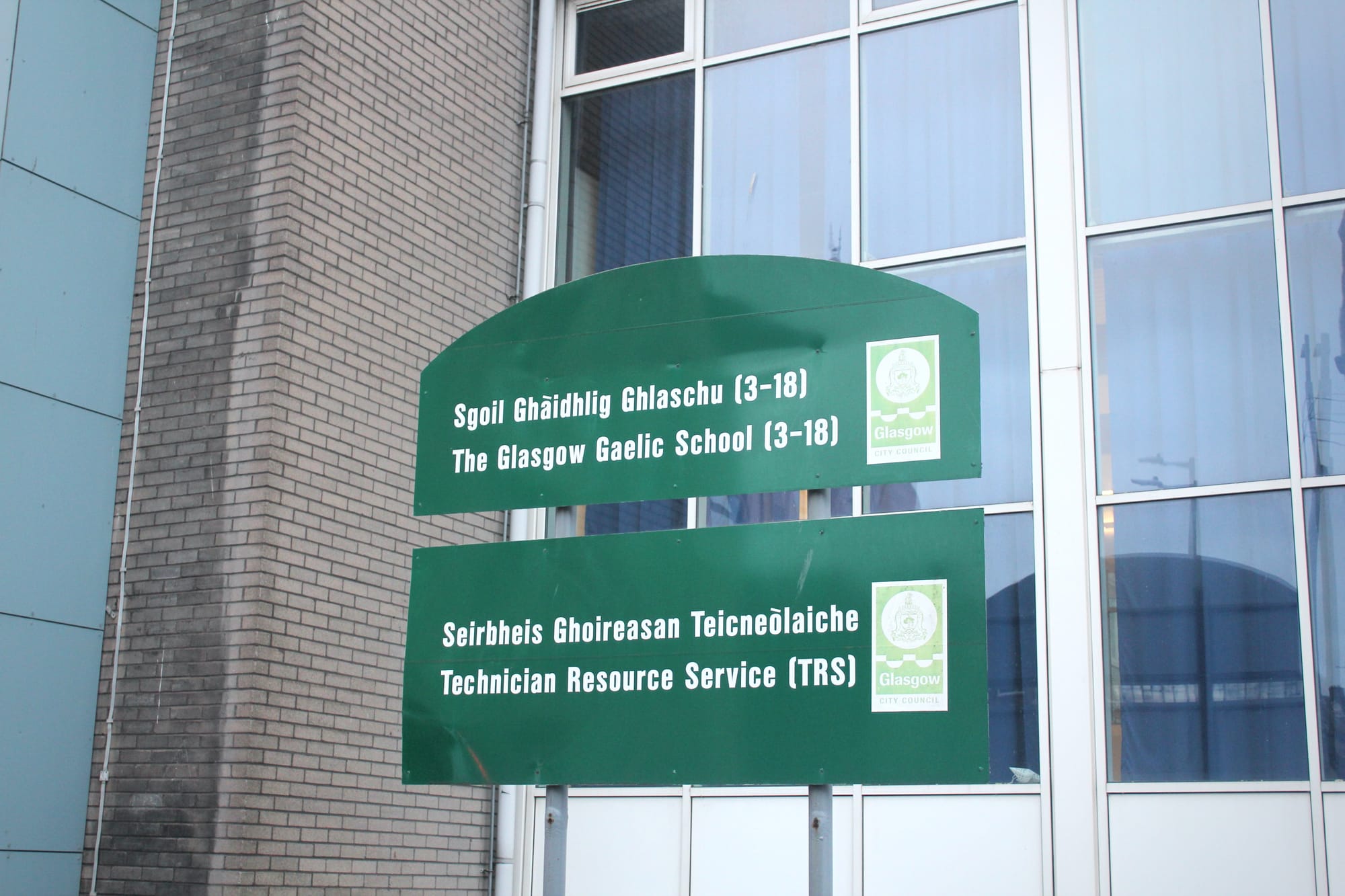
The benefits of Gaelic education — from bilingualism and smaller class sizes — began to attract parents in Glasgow without direct connections to the Gàidhealtachd, the Gaelic heartlands of the Outer Hebrides and Highlands. The demand became so great in recent years that Glasgow City Council implemented a primary cap.
But the success of Gaelic in Glasgow has also brought tension.
‘It has to be about the culture’
Back at Berkeley Street, Fiona MacIsaac is growing increasingly animated, stressing the importance of teaching Gaelic culture, not only the language. “You’re teaching children about where Gaelic came from, and how the school started, they get a real sense of pride that [...] they’re part of something really important.”
As the ranks of Gaelic speakers swelled over the years, the cohort of new Gaels started to outnumber the traditional Gaels. Eventually, those without a direct connection to the Gàidhealtachd became the majority.
Gaelic education today, as MacIsaac sees it, closely resembles the English curriculum, only in a different language. There is no longer the same level of historical and cultural education as in her school days.
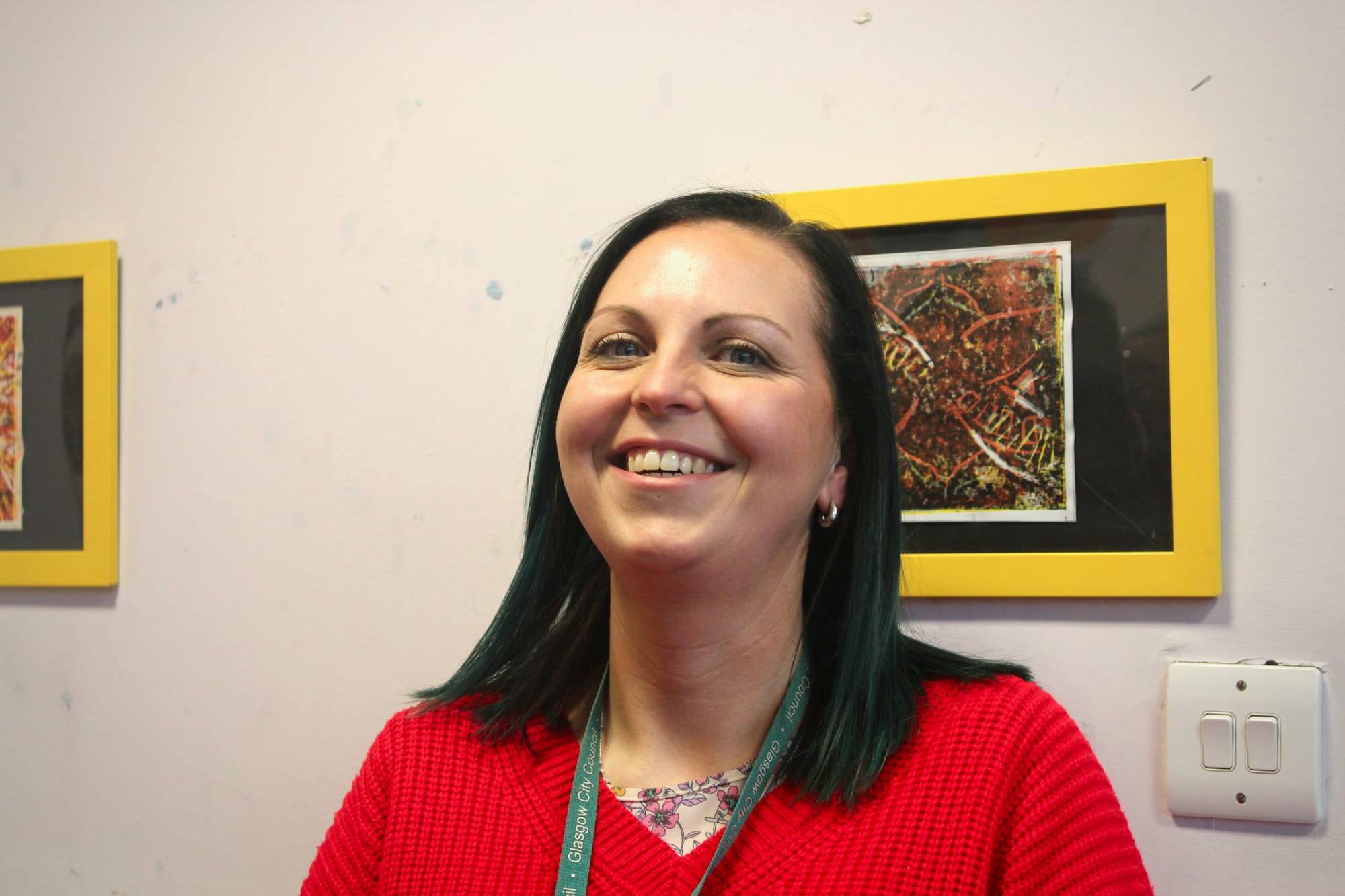
Once MacIsaac finishes, she becomes nervous, worried she’s said something she shouldn’t have. But Catriona MacNeil backs her up. “Most of us came from that Gaelic background, so we had that culture, that understanding of why we were doing the language, which sometimes gets lost,” she says. “Doing another language is great, but why? Why Gaelic? It has to be about the culture”.
Her mum, MacLeod, cuts in. “It was also a feeling of identity, because there were lots of other people, like immigrants coming in, the Italians, the Polish, the Chinese, whatever, coming into the city ... There was a feeling of ... you’re going to lose what basically belongs to us, our own heritage, our own language.”
The debate over the erasure of Gaelic culture in education is contentious. In Gaelic culture, language is more than a means of communication, it is a vessel for relating to the land, community and the past. Language and culture are indivisible. Concepts like Dualchas convey the importance of cultural inheritance: of songs, stories and crafts passed down through generations.
“A lot of the children have got the culture, but you do worry about the odd ones that are just coming on the bus,” MacLeod says. MacInnes expands on her point.
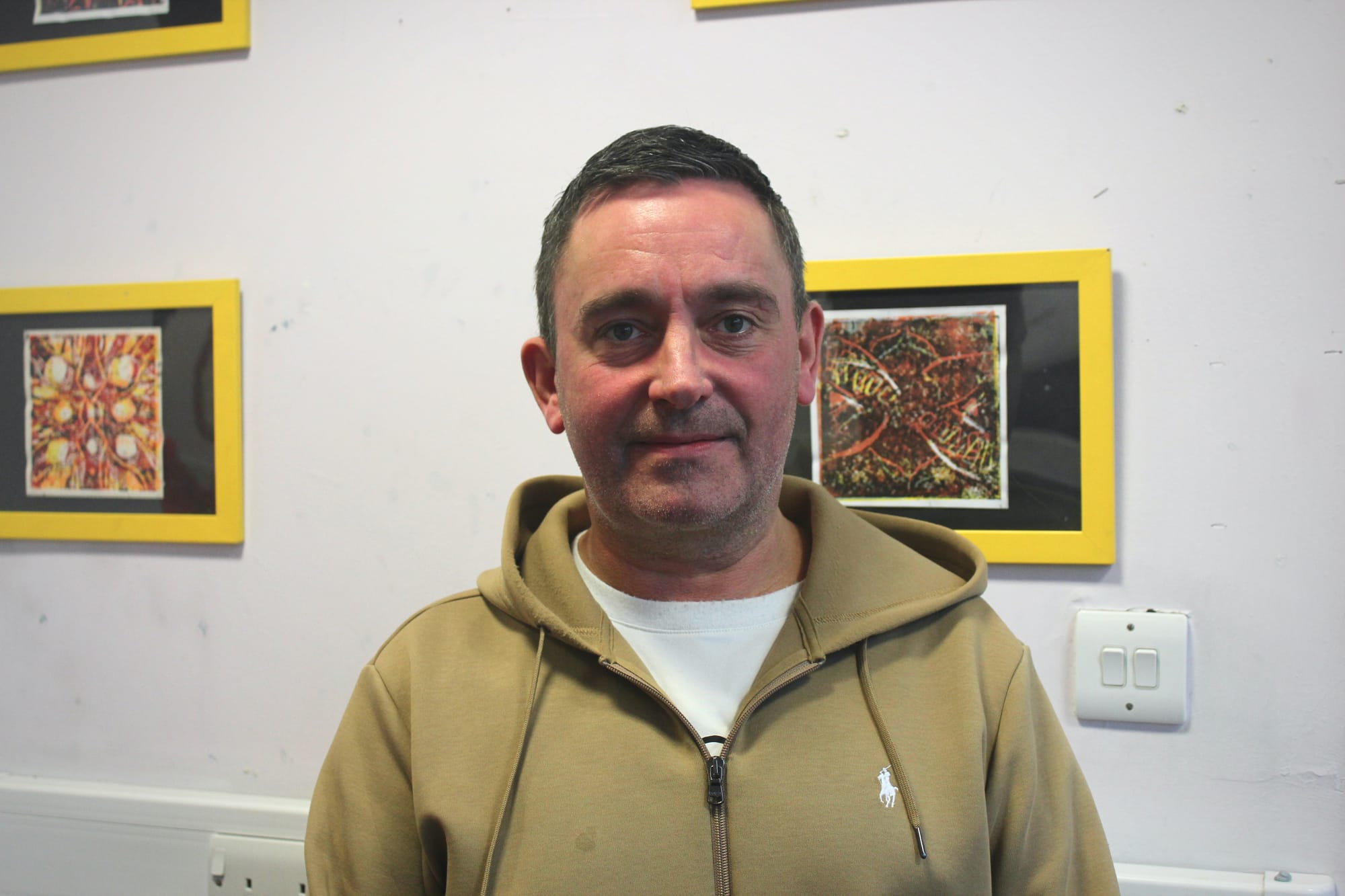
“Quite a lot of the kids that come now have no Gaelic connection whatsoever, they have no connection to the islands,” he says. “When I took my wee girls to nursery here, they had kids in the class that were Chinese, Polish, Asian, and their first language wasn’t even English. I found that quite strange.”
There’s a pause; the atmosphere becomes a bit strained before MacIsaac jumps in to offer a more diplomatic counter point. “It is amazing to see how many children are picking up this language who have no connection with it at home, whose parents don't speak it … They're embracing it, and they're thriving. It is quite incredible.”
The Glasgow Gaels
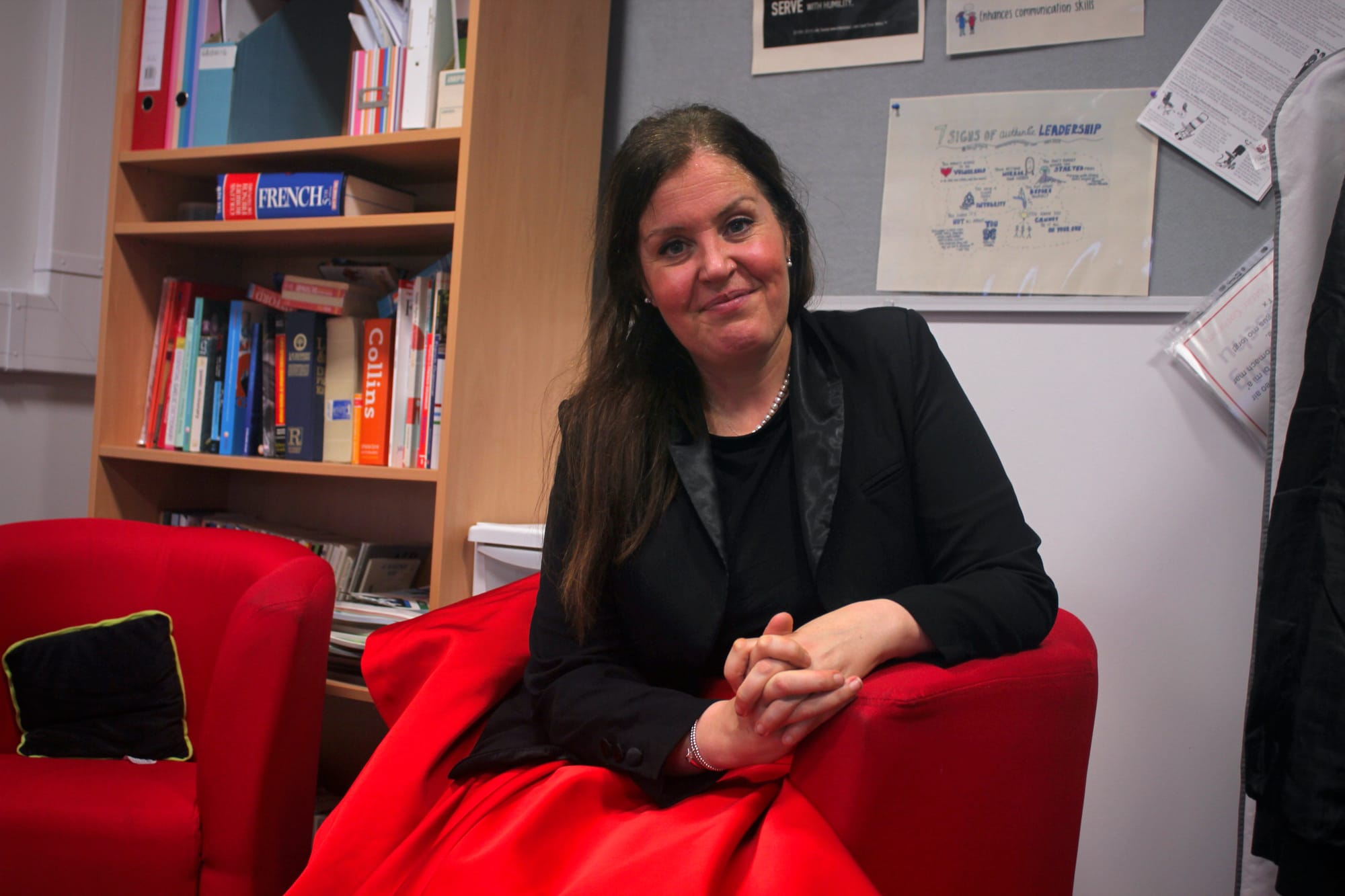
Gillian Campbell-Thow takes a seat in her colourful office in the Àrd-sgoil Ghàidhlig Ghlaschu, the Gaelic secondary where she’s been headteacher for the past three years. Campbell-Thow’s personal aesthetic matches the maximalist decor; she’s wearing a vibrant red frock and sparkly heels, with a number of tattoos and piercings.
“I think it’s really important that people see we’re just people of all sorts who are being their authentic selves,” she says effusively.
On the topic of new Gaelic learners, Campbell-Thow is uniquely placed to answer, being one herself. She’s a polyglot, speaking French and Spanish fluently, as well as German, Italian and “pretty rusty” Mandarin. She started learning Gaelic at university. So how does it compare to the others?
“Good God!” she exclaims. “You have to forget everything you’ve ever learned. But there’s something really rich about the Gaelic language when you get the stories about where the words come from and the etymology of it all.”
Her students — a quarter of whom are in the top two bands of the Scottish Index of Multiple Deprivation, contrary to the belief that GME is the preserve of Glasgow’s middle classes — are often novices too. “There are lots of children here that have no connection to the Highlands and Islands or Hebridean culture,” she explains. “So we redid our vision values. And one of the big things was actually: ‘You are Glasgow Gaels’.”
Contrary to criticisms about a decline in Gaelic culture and history teaching, Campbell-Thow says pupils learn “where the language and the culture came from”.
A lot of children “don’t know why they’re here” when they arrive at primary school — it’s her job to educate them not only in Gaelic, but on Gaelic. Pupils learn history, etymology, traditional poetry, art and song. In music classes, they learn the clarsach, fiddle and bodhran. In physical education, they play Gaelic football and shinty. “You keep that language alive through the culture, through the engagement ... GME is a way of life,” Campbell-Thow says.
On the parent’s side, Athene Richford of Glasgow’s Comann Nam Parant, a Gaelic parents association, says putting her kids — who don’t have a Gaelic connection — into GME was about: “[feeling] rooted … If I was being practical, bilingualism is such a gift for children. [But] there was an opportunity to reclaim something ... a sense of redress for oppression and suppression of the Gaelic language.”
In 2024 the number of Gaelic speakers dropped below 50% in the Outer Hebrides for the first time, but the total number of people using Gaelic in Scotland has increased, thanks to GME. Gaelic was recognised as an official language of Scotland late last year.
GME’s success in Glasgow has young people speaking Gaelic and “working to continue it in generations to come”, says Emily Munro. But it’s now increasingly a “city-based” tongue. The urban shift is reshaping the language with studies suggesting the new cohort of speakers have created a different “flavour” of Gaelic.
“The language is the culture and the culture is the language — those things are interconnected and you can’t have one without the other,” adds Munro. Her two children are in GME. She admits bilingualism was a draw but: “it was also an opportunity to connect to a broader understanding of Scottish culture”.
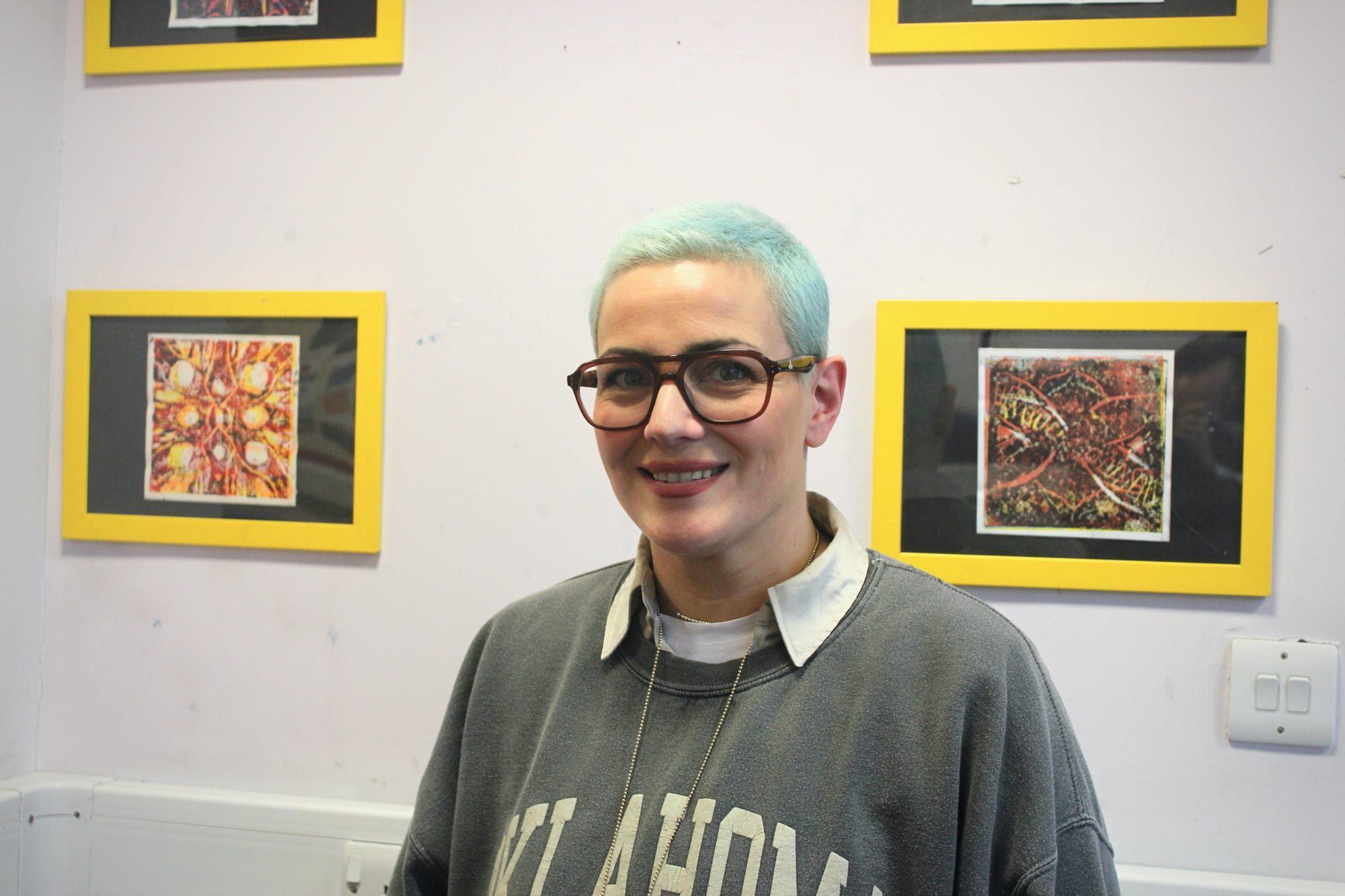
MacIsaac has also seen Gaelic evolve in recent years. “They've got Gaelic Tiktokers, and there’s influencers, and there’s all these things that get the language to a wider community, whereas when we were growing up, we didn't really have that,” she says.
The “widening out” of Gaelic is essential to Gaelic’s endurance, thinks Munro. “No one is going to save [Gaelic] if we don’t,” she believes. Some of the old guard agree with her.
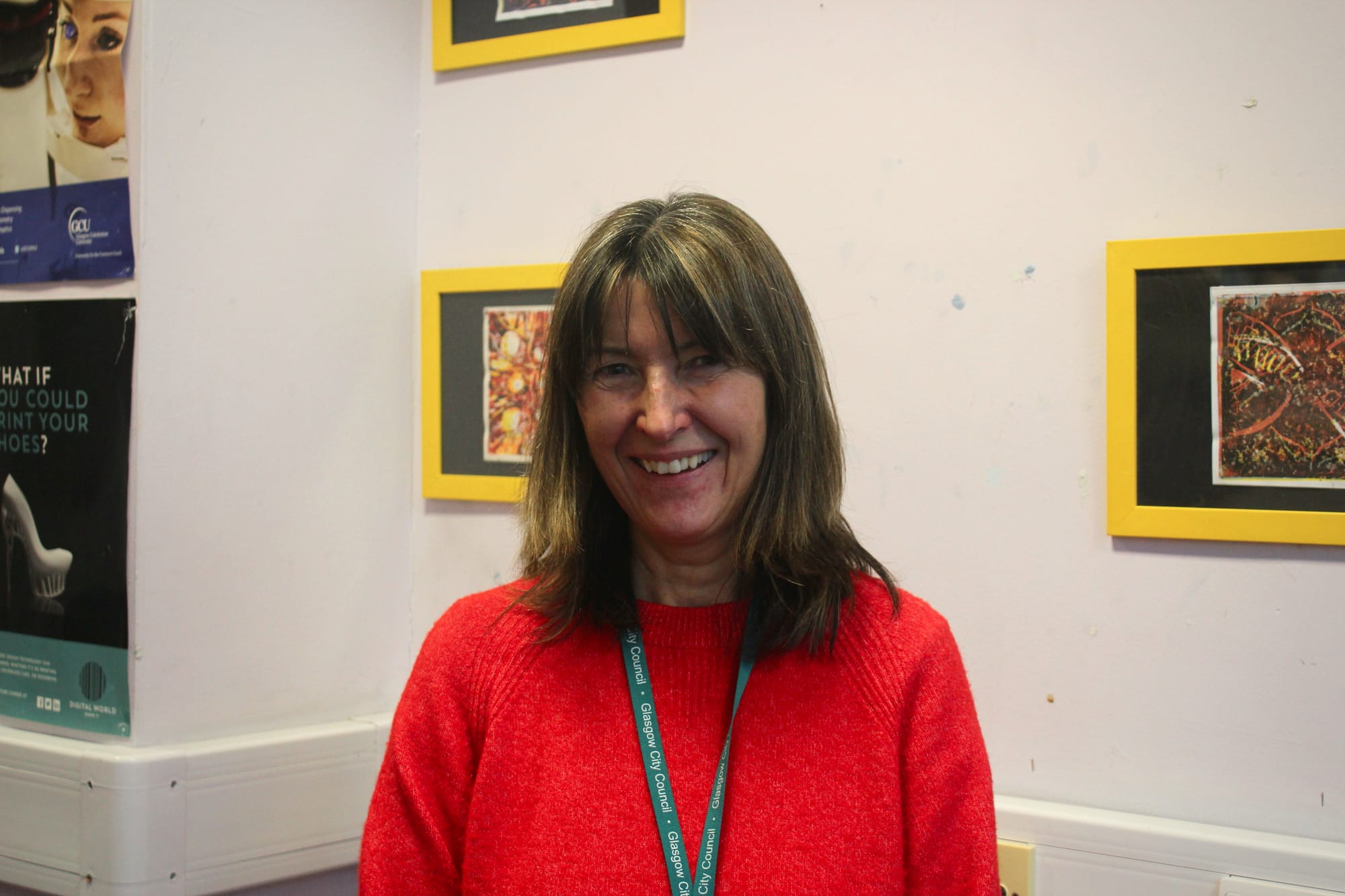
Now retired, Rachel McPherson taught Angus MacInnes and Julia Sutherland at Hillpark. She was born on Skye to parents from Lewis and South Uist, and grew up in Benbecula and Harris. On the thorny issue of cultural erasure, McPherson is sanguine.
“I had felt in the past that maybe we were a bit hemmed in by being a Gaelic school,” she explains. She’s been happy to see changes in recent years, such as the introduction of new instruments and genres of music at the school concerts, which used to be “all bagpipes, accordions, fiddles and Gaelic songs”. McPherson also points to Celtic Connections, which celebrates Gaelic music, culture and language across the city.
“I can see why people worry about culture eroding,” she says. “But I think Gaelic culture is actually quite strong at the moment. It’s strong enough to stand up for itself.”
If someone forwarded you this newsletter, click here to sign up to get quality local journalism in your inbox.